How to buy, cook, and order steak
Dominic Bliss meets Vérane Frédiani, author, filmmaker and expert on all things beef, to find out how to buy, order, cook and enjoy steak
If there’s something Vérane Frédiani doesn’t know about steak, then it’s not worth knowing.
This French food-lover, writer and filmmaker, who is from Marseille and now lives in London, has worked on multiple documentaries dedicated to beef, including Steak (R)evolution (a mission to discover the world’s best steak), Look Back in Angus (how the Scottish cow came to dominate global cuisine) and Wagyu Confidential (on the legendary Japanese beef).
She is also the author of several culinary books, including Steak in France, an exploration of the cultural and gastronomic significance of steak across the country: Cheffes, which profiles 500 female chefs in France; Elles Cuisinent, which celebrates women in the culinary arts around the world; and Taste the World in Marseille, her latest work, celebrating the city’s rich and diverse food culture through the lens of its various communities and neighbourhood kitchens.
All of which puts her in pole position to offer us some expert advice on buying. ordering, preparing, cooking and serving the best steak possible. Be warned, though: you’ll shake your head in disbelief when you find out where her favourite beef hails from (spoiler alert: it’s nowhere in France).
Born and brought up in Marseille, Vérane attended business school in Lille, which included an exchange year across the Channel in Birmingham. By the 2010s she had moved to London with her husband, Franck Ribière, also a filmmaker. They now live in the north of the capital with their 11-year-old daughter.
It was Franck, whose family raised cattle near Montluçon, in central France, who encouraged her love of steak-although her foodie credentials extend well beyond beef. After the couple decided to set up their own film production company, they were naturally drawn to gastronomic and culinary subjects. Their earliest collaboration was a 2014 Netflix documentary called Steak (R)evolution, with Vérane and Franck writing and Franck directing. It’s essentially a meat-lover’s road trip, interviewing cattle breeders, farmers, butchers and chefs along the way, on a mission to discover the best steak on the planet.
“I have no problem with describing myself as a carnivore,” says Vérane. But she is a realist when it comes to cattle farming’s impact on the climate. “Yes, I know we all need to eat less meat. But saying ‘Don’t eat meat!’ is like saying ‘Don’t smoke! Don’t drink wine!’. People don’t react well to that. It’s better to eat less meat and learn about what the farmers and cooks are doing that can be better for the animals. I think we must all learn where to buy meat, how to cook it and be responsible about it.”
Buying meat in France
It sounds shocking, coming from a French foodie, but Vérane suggests French cattle are not the best when it comes to steak. She explains how beef farming developed extensively in France after the Second World War, as a population exhausted by rationing demanded more meat. Working cattle breeds such as Charolais, Limousin and Blonde d’Aquitaine became popular with butchers and meat merchants because they were both large and muscular, enabling them to produce lots of cheap meat while also working the fields efficiently in the days before farming became fully mechanised.
The problem is these breeds do not produce quality steak. That’s why we make so much stew, because you have to cook them a long time to make them tender,” adds Vérane. “They’re very dry as well, so we add a lot of sauce.”
Rather unpatriotically, Vérane suggests the best steak in France is derived from British breeds farmed there. “There are more and more of them in the north where you have lots of rain and grass,” she says, pointing out Aberdeen Angus, Highland cattle, Belted Galloway, Longhorn and Shorthorn as standout breeds, with the first producing particularly tender meat. “The French hate when I say this, of course, but this is true, and the butchers know it.” she says. Unfortunately, the meat from these immigrant breeds is still generally more expensive than that of home-grown breeds.
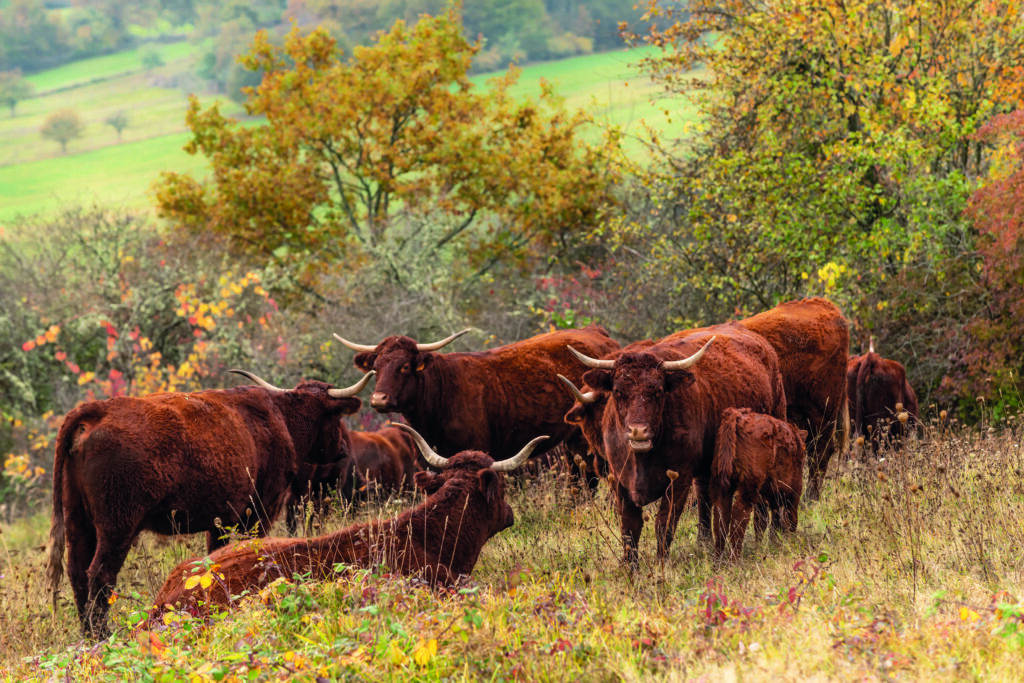
Ideas such as these are enough to get French farmers donning gilets jaunes and barricading the streets, so it’s worth noting there are also some native French cattle breeds that Vérane considers excellent for steak: Aubrac and Salers, from the Massif Central, for example: Normande, from Normandy; and Montbéliarde, from the Jura Mountains. All of them, she says, produce tasty meat because they are fed on “grass full of flavours”.
Vérane’s favourite cuts
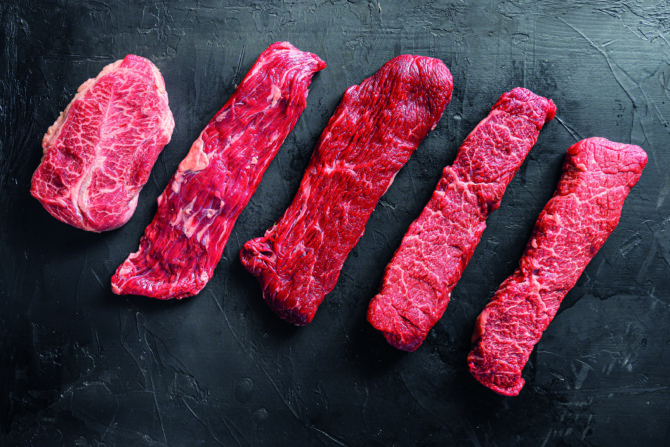
Onglet de boeuf and bavette are her first choice, and must be cooked medium rare, she insists. “The best one I have ever eaten is from Hardiesmill, a farm in the Scottish borders,” she says. “It’s real Aberdeen Angus. Those pieces of meat have the most taste and texture for me.”
She says the industry needs to encourage diners to choose less revered cuts of meat since the very best are so expensive. “We have a hard time thinking of beef as a luxury, but we need to eat less meat anyway. So why not pay the right amount of money for a piece of meat that is healthier and tastier? Just don’t buy it so often. Maybe we should eat red meat once or twice a month, but make it a very good steak which is expensive. We have fewer issues thinking of wine in this way.”
Cooking steak at home
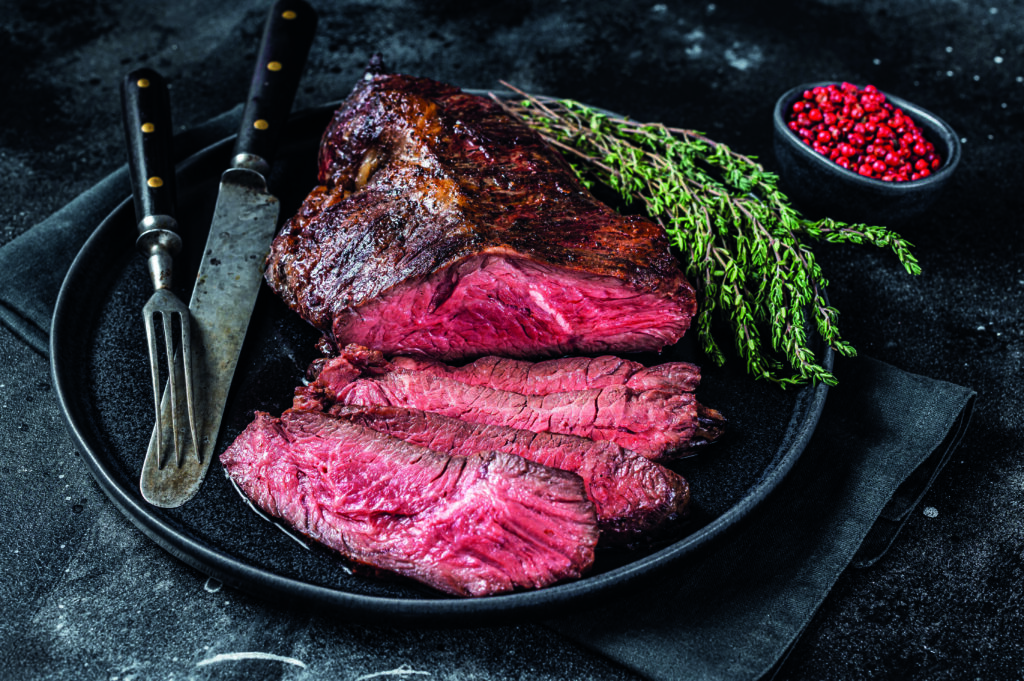
Unusually, Vérane always warms her steaks up first in the oven, perhaps for half an hour but at a very low temperature of 60°C, depending on the size of the meat. Then she finishes them off for a few minutes in a stainless steel pan on a high heat. “Don’t cook them more than å point,” she warns. “And let them rest a little bit before you eat them.”
But remember that, although à point translates as medium rare in English, all French cooking times are shorter than the UK/US equivalents. So, if you ask for à point (medium rare) in a restaurant, expect it to be rare; and if you request saignant (rare), expect it to be very rare indeed, almost what the British or Americans would call blue.
Seasonings and sauces
If the meat is of high enough quality, Vérane prefers not to add any sauce. “Just a very little bit of salt and pepper,” she concedes. “But mustard is okay… if you have to.”
She worries that too many restaurant chefs add sauce in order to justify the high price of the steak and to inflate the importance of their work in the kitchen. “Most of the time they charge you a lot because the meat is very good, and the farmer did a good job and waited a long time before he slaughtered the animal,” she explains. That all costs a lot of money. But most customers will ask, ‘But what did the chef do?. Well, he added the sauce.”
A bit on the side
No one should be snobby about chips with their steak – Vérane says it’s the perfect accompaniment. “Chips with mayonnaise is very good. Alongside this she recommends a simple salad. “If the piece of meat is really good quality then the acidity of the lettuce is perfect,” she says. As for wine, without hesitation, Vérane plumps for a Pinot Noir from Burgundy. “But if you want something stronger, then choose a Languedoc,” she suggests. “Perhaps a red from Hervé Bizeul or a La Muntada from Domaine Gauby.”
Turn to p110 for one of Vérane’s favourite recipes using chuck steak, courtesy of her friend, Delphine Roux, chef at Chez Madie les Galinettes in Marseille.
This recipe is featured in Vérane Frédiani’s book, Taste the World in Marseille, published by Editions de La Martinière.
Looking for more French food and drink content?
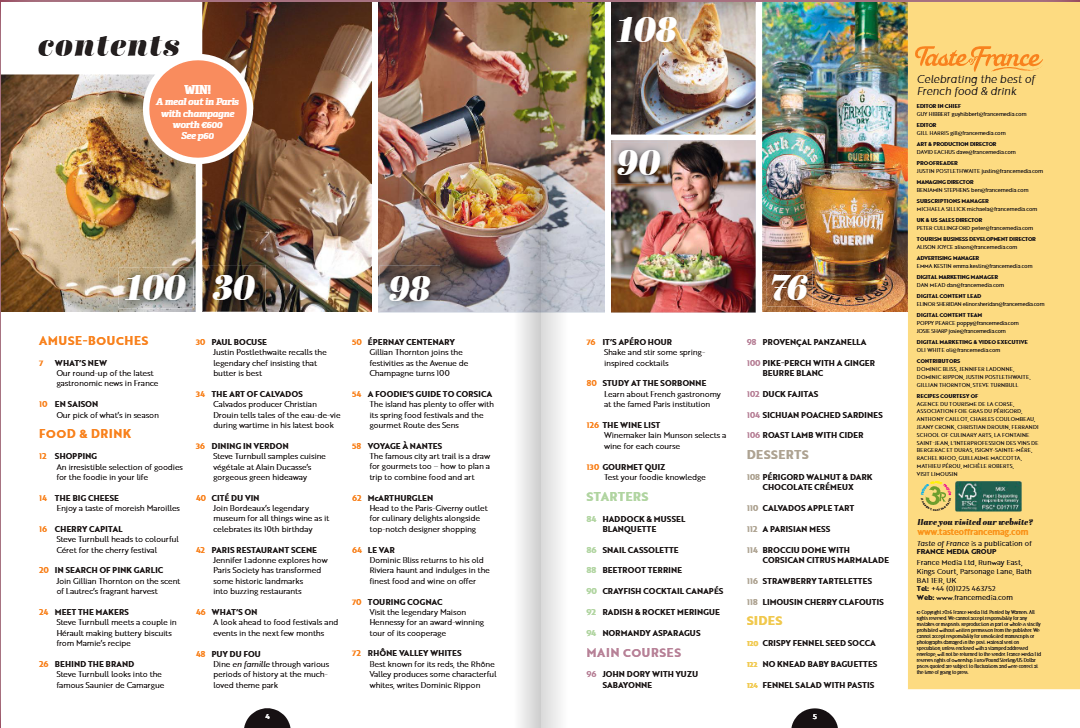
In our magazine we offer a whirlwind tour of the best gastronomic destinations. Discover La Belle France’s renowned markets, quirkiest food festivals, most indulgent restaurants and foodie experiences.
Lead photo credit : Shutterstock
Share to: Facebook Twitter LinkedIn Email
Related Posts