The Green Gastronomy of Gorges du Verdon
It may be best known for its spectacular scenery, but the Gorges du Verdon area offers green gastronomy too. Steve Turnbull shakes off his napkin…
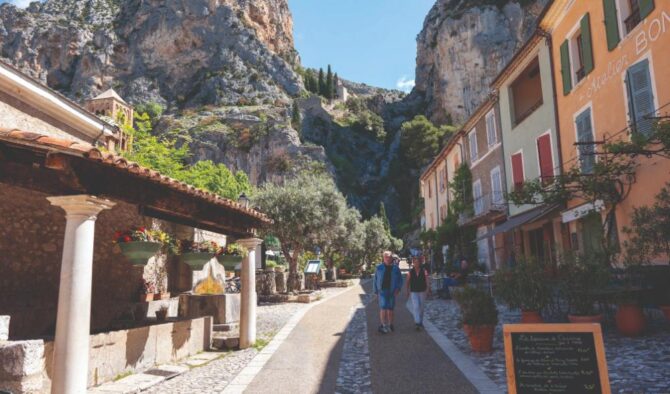
If you’re searching for take-your-breath-away scenery in the south of France, you won’t find better than the Gorges du Verdon, France’s answer to the Grand Canyon, which spans the Alpes-de-Haute-Provence and Var departments. What’s more, Moustiers-Sainte-Marie-arguably the prettiest village in Provence- is just a stone’s throw away. But the food in the area is equally exciting, with a strong accent on the artisanal and sustainable.
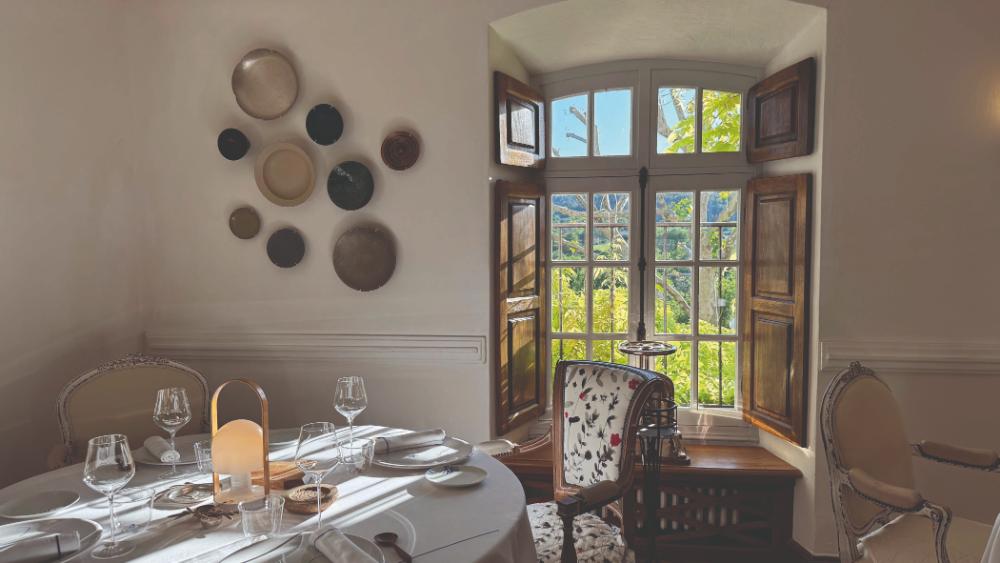
Charming dinig room at La Bastide ©Steve Turnbull
The perfect example is La Bastide de Moustiers. Owned by celebrated chef, restaurateur and cuisine végétale pioneer Alain Ducasse-who fell for the property in the 1990s-this 4-star hotel, with its Michelin-starred restaurant, is nestled in a beautifully tranquil valley at the foot of Moustiers-Sainte-Marie and still describes its food philosophy as cuisine végétale. Fundamental to this in practice is the permaculture potager set in four hectares of lush parkland. This produces an amazing array of organic herbs and vegetables – all lovingly labelled -including 10 varieties of courgettes and more than 30 varieties of tomatoes.
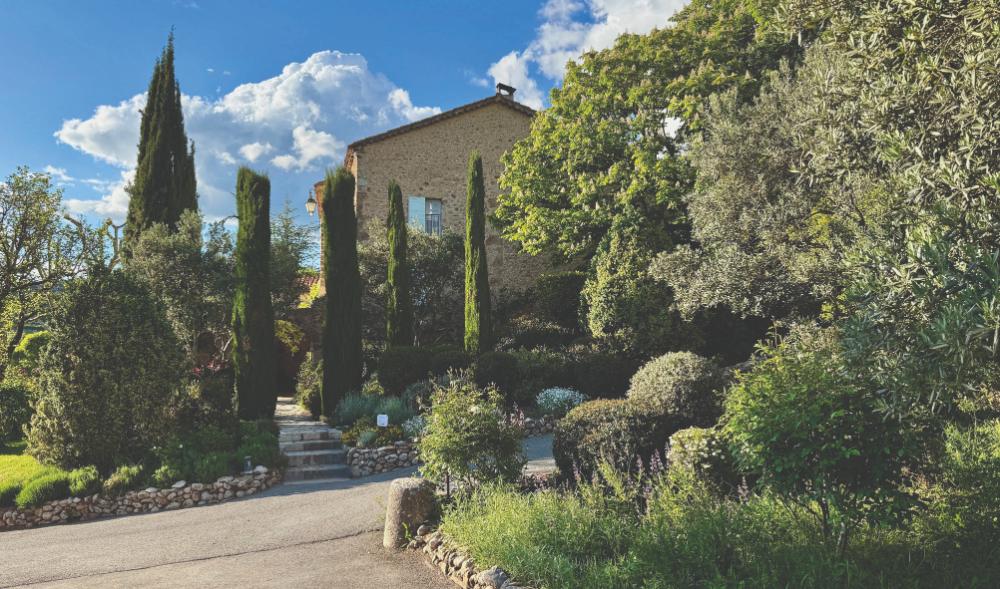
A green oasis – La Bastide de Moustiers ©SteveTurnbull
To put the approach into context, La Bastide is one of a new generation of French restaurants striving to balance traditional gastronomy with strong green values the menu includes meat and fish dishes, but the cooking is rooted in a respect for nature with plants given much more prominence. Indeed, the establishment’s efforts were rewarded recently with a Michelin étoile verte (green star), recognising its leadership in sustainability and its commitment to ‘integrate eco-responsibility into the entire operation’. The restaurant is also the proud owner of a classic Michelin star, attesting to its all-round excellence.
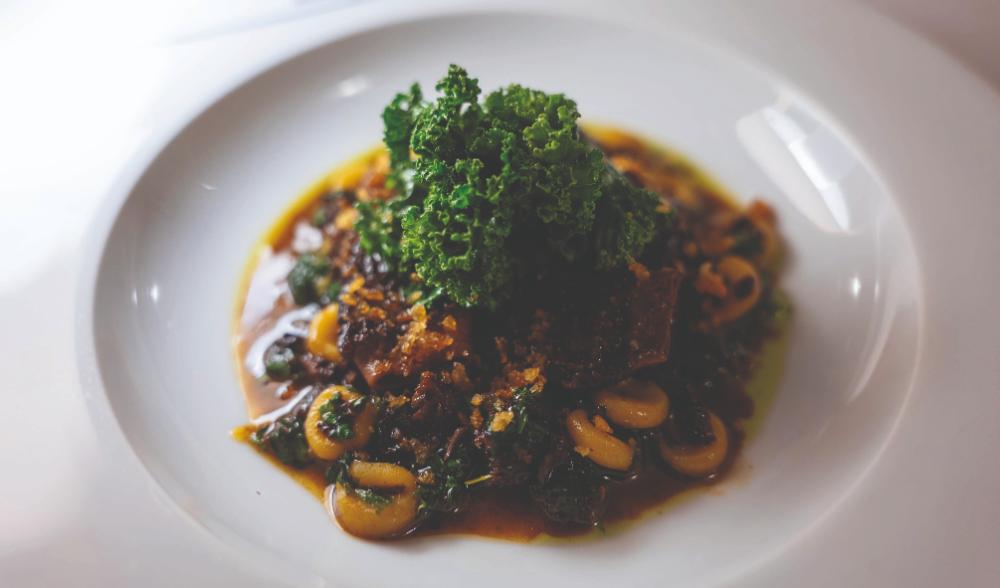
Meaty mushroom dish at La Bastide ©SteveTurnbull
My choice of main at our evening meal was orecchiette de pomme de terre, morilles et chou kale, a richly flavoured pasta dish with plenty of ‘meatiness’ from the mushrooms and sauce. Beforehand, I enjoyed a salad starter with crunchy-fresh vegetables and a ‘soil’ base of épeautre (spelt), offering tastes and textures from the garden. Bravo to chef Valentin Fuchs, who showed his talents with the delicious desserts too. The signature tableware was elegant, the ambience relaxing, and the service second to none.
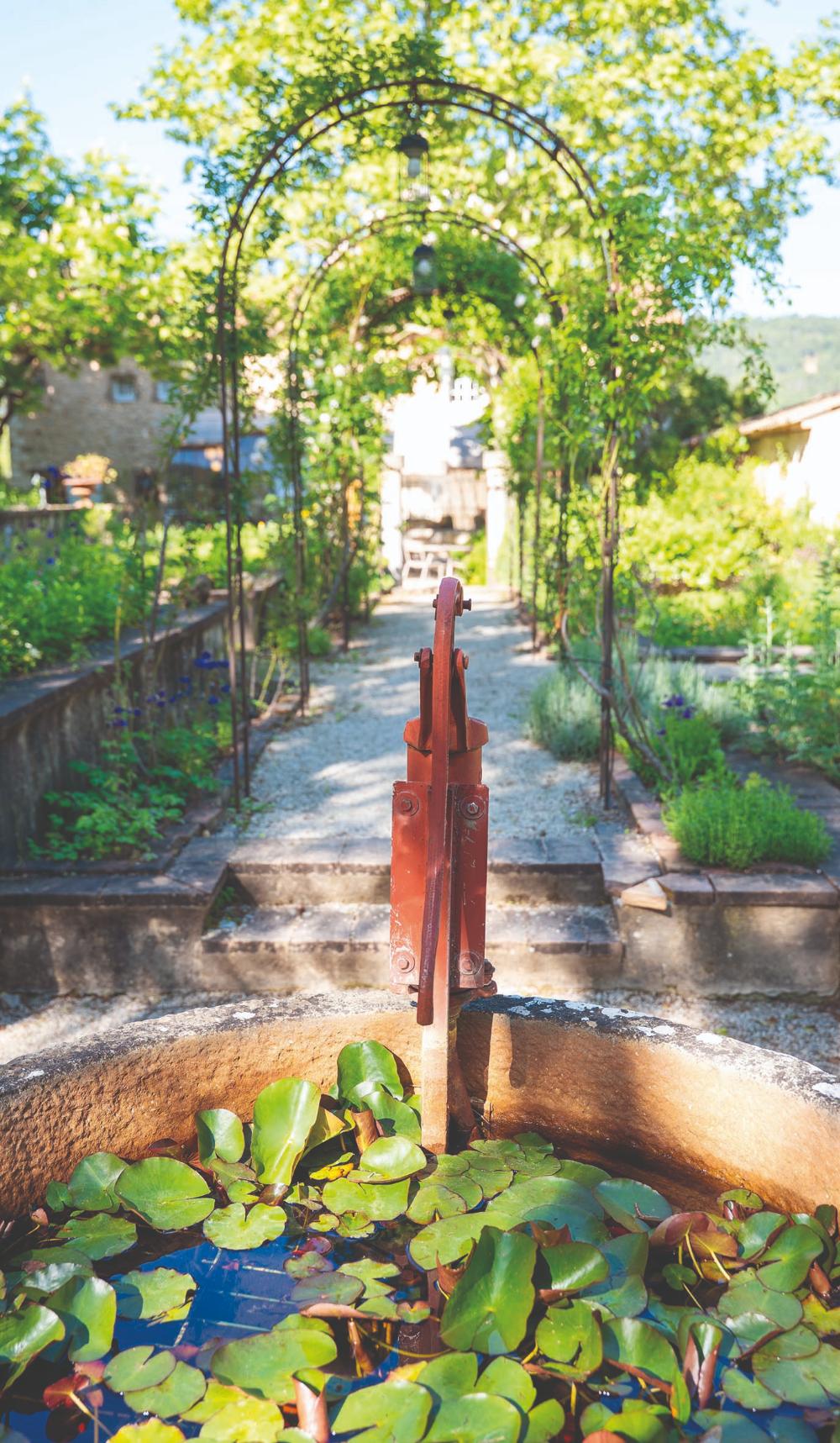
Pride of La Bastide – the permaculture potager ©SteveTurnbull
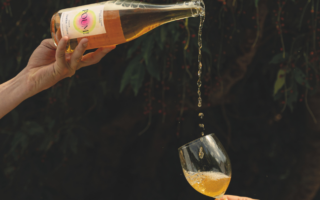
As well as being seasonal, all the food at the restaurant is locally sourced. The lamb comes from the pastures of La Palud-sur-Verdon, perched high above the Gorges, and the fish from the Mediterranean, where it’s caught at night and delivered the next morning, ensuring it’s as fresh as possible. There’s an extensive but well-curated wine list too, reflecting the best of the region and beyond.
The story behind La Bastide, at the heart of the Parc naturel régional du Verdon, goes back to 1994 when Ducasse was motorcycling through the area on one of his frequent trips. When he spotted the 18th-century maison provençale, it was love at first sight and he snapped it up. Initially, he wanted to make it into a secret hideaway where he could invite friends and relax, but his culinary instincts came to the fore, and the idea for an auberge-style hotel-restaurant was born. Nonetheless, this has retained all the charm and character of the original property, while adding luxurious features like a gorgeous swimming pool. Altogether, it’s a green oasis, and a very special place.
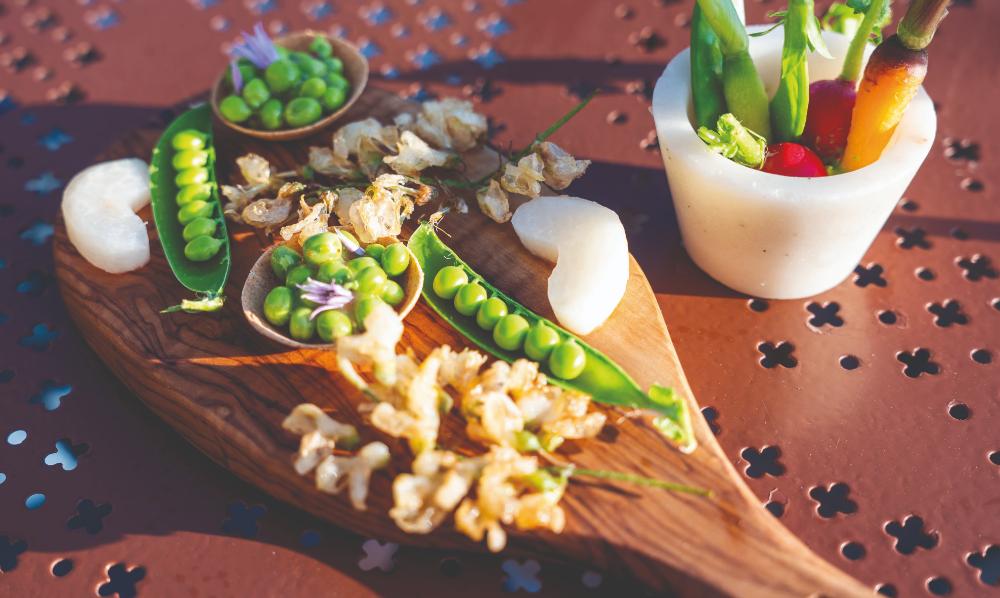
Fresh peas aperitif at La Bastide ©SteveTurnbull
The next day, after thumbing through a copy of Ducasse’s Grand Livre de Cuisine over a wonderful breakfast in the jardin d’hiver, I headed into Moustiers with my wife. The village, tucked beneath towering limestone cliffs, dates back to the Middle Ages and is best known for its ceramics (faïence) industry. but we couldn’t wait to hit the food trail. Our first stop was Le Souquet, an épicerie fine (gourmet grocer) on the path that climbs to the Chapelle de Notre-Dame de Beauvoir, with its stunning views. Inside, we discovered an Aladdin’s cave of artisanal produce, including organic olive oils (the oléiculteur owners produce them locally), crème de châtaignes (sweet chestnut spread) and a range of fruit cordials, all packaged simply, as if from yesteryear.
Naturally, we filled our basket with goodies (you can try before you buy), including a lemon-scented olive oil which lends a mild, citrusy tang to food without the astringency of raw juice. You can use it in vinaigrettes and a wide variety of dishes, but it works particularly well with boiled potatoes, greens and the classic Provençal salad of haricots blancs (white beans) with garlic and fresh herbs. In fact, as owner, Nicole Alliaume, explained, the lemons are ground with the olives to meld the flavours.
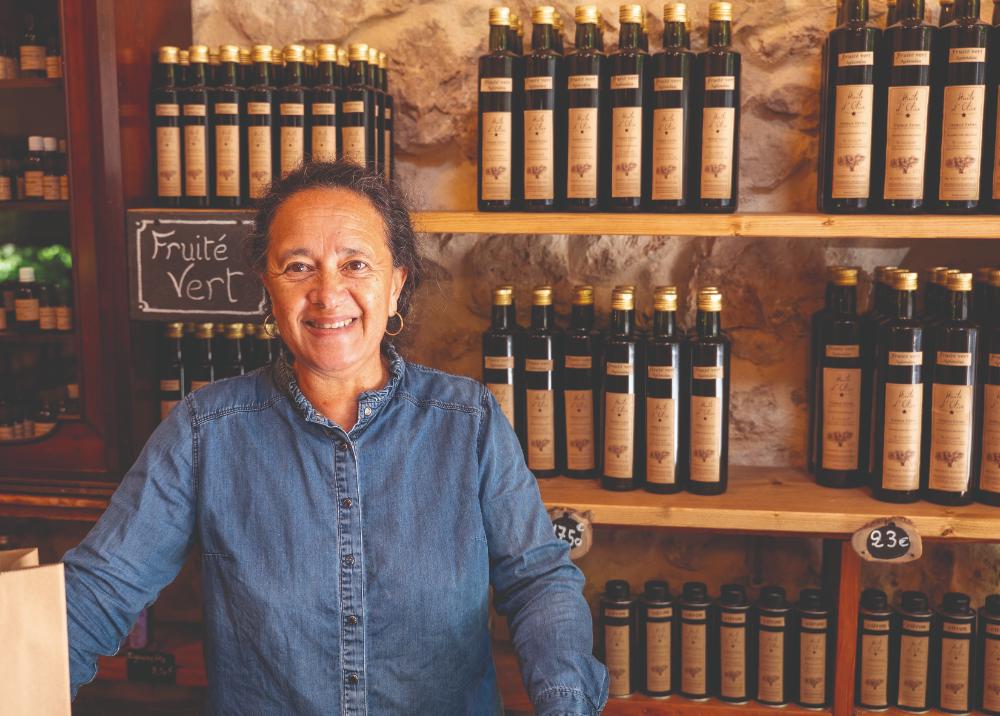
Nicole at Le Souquet with her organic olive oils ©SteveTurnbull
Just around the corner, we met Laëtitia Rippert at Rucher du Para Lou, a shop selling honey and a variety of honey-based products, including pain d’épices (gingerbread) and two types of nougat (noir and blanc). Laëtitia belongs to a family of beekeepers based at the Ferme Para Lou, which overlooks the Lac de Sainte-Croix (a picturesque reservoir linked to the Gorges du Verdon). We sampled several kinds of honey at the shop but it was the delicately floral lavender which proved our favourite – Provence in a jar. On the Plateau du Valensole above Moustiers, there are huge swathes of lavender which flower in the summer, offering a nectar-rich resource for honey bees.
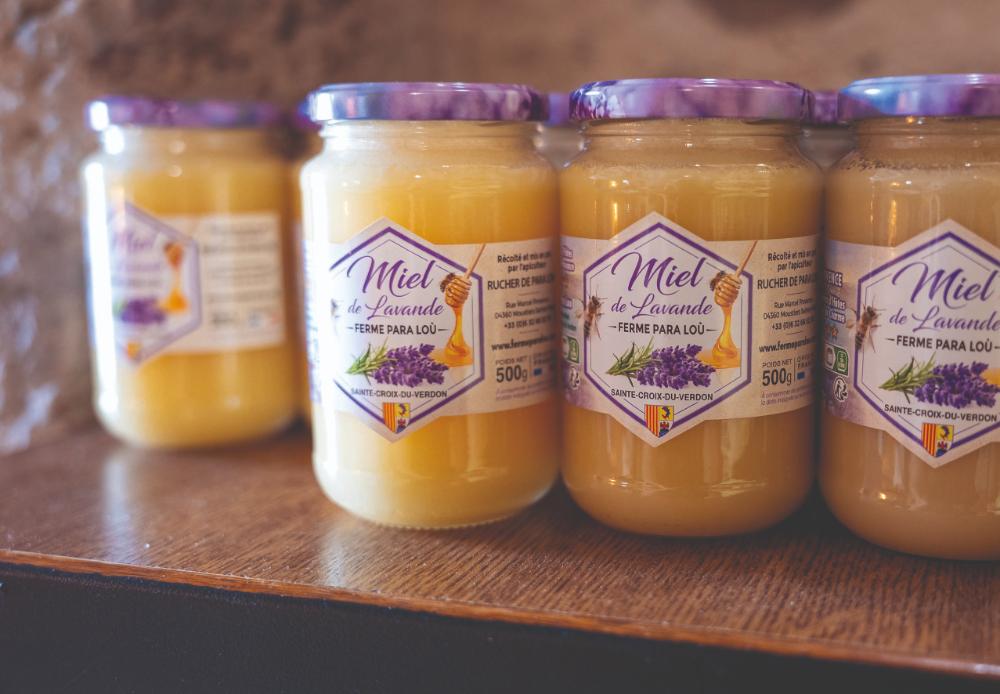
Provence in a jar – lavender honey at the Rucher du Para Lou shop ©SteveTurnbull
The family also run a successful chambre d’hôte/gîtes business, and sell black truffles preserved in olive oil during the winter season. If you fancy digging deep into truffle production and gastronomy locally, head to the Fête de la Truffe Noire in late January at Aups (another charming village), then visit the fascinating truffle museum (Maison de la Truffe) in the town. For top-quality truffle tasting menus throughout the year, Domaine de Majastre, to the south of Lac de Sainte-Croix, is an excellent choice.
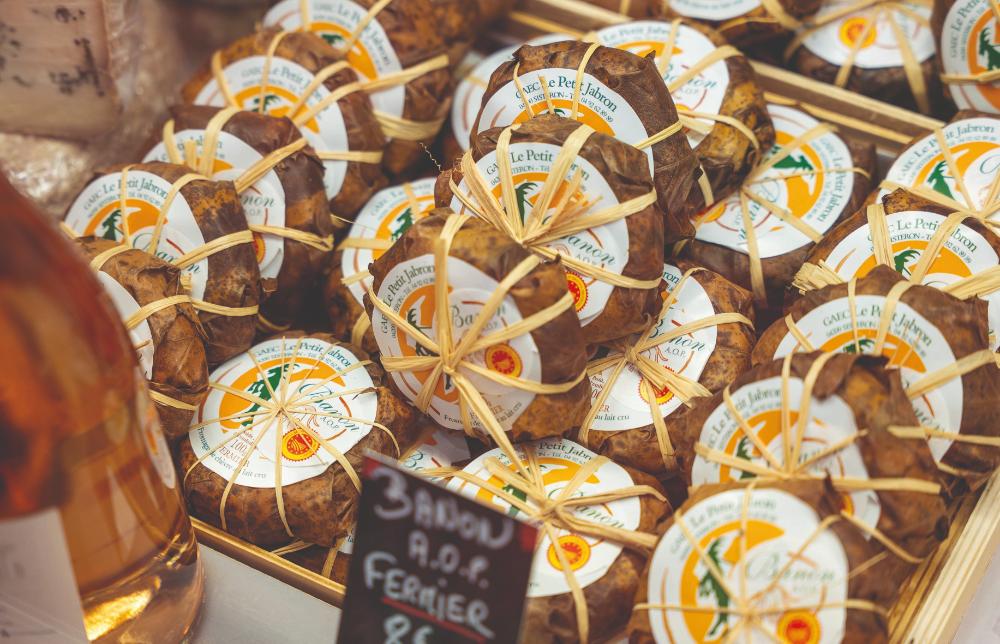
Artisanal Banon goat’s cheese at Moustiers fromagerie ©SteveTurnbull
An additional highlight of our meal at La Bastide was the superb cheeseboard, served traditionally between the main dish and dessert. We also sampled several locally produced cheeses at the Fromagerie Dubray, another family-run business in the centre of Moustiers. One of those we chose – the AOP (Appellation d’Origine Protégée) Banon – is worth a special mention. It’s a deliciously creamy goat’s cheese that is folded by hand on the farm into chestnut leaves, and tied with raffia – you couldn’t get more artisanal (as opposed to industrial) if you tried. Later, we visited the street market in the village, offering charcuterie, craft beers and star-shaped biscuits, inspired by Moustiers famous hanging star – a gold, 16-pointed star suspended high between the cliffs above the village, close to the Chapelle Notre-Dame de Beauvoir.
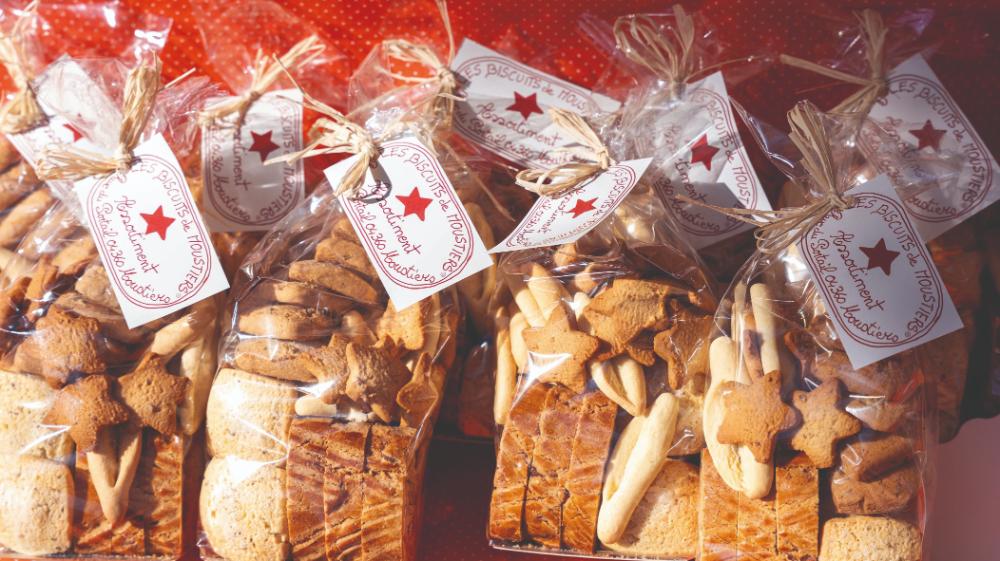
Emblematic star biscuits on the Moustiers market ©SteveTurnbull
It’s one of the town’s most enduring symbols: according to local legend, the star was hung centuries ago as an ex-voto, a votive offering of gratitude and protection, and it still glitters above the ravine today. If you’re here in the summer, the marché nocturne in the evening is a must and, again, you’ll find several organic producers amongst the stalls. Beyond those mentioned, there’s a great choice of restaurants in the area too, including 18th-century La Ferme Sainte-Cécile which offers “une savoureuse cuisine du Sud”, according to the Michelin Guide.
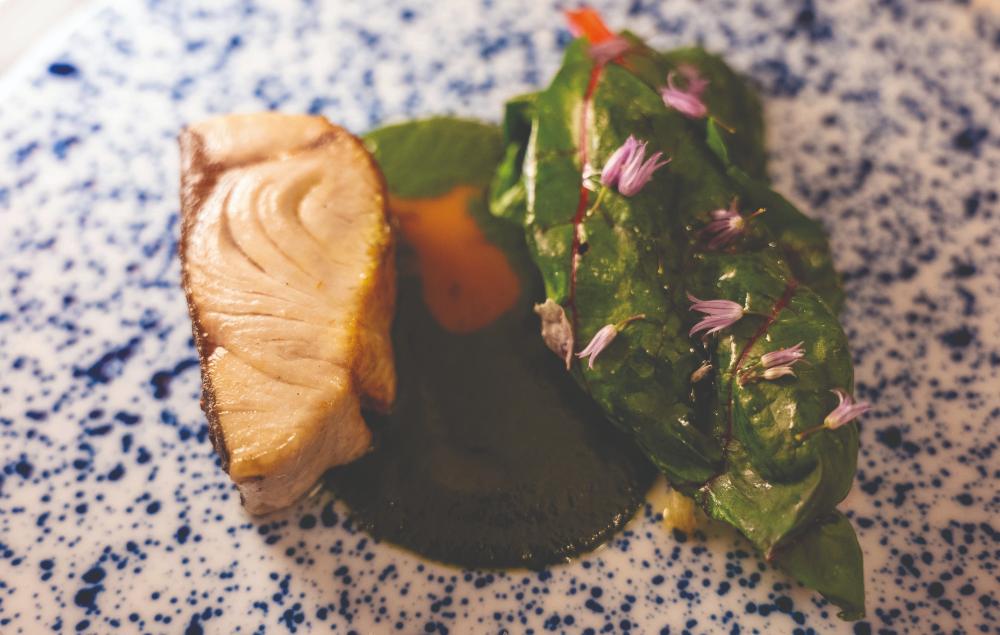
Delicious fish dish at La Bastide ©SteveTurnbull
Like much of France, the choice for vegetarians, and certainly vegans, is more limited. But, as La Bastide proved, things are changing. As a vegetarian myself, I managed to eat well throughout our stay, and my flexitarian wife was more than happy with her fish dishes – including the best salade niçoise she’s ever had, courtesy of La Cantine restaurant in Moustiers.
So, the Gorges du Verdon offers the perfect gourmet dining destination. It’s not only a feast for the eyes, but it also offers something for every taste – while reflecting and protecting its terroir.
Looking for more French food and drink content?
In our magazine we offer a whirlwind tour of the best gastronomic destinations. Discover La Belle France’s renowned markets, quirkiest food festivals, most indulgent restaurants and foodie experiences.
Lead photo credit : Marvellous Moustiers ©SteveTurnbull
Share to: Facebook Twitter LinkedIn Email
More in French vegetables, Gorges du Verdon, Vegetarian Food
Related Posts