M is for Macarons
What is it?
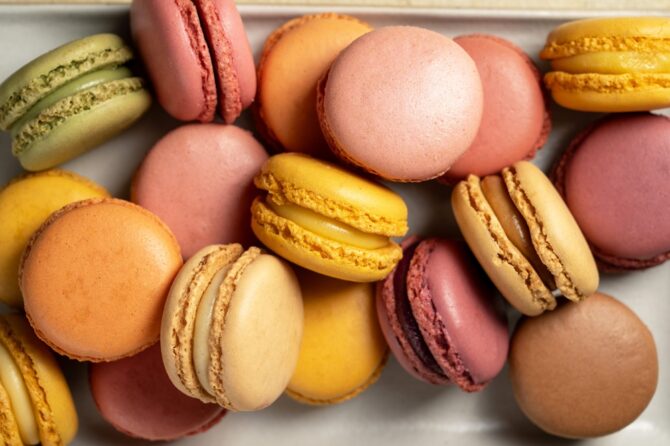
A pretty little confection consisting of two almond meringue shells filled with a luscious ganache, buttercream or jam. The shells have a smooth top, ruffled circumference (known as the ‘foot’) and a light, crisp exterior that gives way to a moist, chewy interior.
Where’s it from?
The macaron originated in Italy and was introduced to France in the 16th century by Queen Catherine de’ Medici’s chefs. However, the modern double-decker macaron, as we know it today, was developed in the early 20th century by Pierre Desfontaines of the famed Parisian pâtisserie (and macaron expert) Ladurée.
What’s so special about them?
Their many pretty colours and delicate appearance make them universally popular, plus they come in a vast array of flavours from classic vanilla and chocolate to the more unusual pistachio, rose and salted caramel.
How do you say it?
Mah-kah-ROHN. Not to be confused with the macaroon (mah-kah-roon) which is a different beast entirely, being a small cake-like biscuit made with coconut.
Where can I buy some?
Ladurée has multiple locations in the UK, including eight in London and one in Manchester, while Pierre Hermé has two boutiques in London. In Edinburgh, Mademoiselle Macaron offers macarons both in-store and for delivery across the UK.
In the USA, Ladurée has five locations in New York City, as well as boutiques in Los Angeles, Miami, and other cities. Le Macaron, founded by a French mother-daughter duo, has more than 50 locations nationwide.
Can I make them at home?
Yes, but it might require a bit of practice! The process involves making an almond meringue batter, piping it into uniform circles, and achieving the characteristic ‘foot’ during baking. Check out the recipes right here on this website, such as this one by macaron guru Pierre Hermé!
Where can I find out more?
You can read more about the history of the macaron on the Taste of France website. Or check out Jean Trogneux, a renowned macaron maker in Amiens since 1872… they apparently produce more than two million macarons each year!
Looking for more French food and drink content?
In our magazine we offer a whirlwind tour of the best gastronomic destinations. Discover La Belle France’s renowned markets, quirkiest food festivals, most indulgent restaurants and foodie experiences.
Lead photo credit : © Shutterstock
Share to: Facebook Twitter LinkedIn Email
More in alphabet, Food alphabet, Macarons
Related Posts