J is for… Jambon persillé
What is it?
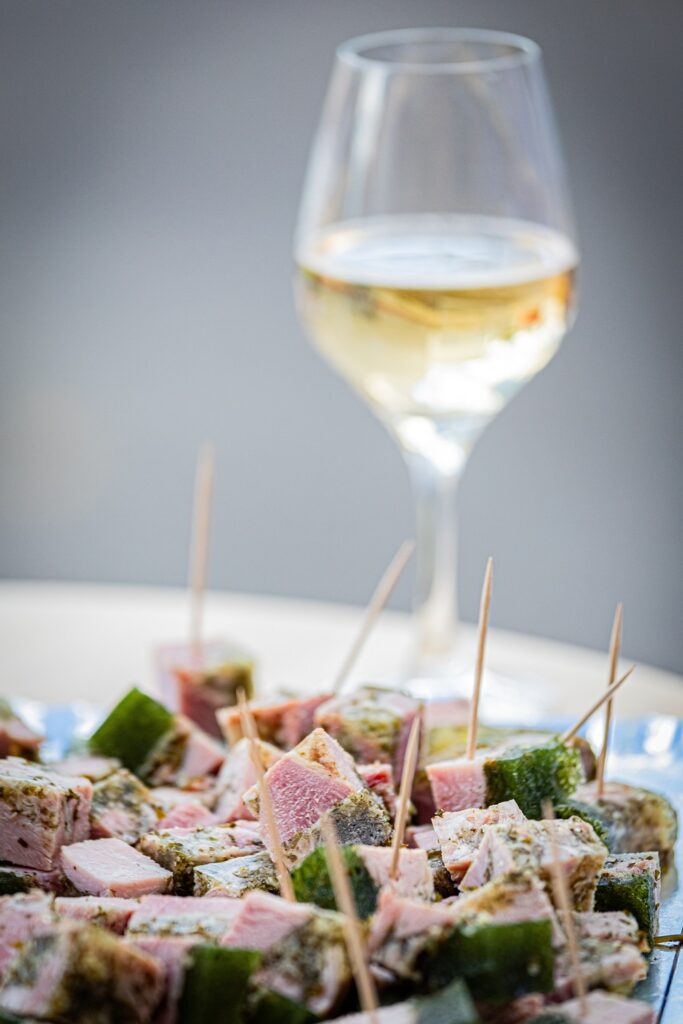
Ham hock simmered in white wine and made into a terrine with a generous amount of parsley.
Where’s it from?
Burgundy. The exact origins are unknown but it’s widely thought to date back to rural Burgundy in the late Middle Ages or early Renaissance. Salting, curing and jellied preparations were common as it was the only way to preserve meat in a world without refrigeration. In the case of jambon persillé, ham was preserved in a gelatine-based aspic, which provided a barrier against bacteria and helped maintain its freshness.
Is it popular?
It’s commonly associated with Easter in France. Many centuries ago it became a staple at Easter celebrations, symbolising the end of Lent and the arrival of spring, with its fresh parsley and vibrant green accents. It’s a tradition that stuck.
Where can I try it?
In France, you’ll find it in charcuteries (pick some up alongside some Dijon mustard, crusty fresh bread and a bottle of Burgundy and that’s your picnic sorted!) and featured on menus in brasseries.
How do you say it?
Zhambon pairseeyeh
Can I make it at home?
Of course! It looks like quite the faff but total hands-on time is only about an hour… without about nine hours of resting/setting. The finished product will last about five days. Try our easy-to-follow recipe below.
Where can I find out more?
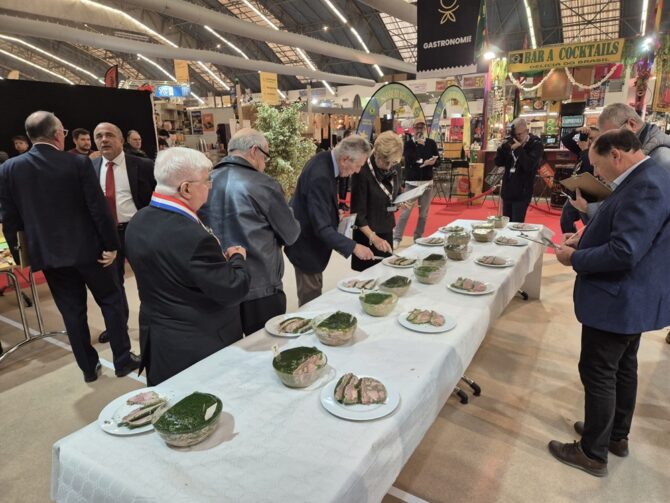
Head to the gastronomic bonanza that is the Foire de Dijon, where La Confrérie des chevaliers de Saint-Antoine organises the annual competition for the best artisanal jambon persillé. The winner for 2024 was Morey Traiteur in Châtenoy-le-Royal, in the Saône-et-Loire department. Be sure to drop by if you’re holidaying near there any time soon!
Traditional Jambon Persillé Recipe
Ingredients
- 1 kg (2.2 lbs) ham hock or a mix of ham and pork shoulder
- 1 pig’s trotter (optional, but helps with natural gelatine)
- 2 large carrots, peeled and cut into chunks
- 1 large onion, peeled and halved
- 1 leek, white and light green parts only, cut in half
- 3 cloves of garlic, peeled
- 4-5 bay leaves
- 5-6 sprigs of fresh thyme
- 1 bunch of flat-leaf parsley (approximately 1 cup chopped)
- 10-12 black peppercorns
- Salt, to taste
- White wine vinegar (optional, for a tangy finish)
- For the Aspic (if the pig’s trotter isn’t used):
- 2-3 packets of unflavoured gelatine (about 21 g)
Method
- Place the ham hock (and pig’s trotter, if using) in a large pot. Cover with cold water, then bring to a boil over medium-high heat. Skim off any foam that rises to the surface.
- Once boiling, reduce to a simmer, then add carrots, onion, leek, garlic, bay leaves, thyme and peppercorns. Season with salt, but not too much, as the ham adds natural saltiness.
- Let simmer for 2–3 hours until the ham is very tender and easily falls off the bone.
- Carefully remove the ham hock and pig’s trotter from the pot and set them aside to cool slightly.
- Strain the broth, discarding the vegetables and herbs. If using the pig’s trotter, let the strained broth cool and a natural gelatine should form. For added clarity, you may strain the broth a second time through cheesecloth.
- If not using the pig’s trotter, allow the broth to cool and dissolve the gelatine packets according to the package instructions, then add to the broth.
- Once cool enough to handle, shred or cut the ham into bite-sized pieces, discarding any excess fat or gristle.
- Finely chop the parsley and mix it thoroughly with the ham. If desired, add a splash of white wine vinegar for a hint of acidity.
- Place a layer of the ham and parsley mixture into a terrine or loaf mould. Ladle enough broth over the layer to cover it. Repeat this layering until the mould is full, finishing with a layer of broth to ensure the mixture is well-bound.
- Cover with plastic wrap and refrigerate for at least six hours, or preferably overnight, to set fully.
- To serve, run a knife around the edges of the mould and turn the jambon persillé out onto a platter. Slice and serve cold, ideally with Dijon mustard, cornichons and fresh baguette.
Tips
For best results, use a firm hand when pressing down each layer in the mould to avoid air pockets.
Store leftovers in the fridge for up to five days.
Latest Posts:
- Win a Case of French Wine Worth £240
- French Sauces: The Renaissance of the Saucier and the Art of Sauce Making
- How to Make the 5 French Mother Sauces
- Antoinette’s Chocolate Cake: A Rich French Café-Style Recipe
- Emma Watson’s Family Vineyard and the Story of Renais Gin
Lead photo credit : The competition at this year's Dijon Fair CR La Confrérie des chevaliers de Saint-Antoine
Share to: Facebook Twitter LinkedIn Email
More in Food alphabet
Related Posts