Everything I Ate on a 7-Day All-Inclusive Cruise Along the Seine
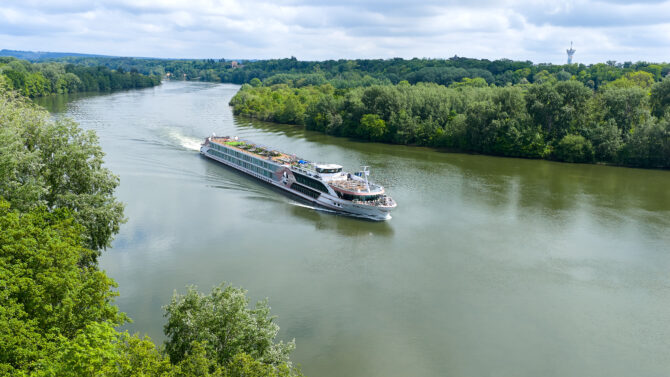
Seven nights from Paris to the Normandy coast aboard Viva Beyond, three restaurants, and a tasting menu written by a Michelin-starred chef.
I came to this cruise expecting châteaux and Impressionist landscapes, and spent a good deal of it thinking about the next meal instead.
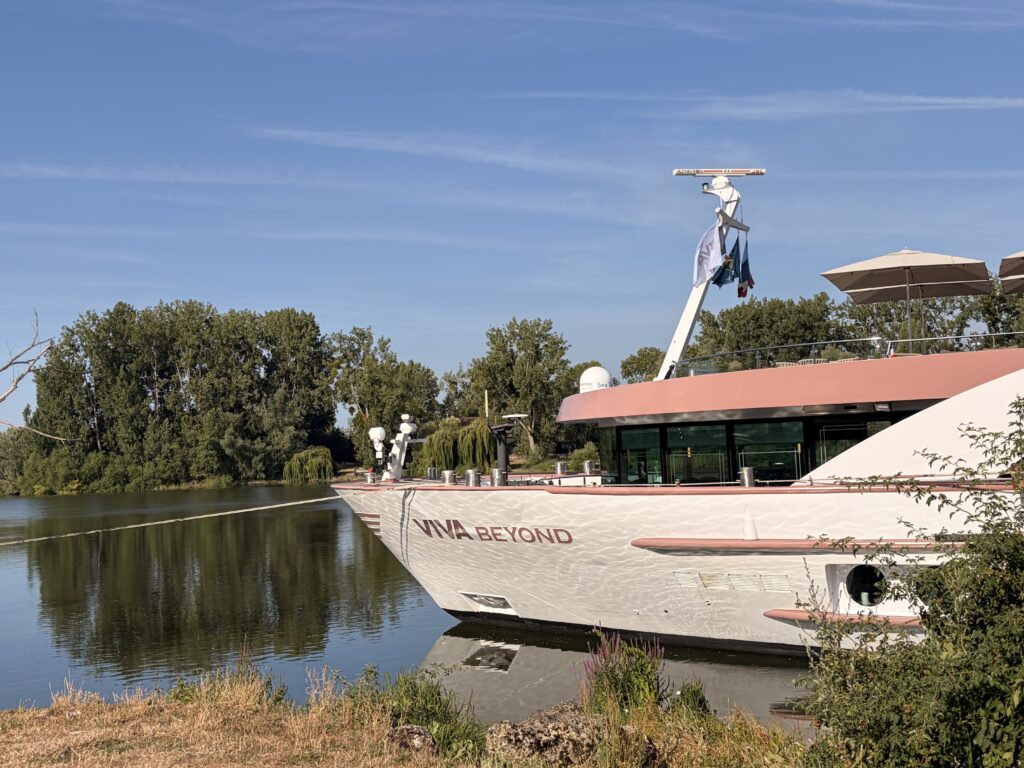
Viva Beyond is a new ship, sailing since May 2026 and based in Paris. It is the first vessel in the line’s Viva Boutique range and carries only 112 passengers, which makes the presence of three separate restaurants on board faintly extravagant. All three are included in the fare, along with the bar list, so there is no calculation involved in choosing where to eat or what to order. The itinerary, Pure Culture Along the Seine, runs seven nights down the river towards the coast at Le Havre. Over the week I ate in all three restaurants.
Breakfast in Riverside
Breakfast is served in Riverside, the main restaurant, where a buffet island occupies the centre of the room and a short cooked menu is brought to the table.
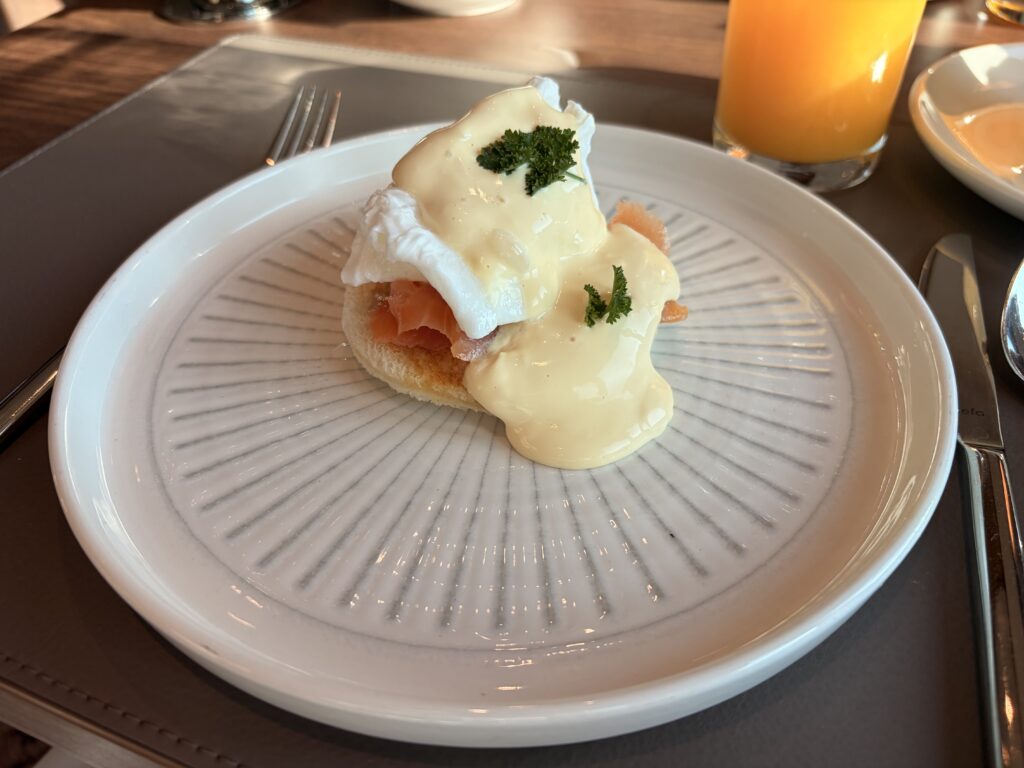
I ordered eggs royale on most mornings, with pastries alongside. A properly poached egg at eight o’clock on a moving vessel is not something to be assumed, and these were consistently good. The buffet ran alongside it and was substantial: hot dishes, yoghurts, cheeses, cold meats and fruit, replenished throughout the service.
Riverside: Lunch and Dinner
Dinner is a multi course menu served at the table rather than a buffet, and there is invariably a regional dish among the options, which along this stretch of river tends to mean butter, cream and apples.
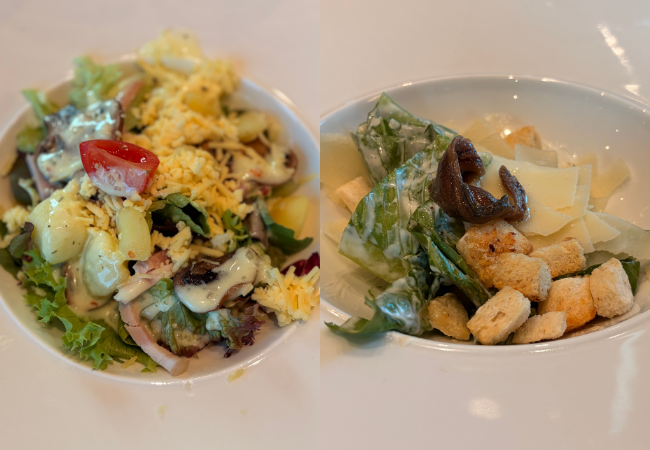
Salade César proved the dependable opening, prepared straightforwardly and without embellishment. A salade Parisienne on another occasion was cleaner and considerably lighter, and better suited to an afternoon spent on the sun deck.
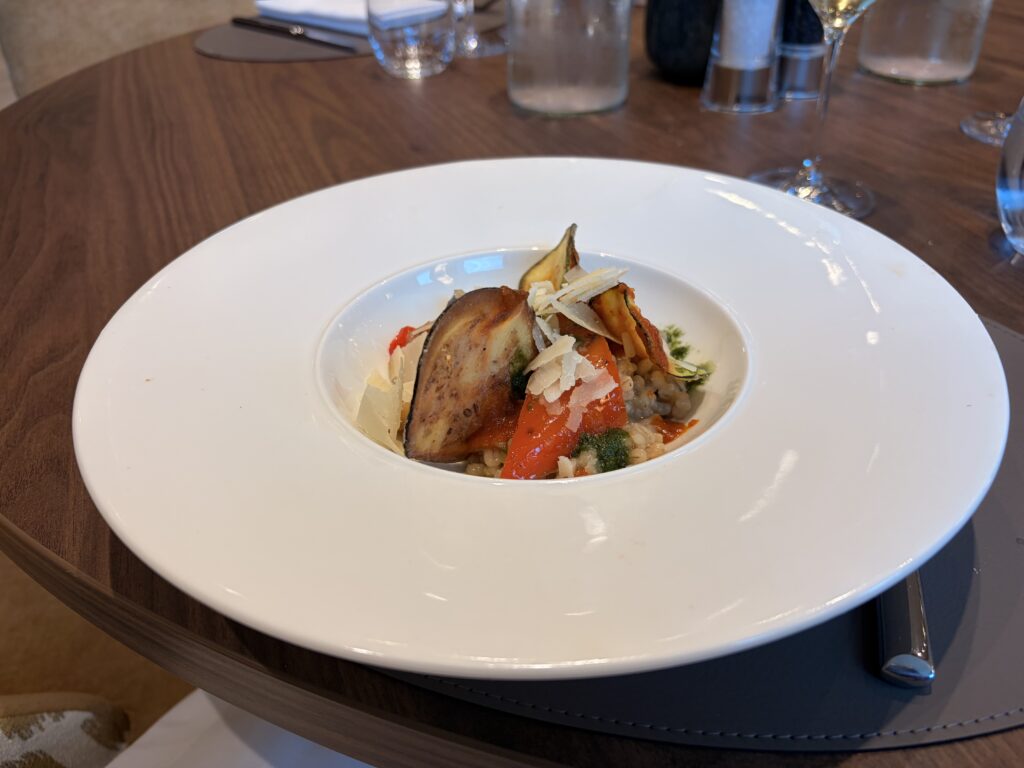
Risotto d’orge was the week’s genuine surprise. Made with barley rather than rice, and dressed with sundried tomato, pesto, asparagus, courgette, aubergine, pepper and parmesan, it had far more to it than one expects of the nominal vegetarian option.
Filet de porc farci aux champignons, pork tenderloin stuffed with mushrooms and finished with a port wine jus, was a rich and generous dish of the sort best appreciated after a morning walking around a French town.
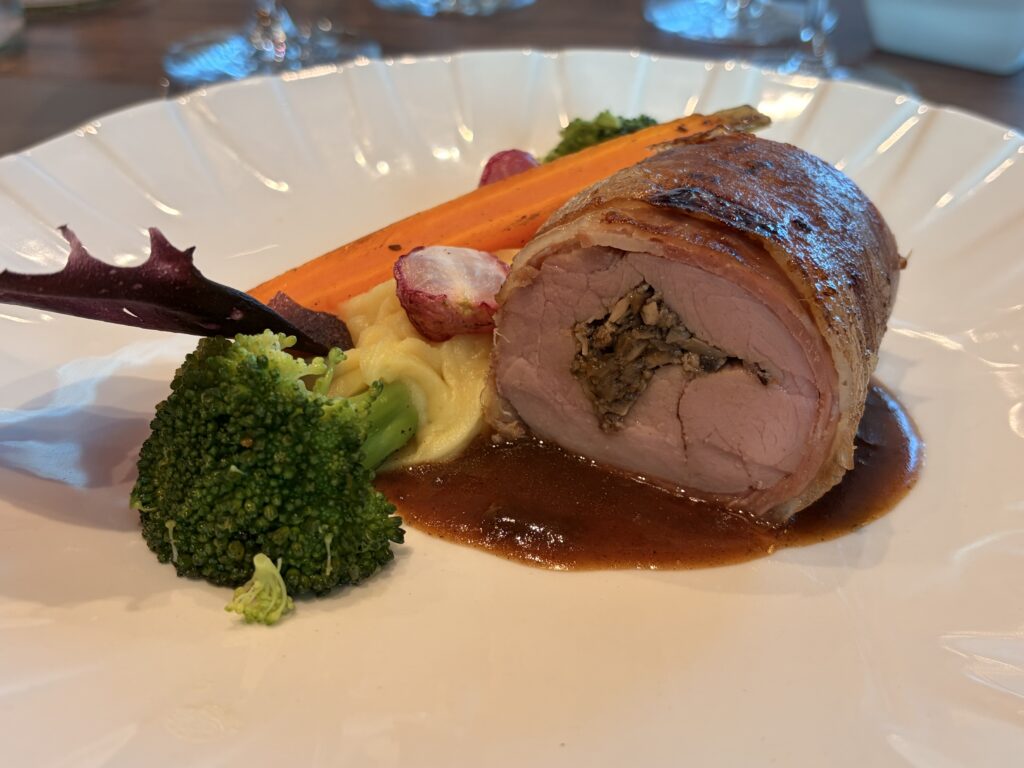
Culotte d’agneau rôtie, roasted lamb rump served pink, was the finest piece of meat I was served in Riverside.
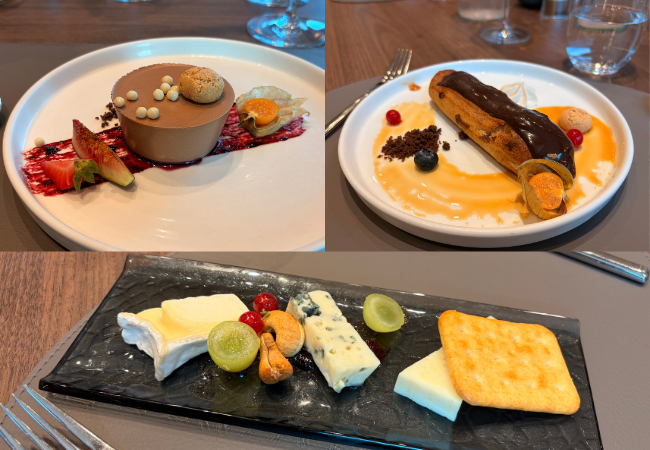
Desserts included a mousse au chocolat on one evening and an éclair au chocolat on another. When I wanted to finish on something savoury there was a fromages course instead, and the cheese is worth choosing over the pudding at least once during the week.
The Gala Dinner
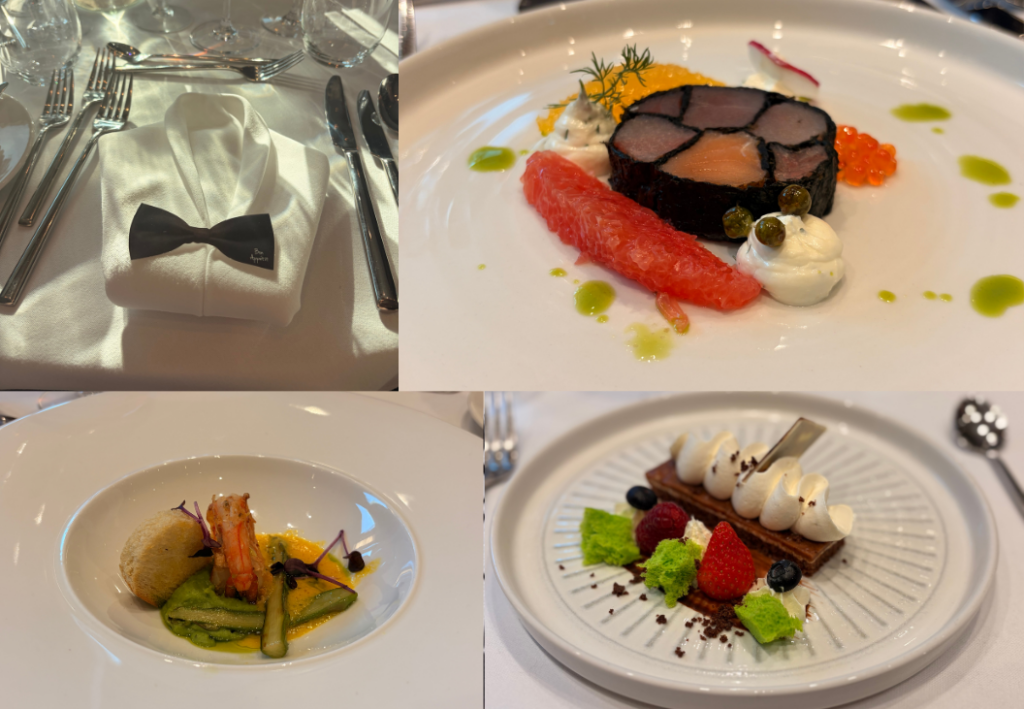
One evening is given over to the gala dinner, for which Riverside is dressed accordingly. It opened with a salmon mosaic, layered, set and cut into neat slices, followed by a king prawn with pea purée that was the most elegant plate of the week: a single large prawn against a vivid green, with nothing else competing for attention. Dessert was a layered chocolate affair built on a biscuit base, and it did not last long.
Viva Brasserie
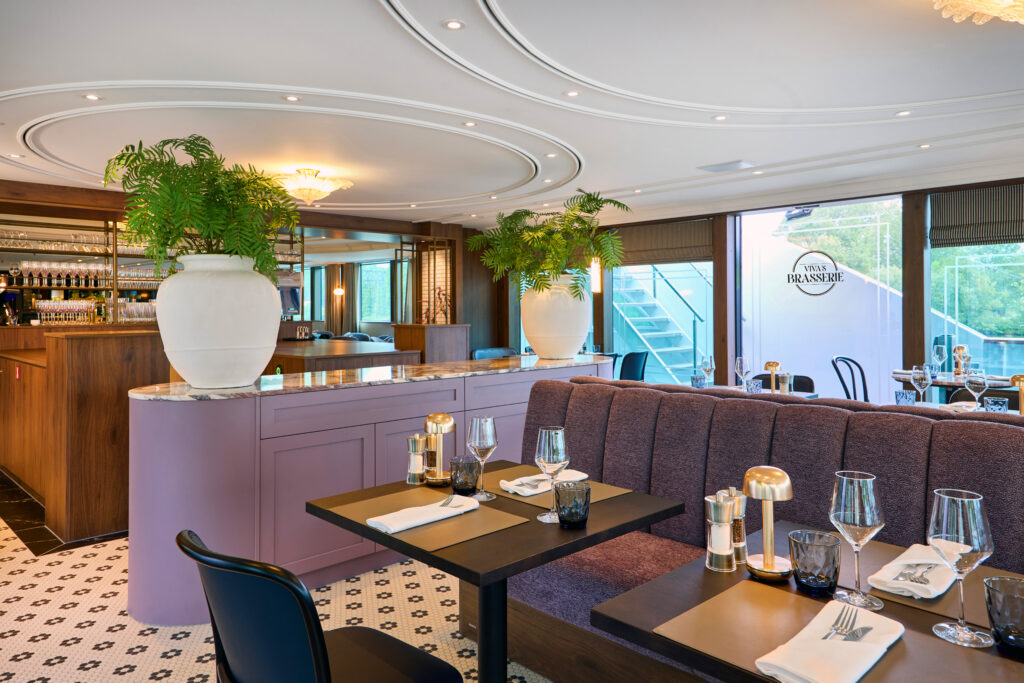
The Brasserie occupies a position at the stern on the upper deck, with windows running the full height of the room, and it is the more relaxed of the two everyday restaurants. It is a smaller space and dinner requires a reservation. I made several, as friendly receptionist Luís would attest…
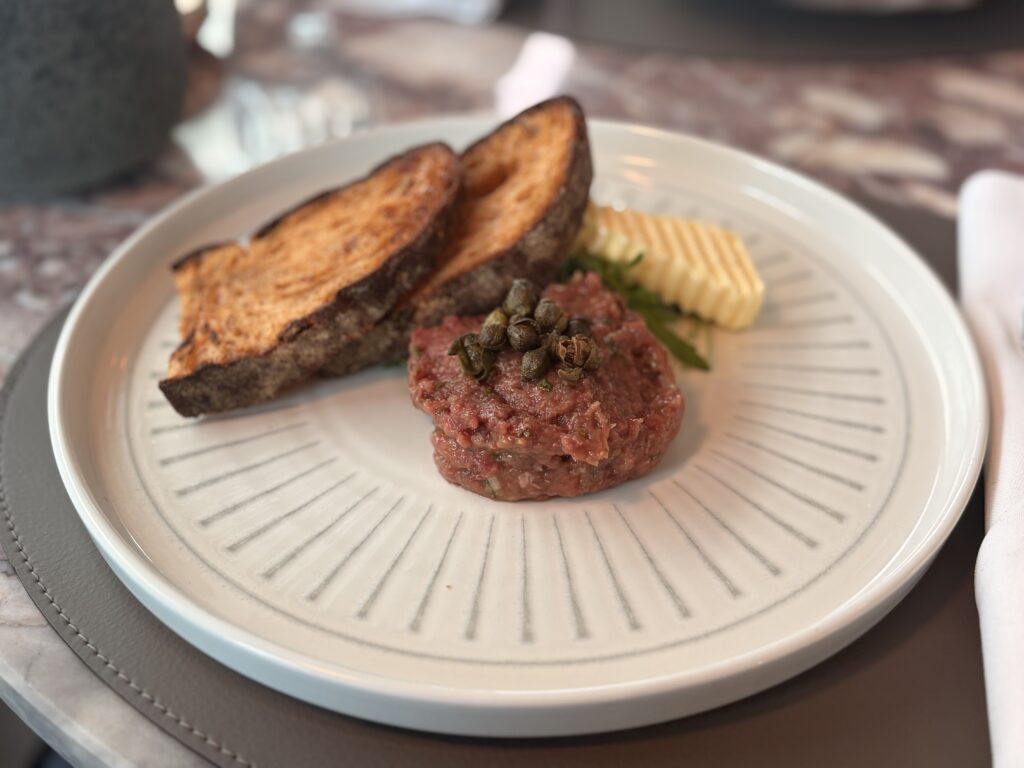
Steak tartare, hand cut and properly seasoned, is a reliable measure of any kitchen, and this one acquitted itself well.
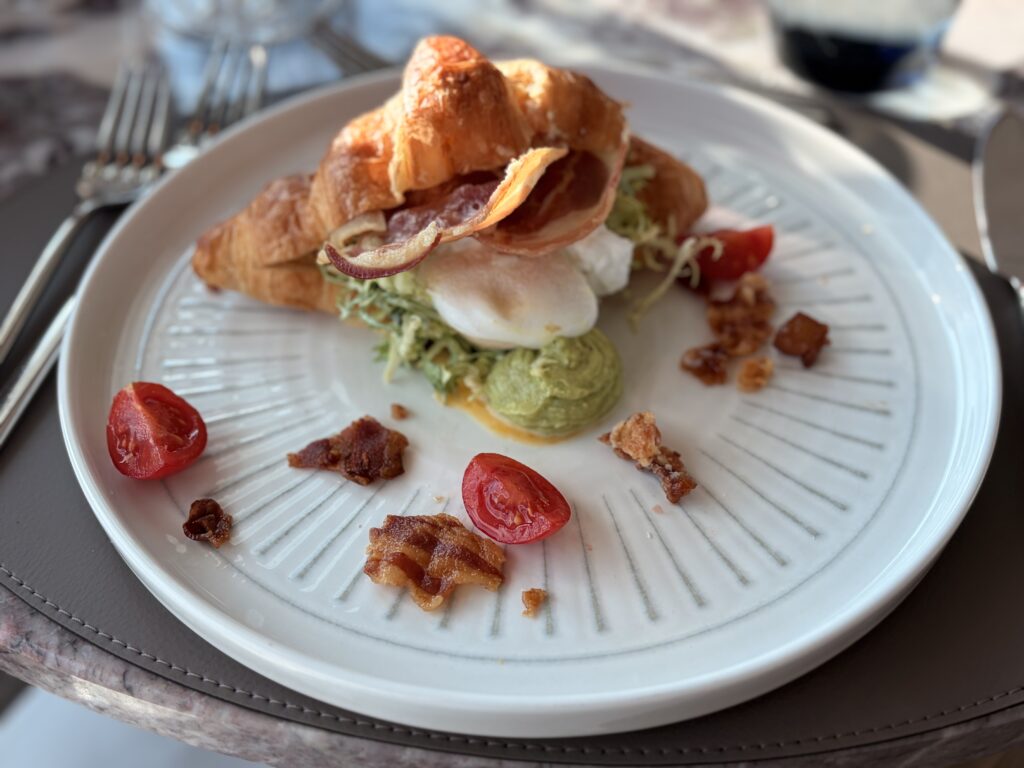
Salade Lyonnaise arrived with croissant in place of croutons, alongside avocado, soft egg, frisée and pancetta.
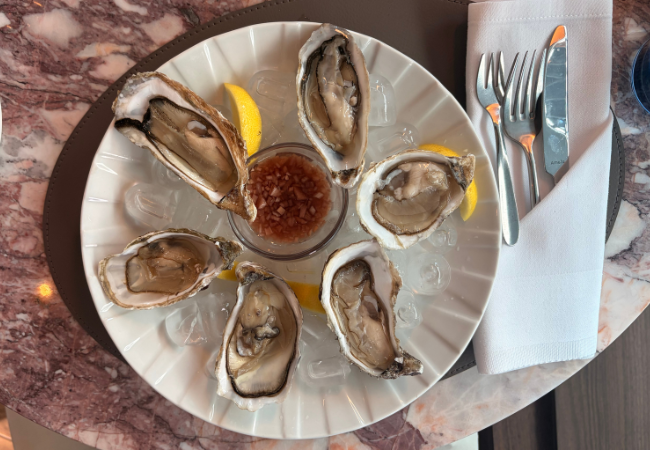
Fine de Claire oysters were served with red wine shallots, the dressing sharp enough to provide contrast without overwhelming the oyster beneath it. They were properly cold and clean tasting, which makes more sense when you remember that by midweek the ship is sitting at Le Havre with the Channel in front of it.
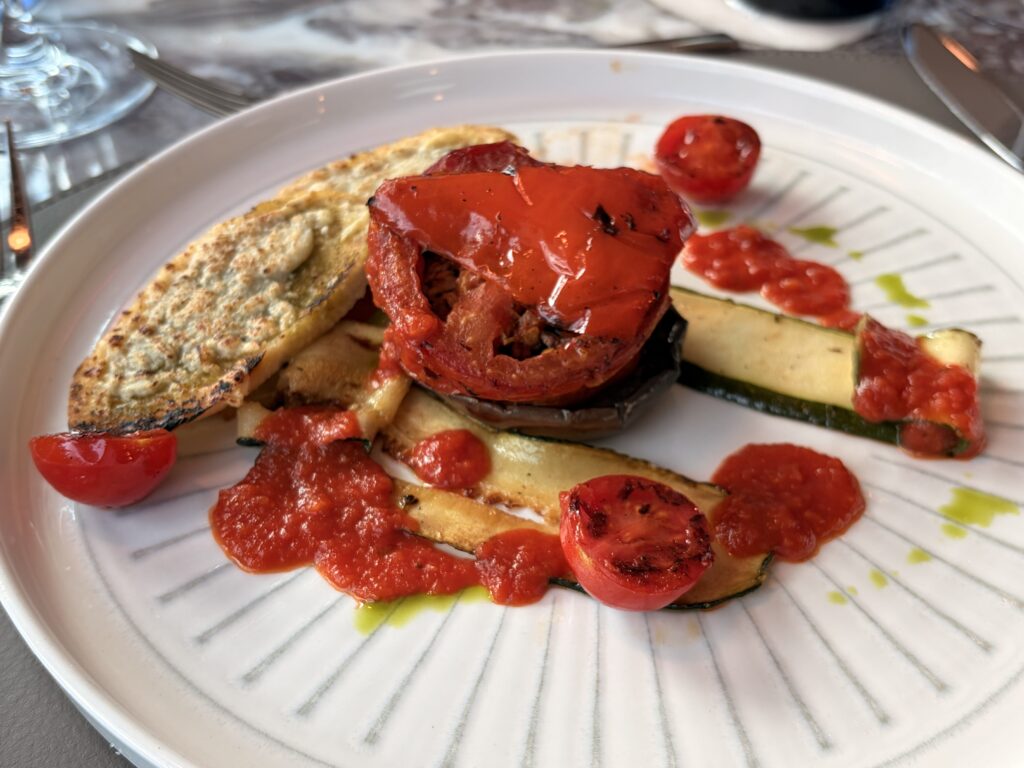
Ratatouille, which sounds like an accompaniment, appeared as a course in its own right, cooked slowly and at length.
Linguine Marseillaise brought prawns and mussels together in a lobster fond with pernod, garlic and herbs. The pernod is the making of it.
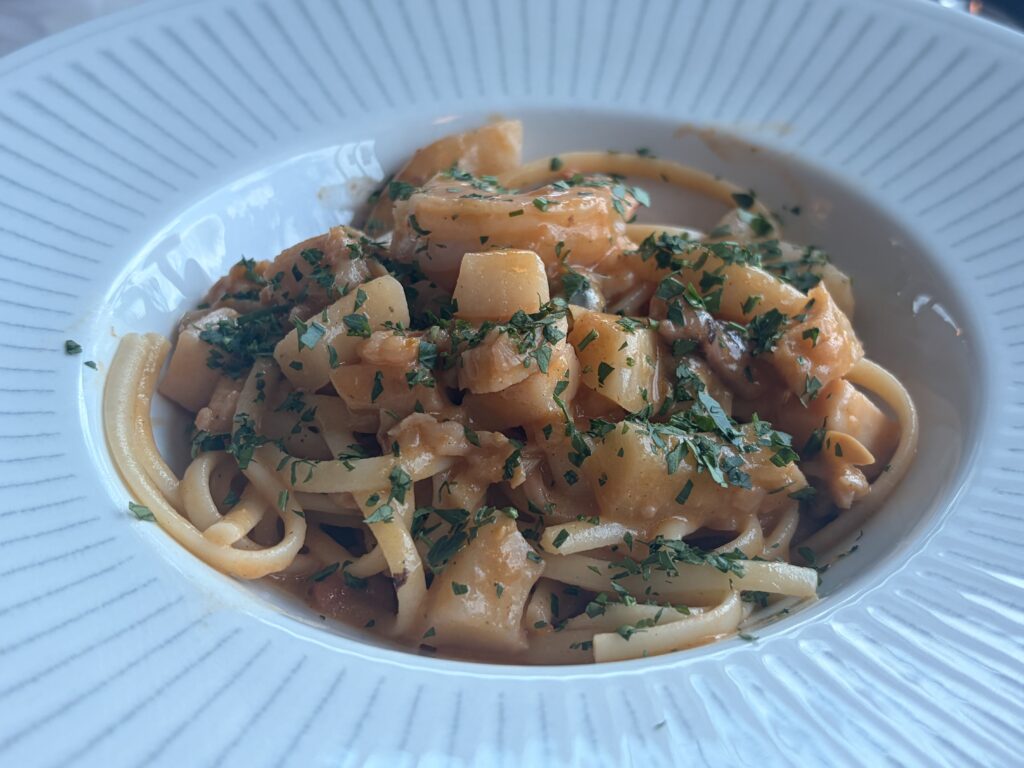
Cassolette de Saint-Jacques onctueuse, scallops and white fish in a creamy sauce with smoked paprika, was an unashamedly comforting dish given a degree of polish.
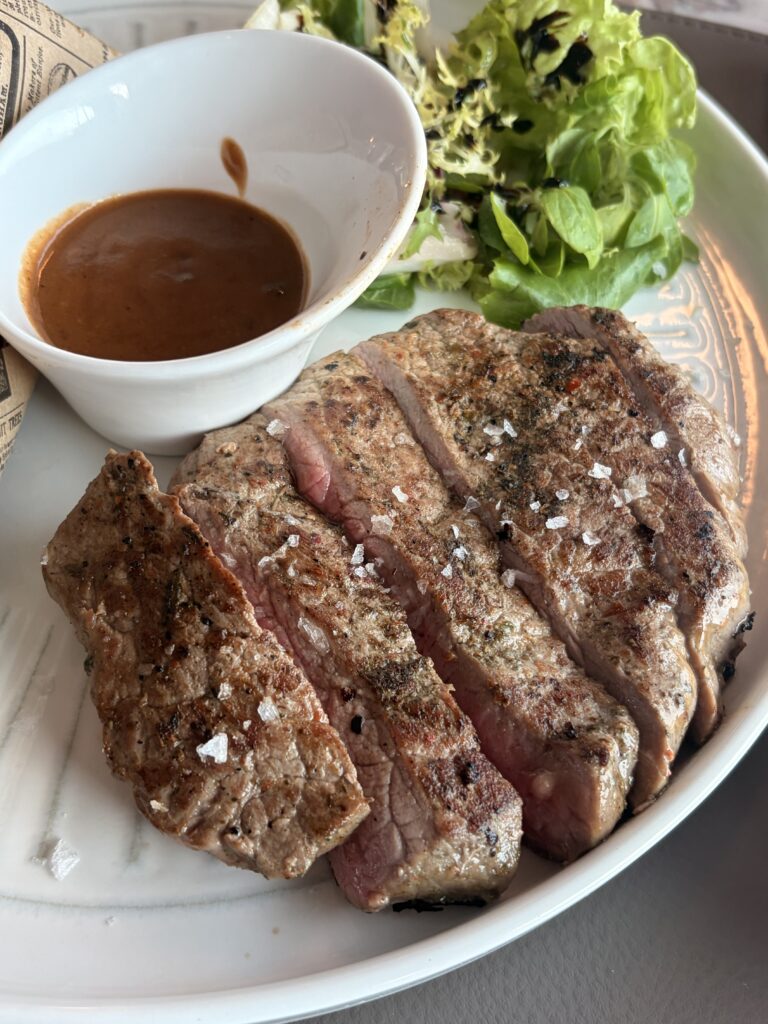
Charolais entrecôte arrived cooked precisely as requested, which cannot be taken for granted.
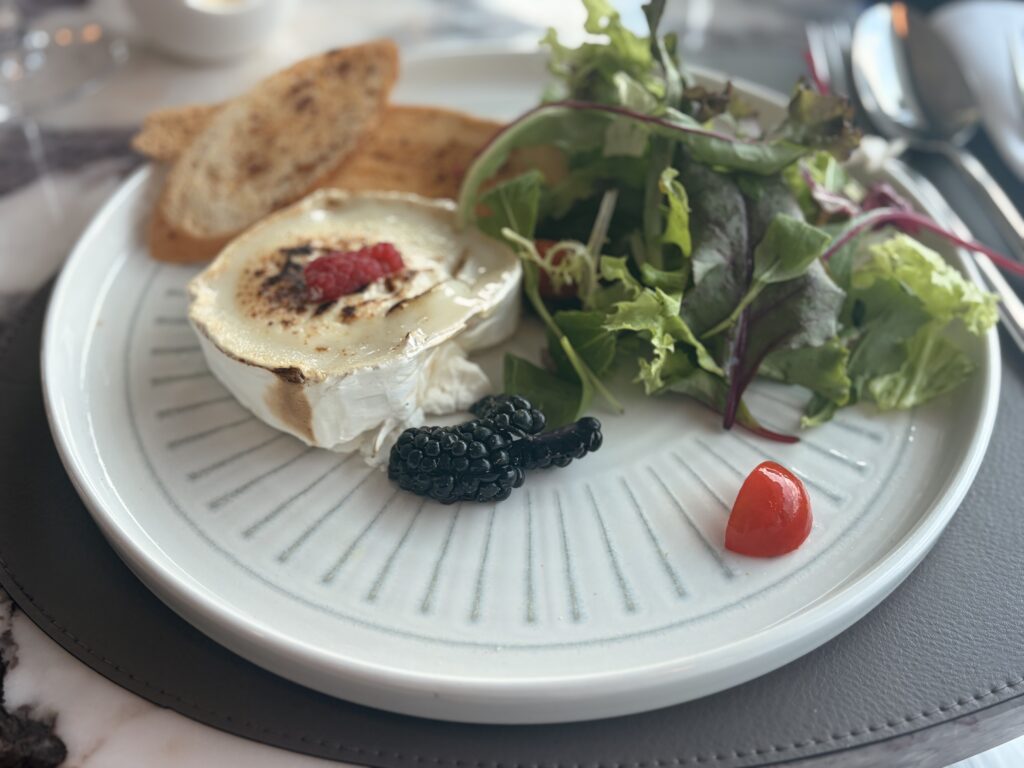
Chèvre Sainte-Maure, the ash coated goat’s cheese from the Loire, was served as a course in its own right rather than folded into a salad.
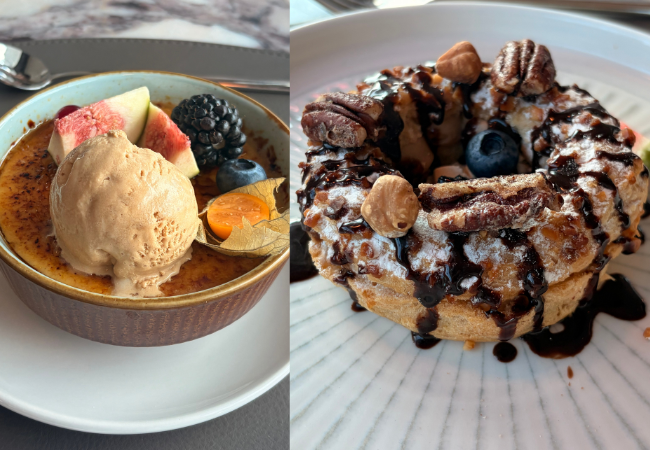
Desserts here were a Paris-Brest and, on a separate evening, a crème brûlée. The Paris-Brest was delightful, and choux pastry with praline cream is a difficult thing to execute properly.
MOMENTS: A Michelin Experience
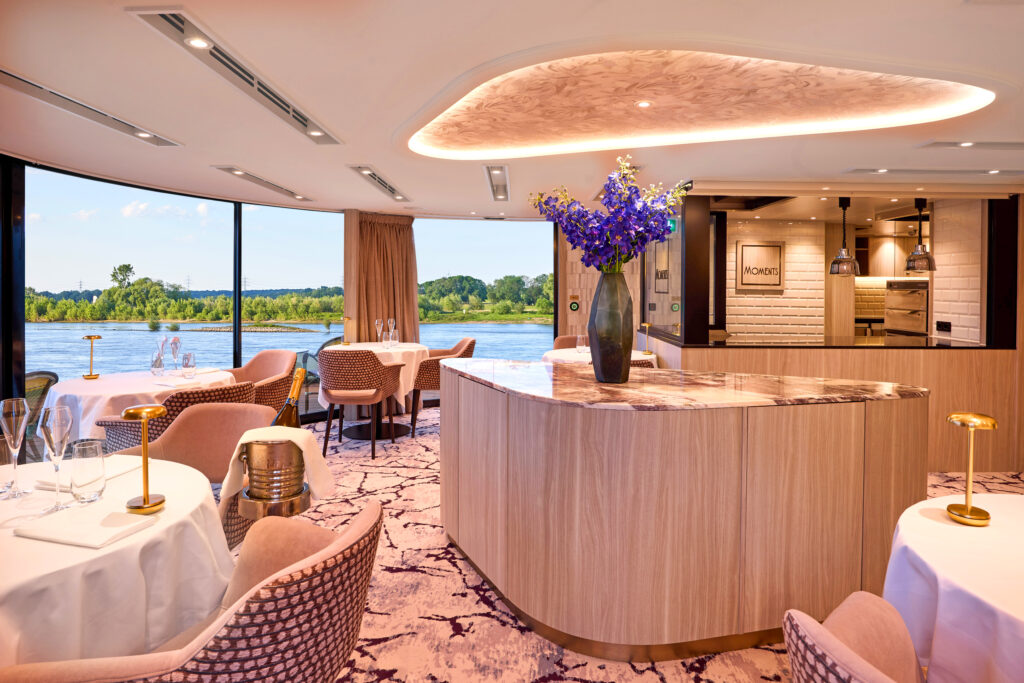
MOMENTS is the reason to be aboard this particular ship. It has only six tables, and consequently needs booking as early as possible. The menu was created for Viva Beyond by David Görne, who holds a Michelin star at Manoir de Rétival, his restaurant overlooking the Seine in Normandy, where he has cooked as his own master since 2009, and VIVA Beyond Suite guests have the opportunity to dine there along the way. His cooking is so thoroughly and unapologetically French, with the occasional detour into something less expected. He devised the menu in collaboration with the ship’s own culinary team, who then execute it nightly out of a galley the size of a domestic kitchen.
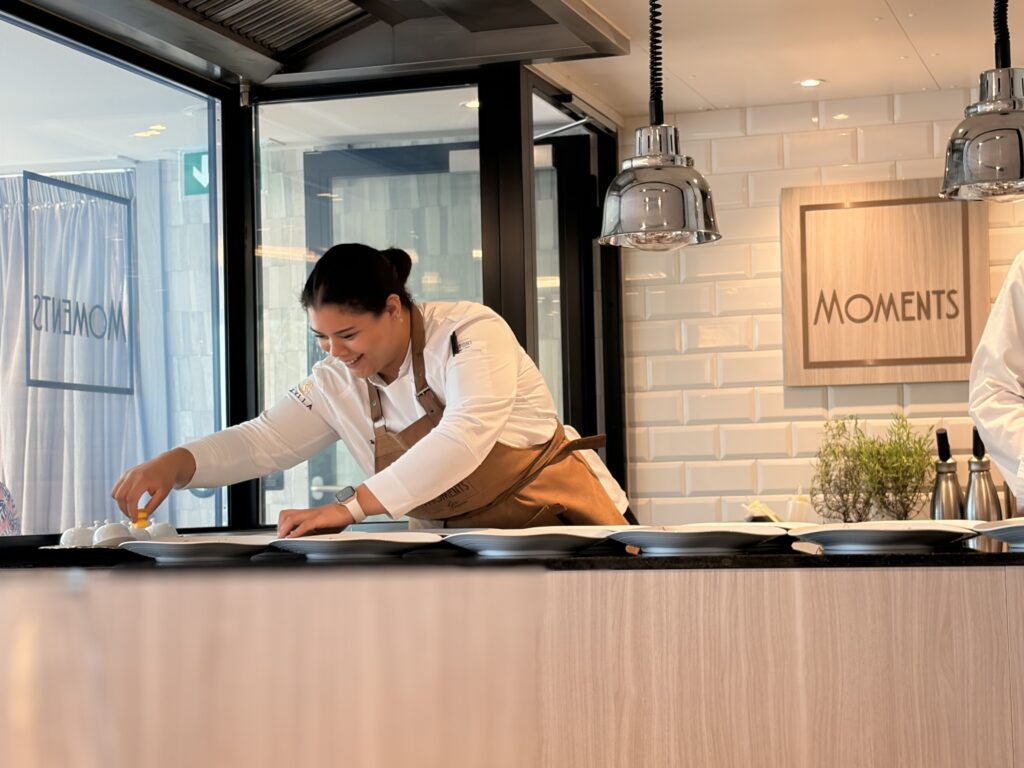
What is striking is that none of this carries a supplement. A seven course tasting menu with matched wines, from a starred kitchen, at no additional cost.
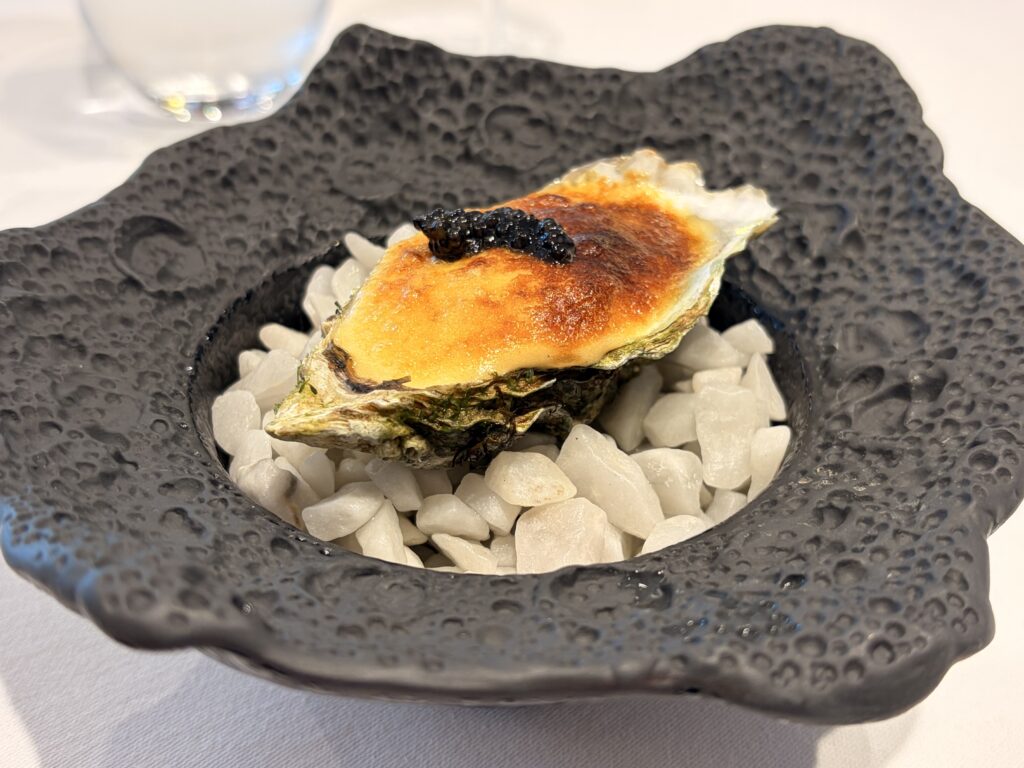
Oyster, champagne, caviar, sautéed spinach and hollandaise sauce. An opening course that establishes the intentions of the evening without ambiguity. The oyster arrives warm, the hollandaise holds, and the spinach beneath it stops the whole thing from being merely rich.
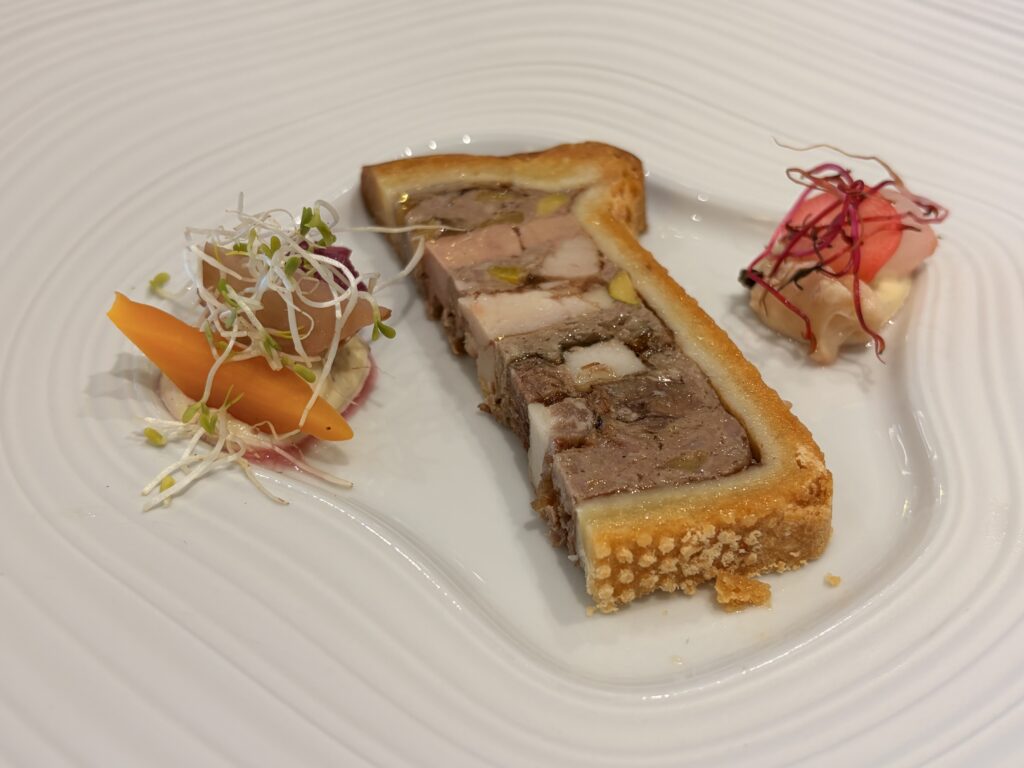
Pâté en croûte made on board, with veal, pork and duck, dried fruit and pistachio. This is one of the dishes Görne showcased when the ship was christened in Paris, and it is easy to see why. A terrine baked in pastry is exacting work: the pastry must stay crisp against a wet filling, the layers must hold when cut, and the seasoning has to carry when served cool. It is also a dish that has quietly disappeared from most menus, which makes finding a proper one on a boat all the more surprising.
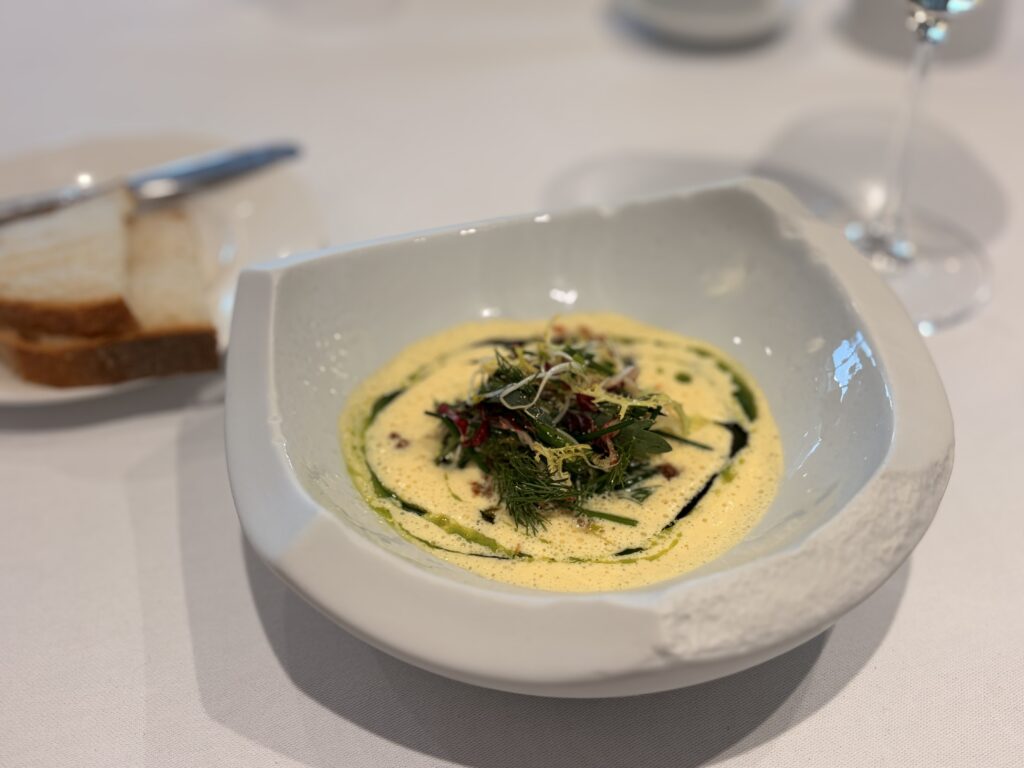
Pike mousseline with vin jaune sauce. This is quenelle territory, and a deliberately old fashioned choice. Pike is a bony, unpromising river fish that is transformed entirely by being worked into a mousseline, and the vin jaune from the Jura contributes a nutty, faintly sherried character that is quite unlike any other wine sauce in the French repertoire.
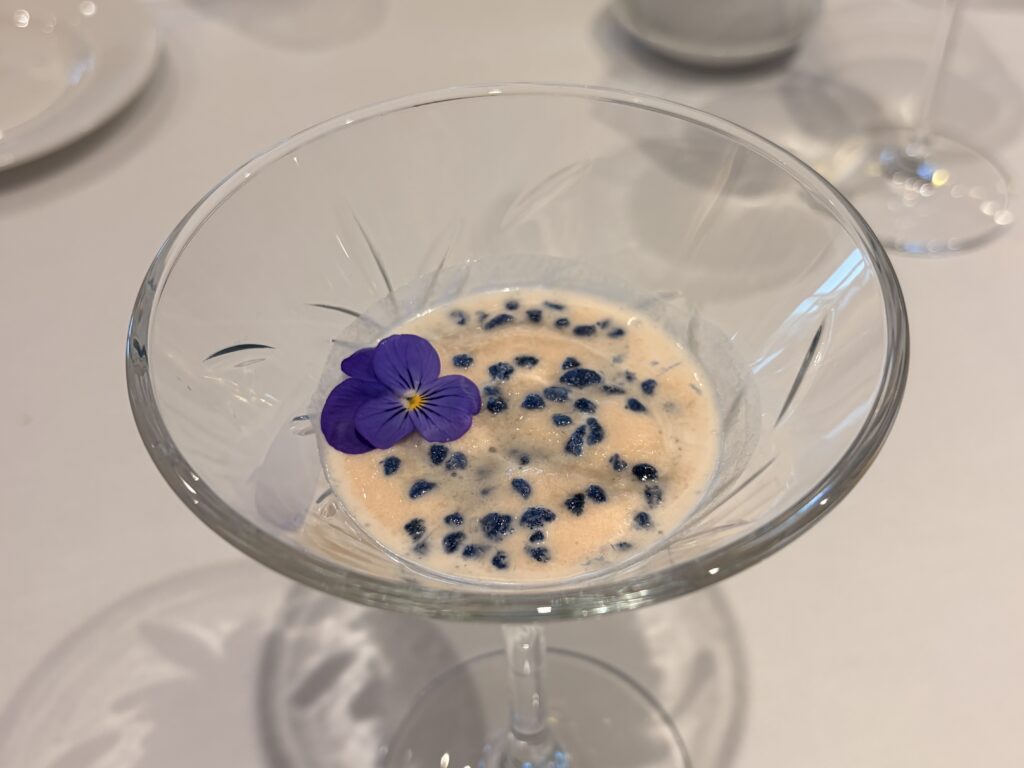
Sorbet au champagne rosé. The palate cleanser, pale pink and barely sweet.
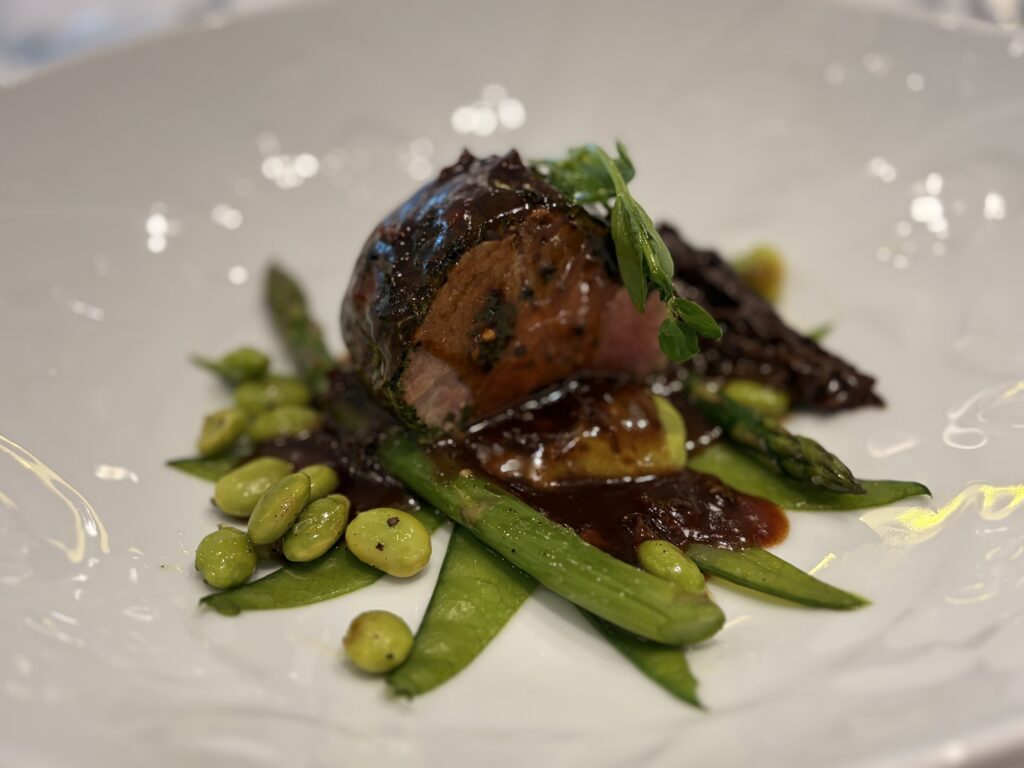
Filet de veau with asparagus and morels. The other dish Görne presented at the christening, and the my favourite plate of the week by a clear margin. Veal tenderloin, cooked precisely, with morels in cream, which remains one of the great combinations in French cooking and needs no improvement.
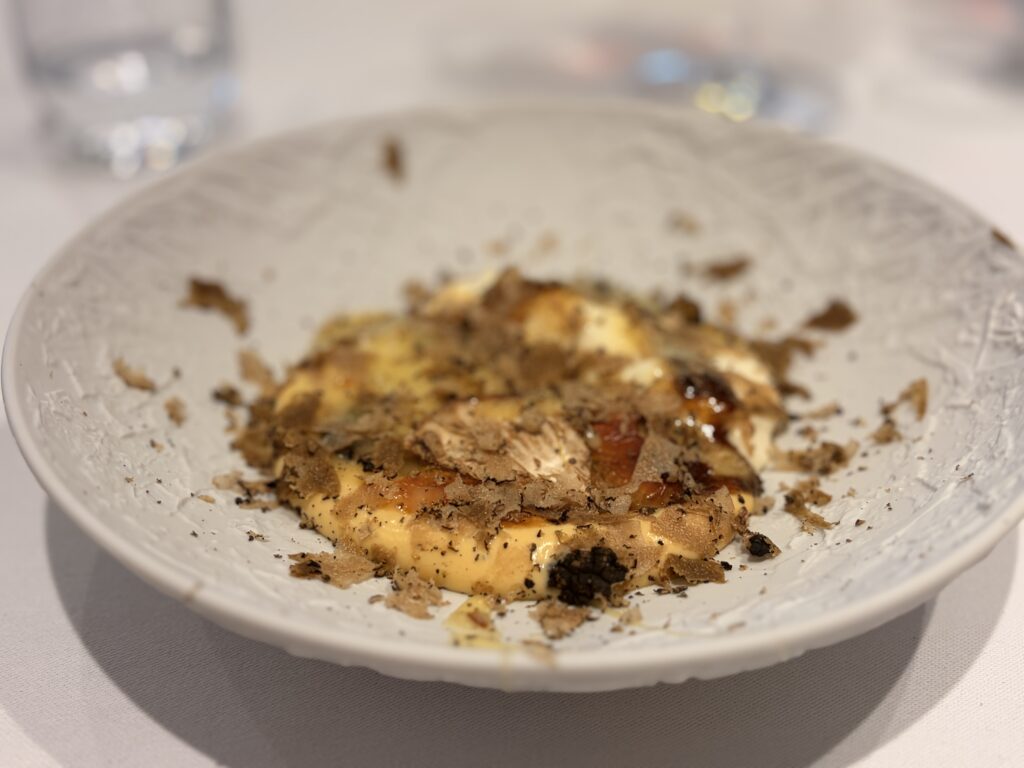
Camembert with truffle and parmesan. A Normandy cheese paired with two things one would not ordinarily place near it, to considerable effect.
White chocolate gateau with red berries. Lighter than the description suggests, which after six preceding courses is precisely what is wanted.
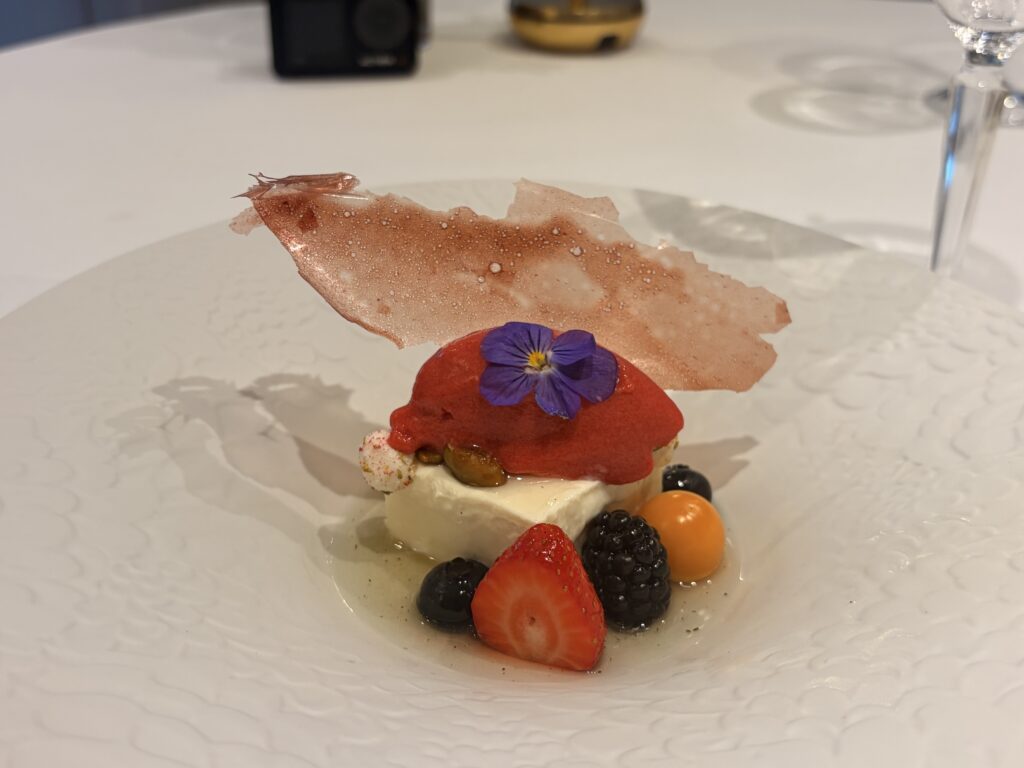
If you sail this itinerary and do only one thing, book MOMENTS on the day you board.
The drinks
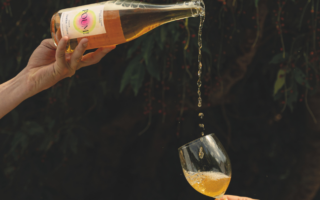
Champagne is offered on arrival, and the wine list is predominantly French and regional, as it ought to be on this river. Wine is brought round at lunch and dinner with someone on hand to advise on what suits the menu, and at MOMENTS each course arrives with its own glass, matched to the dish rather than merely to the colour of the meat. Aperitifs before dinner are taken in the Panorama Lounge, where there is live music and entertainment in the evenings.
The crew
Three restaurants and 112 passengers means the staff move between the rooms, so whoever brings breakfast may well be taking your order in the Brasserie that evening. The practical effect is continuity as preferences carry over from one room to the next without being restated.
Ashore
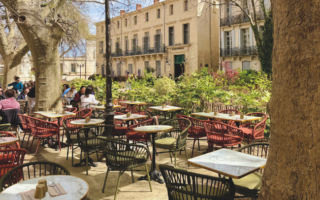
The excursions were where the eating became even more local. The Seine runs through orchard country, and almost every stop had something in a glass or on a plate attached to it.
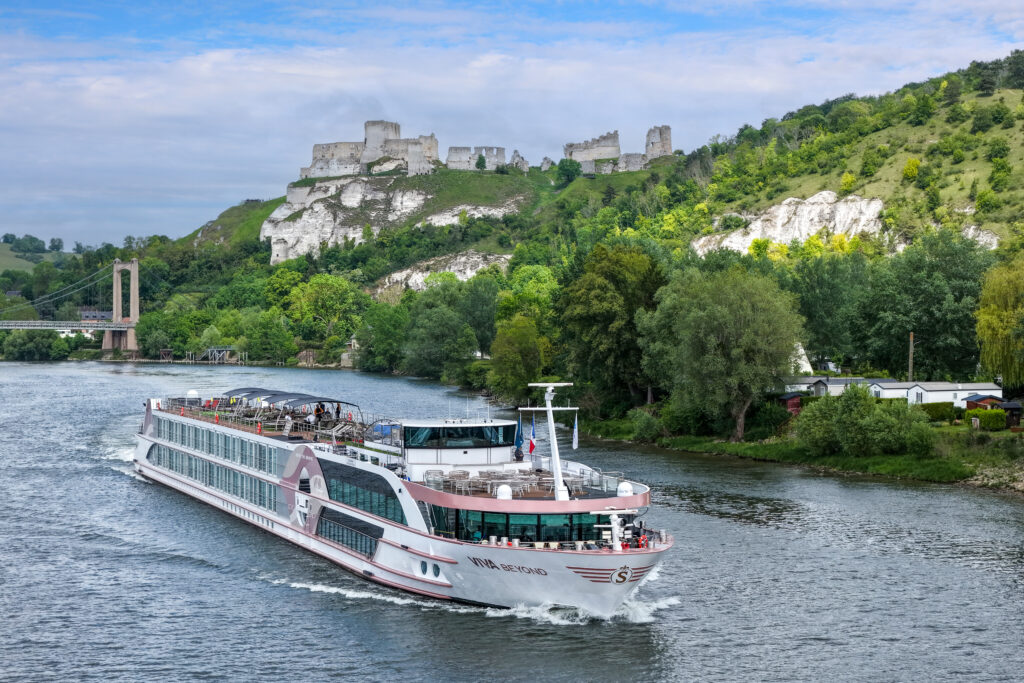
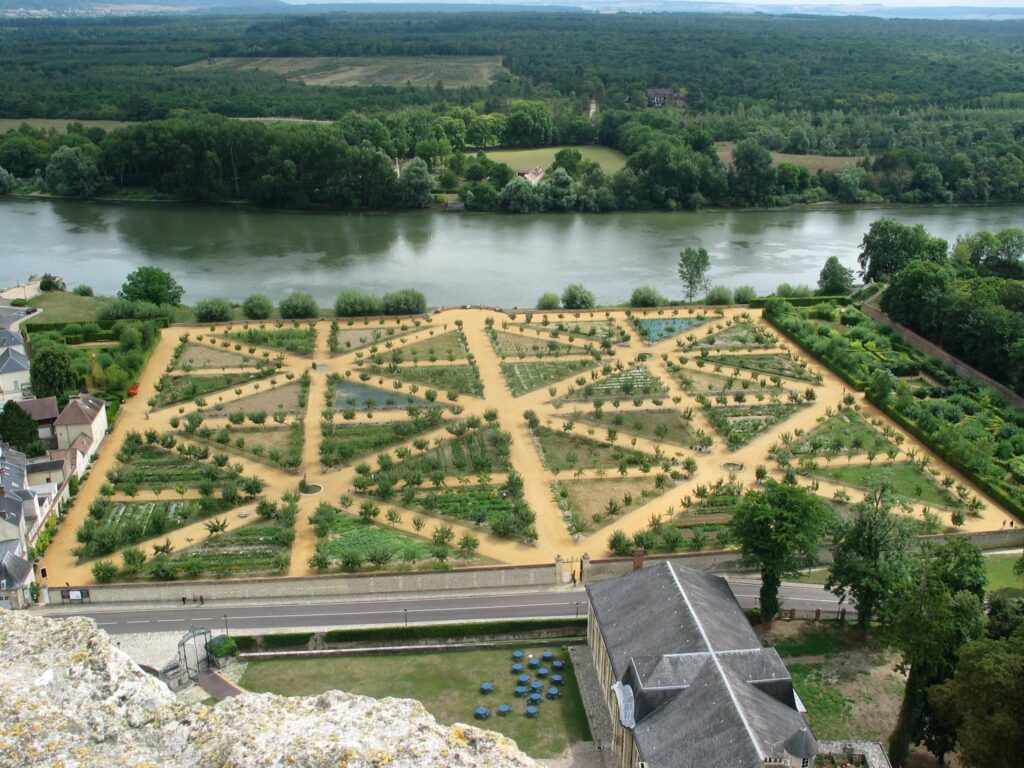
Château de la Roche-Guyon. The village is the only member of Les Plus Beaux Villages de France in the whole of the Île-de-France, and the château is built directly against a chalk cliff, with a twelfth century keep on the ridge above connected to the house below by a passage cut through the rock. The La Rochefoucauld family rebuilt and enlarged it in the eighteenth century, and Turgot and Condorcet argued in its drawing room during the Enlightenment. Rommel then installed his staff here in 1944 and had bunkers dug into the cliff, which are still there. The part that matters for present purposes is the potager, a three hectare kitchen garden restored to its original eighteenth century plans and still producing organic fruit and vegetables that are sold on site. I drank a jus de pomme pressed from the local crop, and it made the point about the region more efficiently than any amount of reading had.
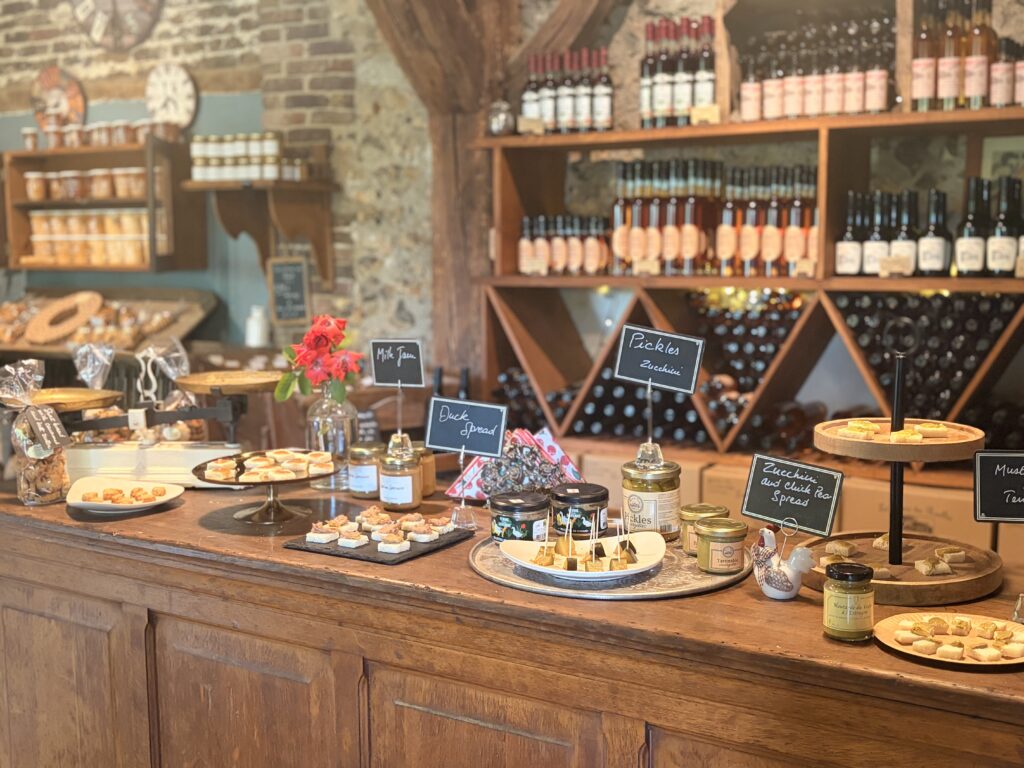
La Ferme des Ruelles. A working family apple farm at Tilly, not far from Giverny, run along resolutely organic lines by the Galmel family, who talk about soil and earthworms with the seriousness other people reserve for vintages. The orchards produce cider in three registers, sweet, semi-dry and dry, along with apple juice, sparkling apple and the eau-de-vie that becomes calvados. There is also a shop attached selling the family’s own preserves and mustards. If you want to understand why Normandy is called the orchard of France, this is a more persuasive half hour than any museum.
Étretat. The chalk cliffs here are among the most painted views in France, and Monet returned to the arch and the needle repeatedly, from the beach, from the clifftop and from a boat. Standing on the shingle looking at the Porte d’Aval, you understand the appeal immediately: the rock is so white and the sea so grey-green that the whole thing looks slightly artificial. I ate a crêpe in sight of it, which is the only sensible way to eat one there.
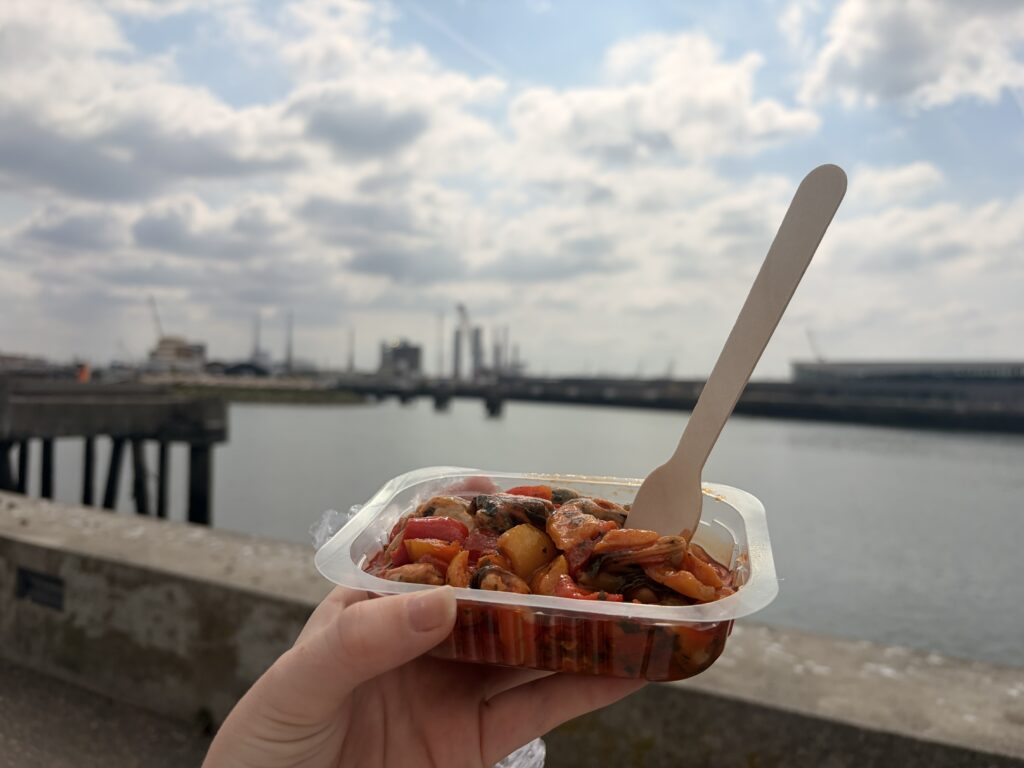
Le Havre. The port was almost entirely destroyed in 1944 and rebuilt by Auguste Perret in reinforced concrete on a rigorous grid, an act of architectural conviction that took decades to be forgiven and is now actually UNESCO listed. It is a strange and rather bracing city to walk around during a week of half-timbering and chalk. Lunch was mussels, which is the obvious order on reaching the coast, and the correct one.
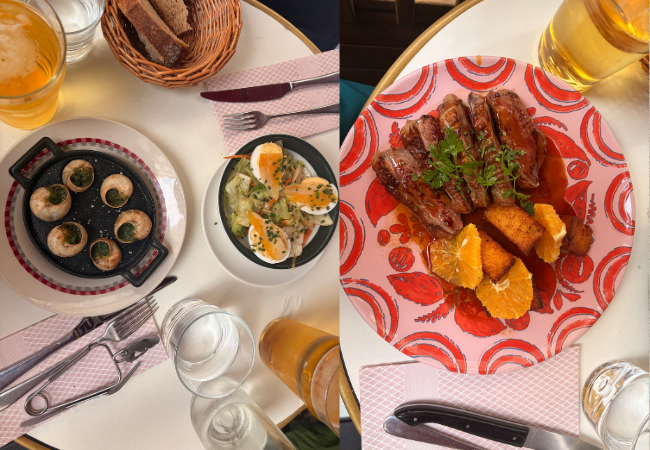
Bistrot des Fables, Paris. Back where the week started, in a proper, Bib Gourmand bistro rather than a dining room. Escargots in garlic butter, then demi magret de canard, half a duck breast cooked pink and sliced. Snails and duck in Paris felt like the appropriate way to close a week of French food on a French river.
Three restaurants across seven days, and I never ate the same dish twice unless I chose to, which was always a pleasure. What impressed me was less any individual plate than the breadth of the operation: the Brasserie producing quality bistro dishes such as tartare, entrecôte and pasta to order, Riverside feeding the entire complement at once without ever resembling catering, and MOMENTS delivering a starred chef’s tasting menu to twelve people a night in the stern.
For any traveller who plans a holiday partly around what will be on the plate, this itinerary repays the attention. Three recommendations for anyone booking it: reserve MOMENTS on the first day, take the cheese course in place of the dessert at least once, and resist the temptation to default to Riverside every evening simply because tables don’t require reservations.
The writer travelled as a guest of Viva Cruises aboard Viva Beyond on the seven night Pure Culture Along the Seine itinerary.
Lead photo credit : default
Share to: Facebook Twitter LinkedIn Email
More in Cruise, Normandy, Paris, Seine
Related Posts