A Foodie Weekend in Montpellier
Steve Turnbull discovers why Hérault’s capital is one of southern France’s most exciting gourmet destinations.
Montpellier may not be the first name that comes to mind for a gourmet getaway, but it should definitely be on your radar. Hérault’s chic and charming capital offers fine dining of the highest order, an array of artisanal producers and plenty more to tempt your taste buds. It’s surprisingly rich in history too, and perfect for those who love the ambience of the Med as much as its food.
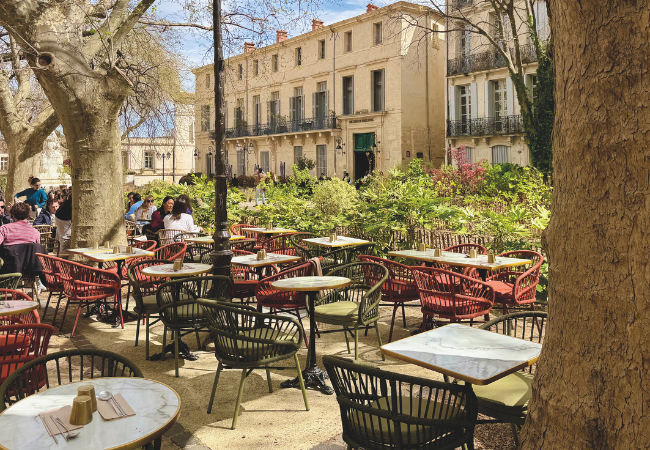
The tourism infrastructure in the city has developed significantly in recent years, accommodation included, but there’s nowhere better to stay than the Hôtel Richer de Belleval, so my wife and I were delighted to be hosted there. Located at the heart of the Écusson, Montpellier’s historic centre, on the Place de la Canourgue (the city’s prettiest square), the hotel has a long history. It was a 17th-century hôtel particulier owned by Pierre Richer de Belleval (1564-1632), a pioneering French botanist and royal physician best known as the founder of the Jardin des Plantes in Montpellier, one of the oldest botanical gardens in Europe.
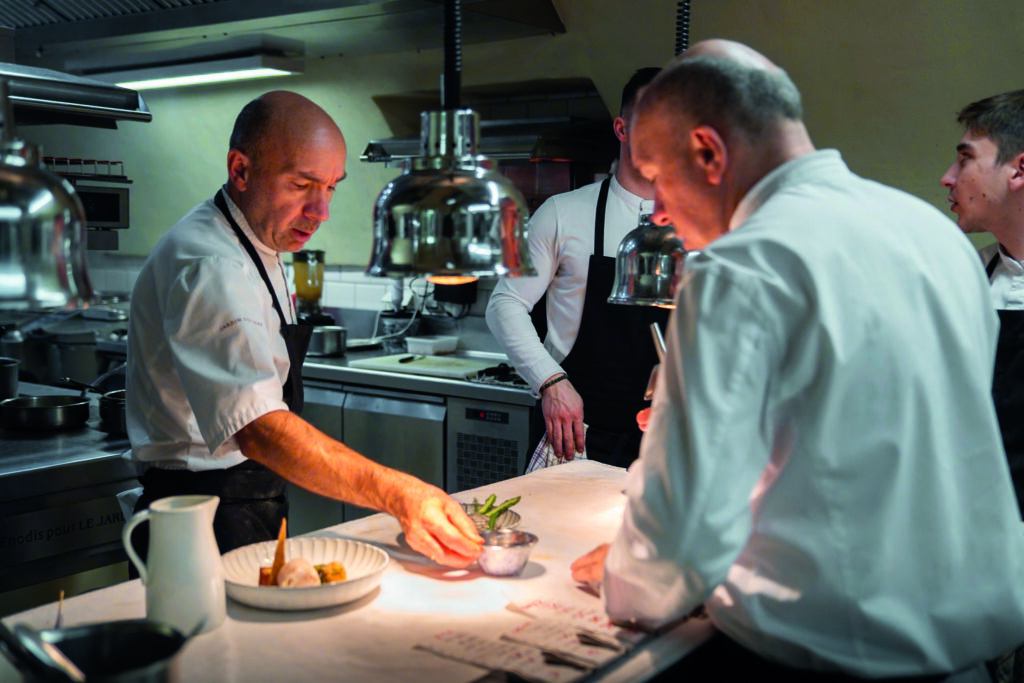
Later, the building became the Hôtel de Ville (City Hall), and then stood derelict for many years before it was bought by the GGL-Helenis group in 2016. It was then transformed into a luxury five-star Relais et Châteaux boutique hotel, which opened its doors in 2021 with illustrious chefs Jacques and Laurent Pourcel (locally born twins) taking the helm in its restaurants.
Following a warm welcome, we settled into our wonderful room overlooking the square, then made a tour of the hotel. It definitely has the wow factor-timeless French elegance, complemented by contemporary styling with a hint of eccentricity, courtesy of designer Christian Collot.
In the evening, we ambled across the city (the centre is easily walkable and extensively pedestrianised, but you can also take a tram) to the L’Arbre brasserie, housed in the L’Arbre Blanc apartment building, a neo-futurist reinterpretation of the traditional folie montpelliéraine-the extravagant pleasure houses once built by wealthy Montpellier families on the edge of the city. The highlights of our meal were my starter of tielle, a saffron-coloured pie with a scalloped crust from the port of Sète, traditionally filled with squid or octopus in a spicy tomato sauce, and the dessert of chilled baba au rhum. Afterwards, we took the lift to the bar on the 17th floor and enjoyed panoramic views stretching all the way to the Mediterranean.
The next day, we had lunch at the bistronomique La Canourgue restaurant in the hotel, and the interior courtyard setting couldn’t have been more delightful.
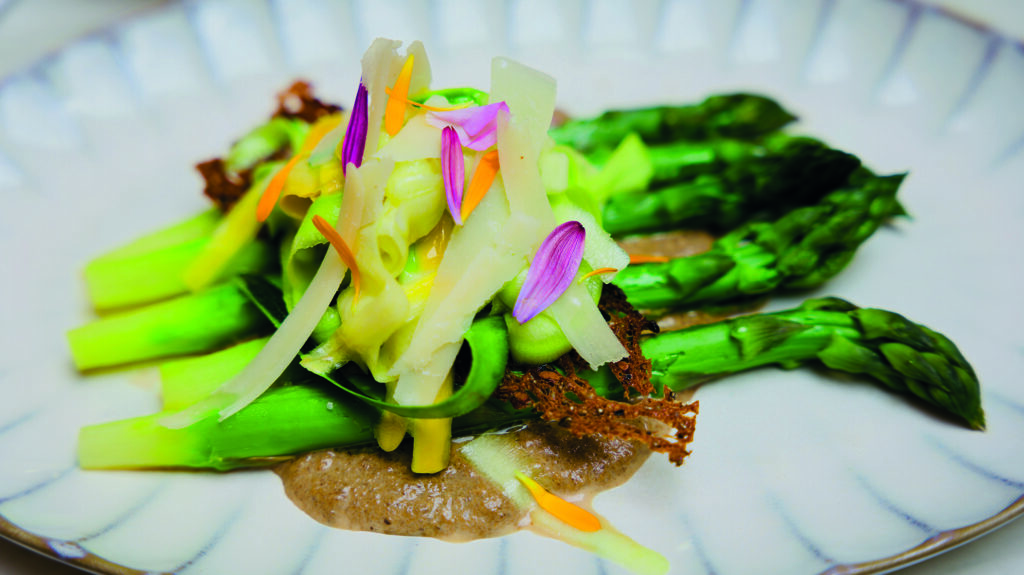
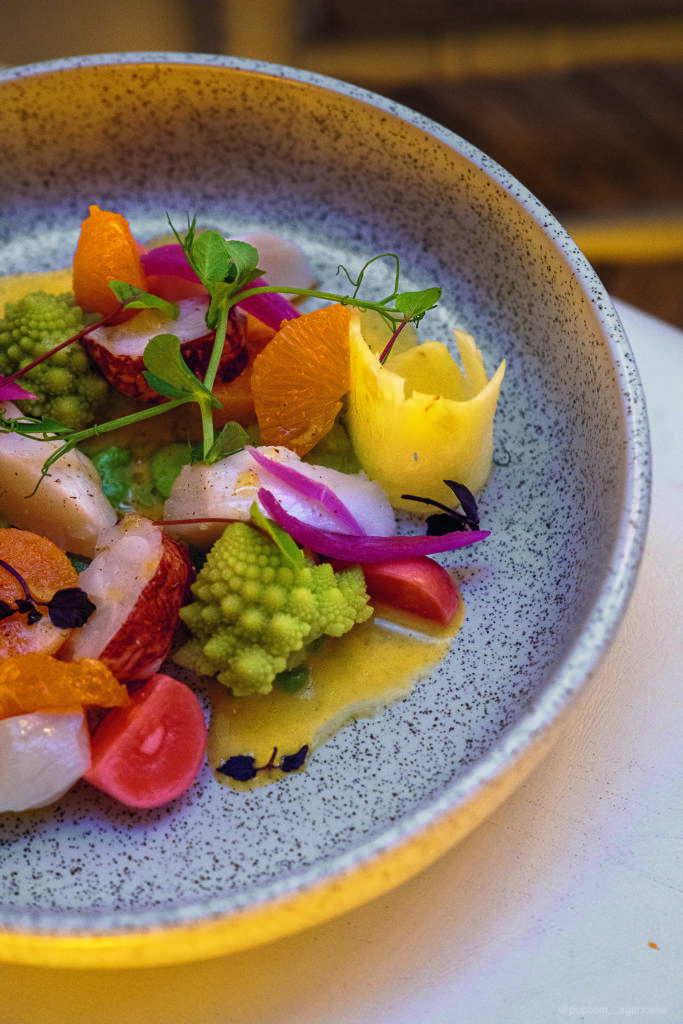
Unfortunately, there were no Tarbouriech oysters (from the nearby Étang de Thau) left for the first course, but my second choice of green asparagus, morel cream and Parmesan espuma was so pretty I couldn’t decide whether to gaze in admiration at the artistry or dive in. This set the tone for the whole meal, which was followed in my wife’s case by a delicious poached monkfish medallion with bouillabaisse raviole and Provençal-flavoured emulsion. As for the ending, I can confidently say that my crispy vanilla-caramel finger was as good a dessert as I’ve ever tasted in France.
The style of cuisine at Richer de Belleval is modern Mediterranean, and the food is truly exceptional, especially at the Michelin-starred, Jardin des Sens restaurant. The hotel also has a Michelin Key, recognising the exceptional quality of a stay there, described in the Michelin Guide as a “soulful escape rooted deeply in time and taste”.
The next morning, after a richly satisfying breakfast in the courtyard, we met up with Valérie Paduano from the Montpellier Tourist Office for a gourmet tour of the city. We began at the Rêves des Pains boulangerie, just a stone’s throw from the Place de la Canourgue. The place had barely opened, but already a queue was starting to form in the street outside – always a good sign.
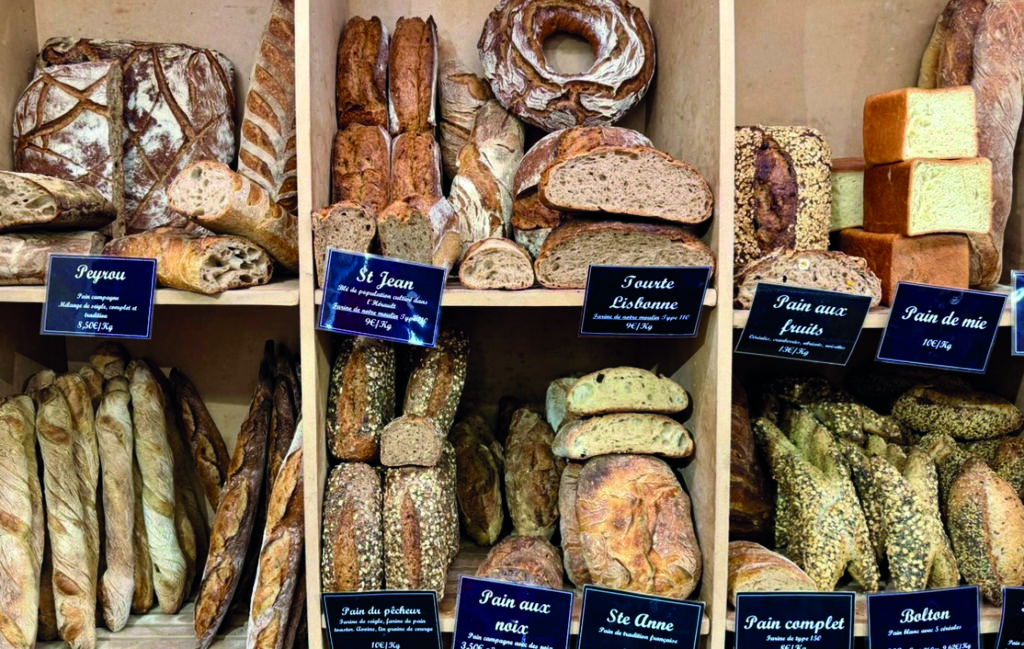
Inside, as I watched one of the bakers feeding loaves into the 200-year-old wood-fired oven, the sweet and savoury aromas from countless artisanal products wafted over me. No wonder the bakery won a competition for the best boulangerie in France in 2015 and supplies the Richer de Belleval with its bread and pastries.
Afterwards, our tour continued through the cobbled streets and hidden squares of the centre, overlooked by sandy-coloured Haussmannian buildings, bathed in spring sunshine. A short while later, at the bottom of bustling Rue Saint-Guilhem, which is lined with cafés, eateries and more artisanal food producers, we came to recently opened chocolatier Õme. Õme means ‘two’ in Nahuatl, the language spoken by the Aztecs, highlighting the simplicity of the ingredients used-just premium cacao, sourced ethically from suppliers in South America, and sugar.
A few doors further up the street, we arrived at award-winning Biscuiterie Saint-Guilhem, where we met lovely owner Laetitia Loewert and marvelled at her colourful sablés and savoury biscuits. The shop sells pâtes de fruits (fruit jellies) as well as other kinds of confectionery too, and a whole range of prettily presented jams, including Raspberry and Violet, and Rhubarb, Apricot and Passion Fruit. Spread some on a slice of brioche for breakfast or any time of day.
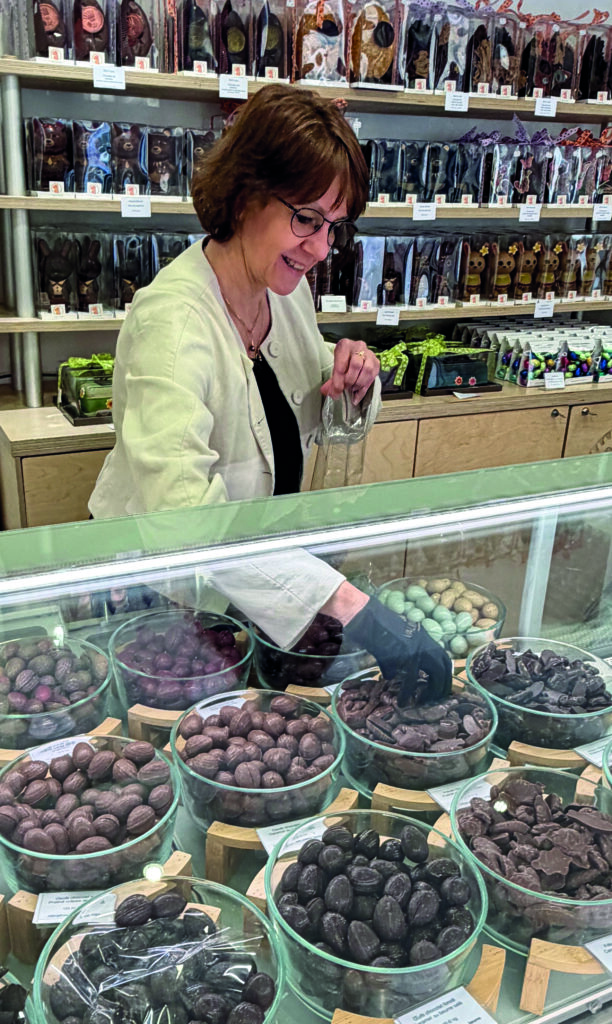
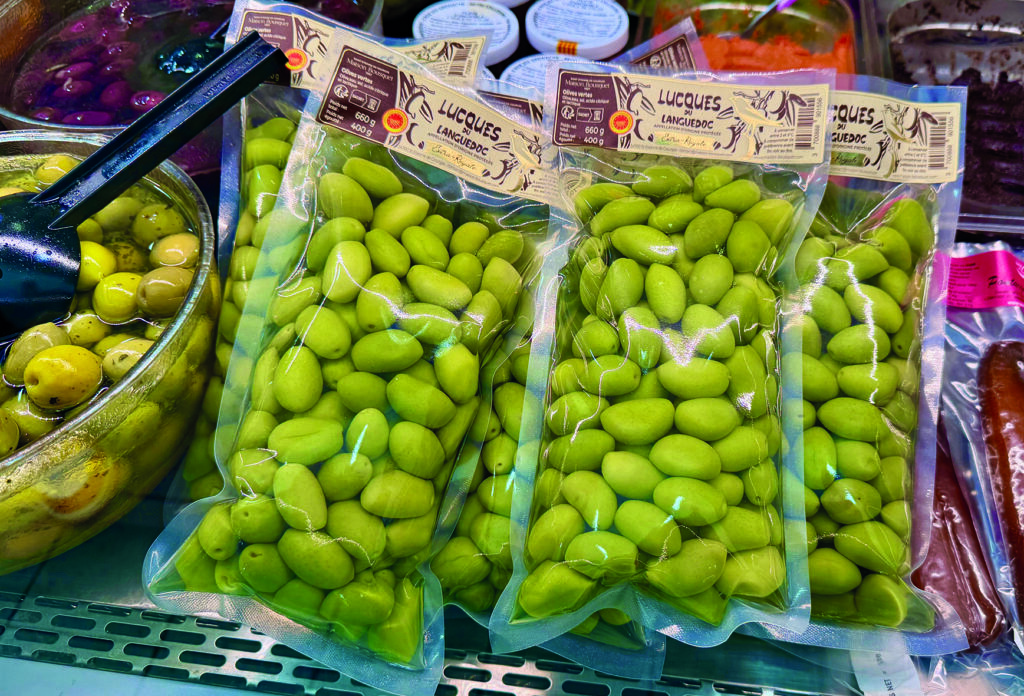
Next up was nearby Fromagerie Origine, where we tried some Tomme de Brebis, a hard and salty sheep’s cheese with a pleasant tang from the neighbouring Aveyron region. Then at Les Halles de Castellane, a lively covered market popular with locals and visitors, I bought some Lucques olives, nicknamed the Languedoc’s ‘green diamond’ thanks to their pointed shape and prized citrus-almond taste. Just around the corner, we found funky pâtisserie Did’z, whose mango tartlets spiked with piment d’Espelette are a must, before visiting a more traditional chocolatier in the gorgeous Église Saint-Roch quartier. Named after owner Thierry Papereux, a member of the prestigious French Academy of Chocolate and Confectionery, it sells every type of gourmet chocolate you could imagine, as well as macarons and other fancies.
A feast for history lovers
Our final stop was Le Panier d’Aimé, an épicerie fine selling gourmet products from the Grand Midi (the name translates poetically as ‘basket of loveliness’). Inside, charming owner Marc Selle and his team offered us charcuterie and a white wine (Les Rocs Blancs to taste from local organic estate Domaine de Roquemale. Made from seven grape varieties, including Piquepoul, it was beautifully fresh and fruity on the palate with an anise finish. Later, we met Bruno Martinez for a guided tour of the Écusson and its main attractions, including the Arc de Triomphe/Porte du Peyrou (the views from the top are superb), which celebrates the achievements of Louis XIV, and the medieval Jewish baths (Le Mikvé). Our tour concluded with the iconic Place de la Comédie, known by city folk as L’Oeuf (The Egg) due to the shape of the former traffic island that is imprinted on the square.
At apéro hour, we enjoyed cocktails in the hotel’s Élytre bar with its fabulous beetle-inspired décor before sauntering through the streets to Le Clandestin, a tapas bar where the ambience was chilled and convivial, with live music from a jazz pianist. Our trip may only have lasted a weekend but we came away with a whole new appreciation of what Montpellier has to offer as a gourmet destination.
GETTING THERE
Montpellier Mediterranée Airport is 8km (10 minutes by car) from the city centre.
From Paris 3h 15m; Lille 4h 45m; Marseille 1h 30m; Lyon 1h 35m; Nice 4h 10m.
Share to: Facebook Twitter LinkedIn Email
More in Montpellier, Occitanie
Related Posts