A Foodie Guide to Authentic Southwest, Night Markets and Gascon Traditions
Discover Authentic Southwest, a region spanning Tarn-et-Garonne, Lot-et-Garonne and Gers, where local markets, age-old know-how and exceptional produce make for a mouthwatering visit…
Straddling Occitanie and Nouvelle-Aquitaine, a new destination is quietly asserting itself as the beating heart of French art de vivre. Welcome to Authentic Southwest, a region that brings together the departments of Tarn-et-Garonne, Lot-et-Garonne and Gers, and distils everything we love about French life: conviviality, tradition, exceptional produce and a deep respect for the land.
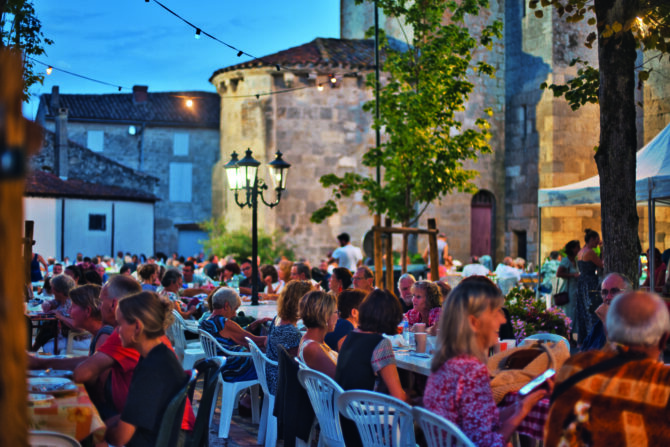
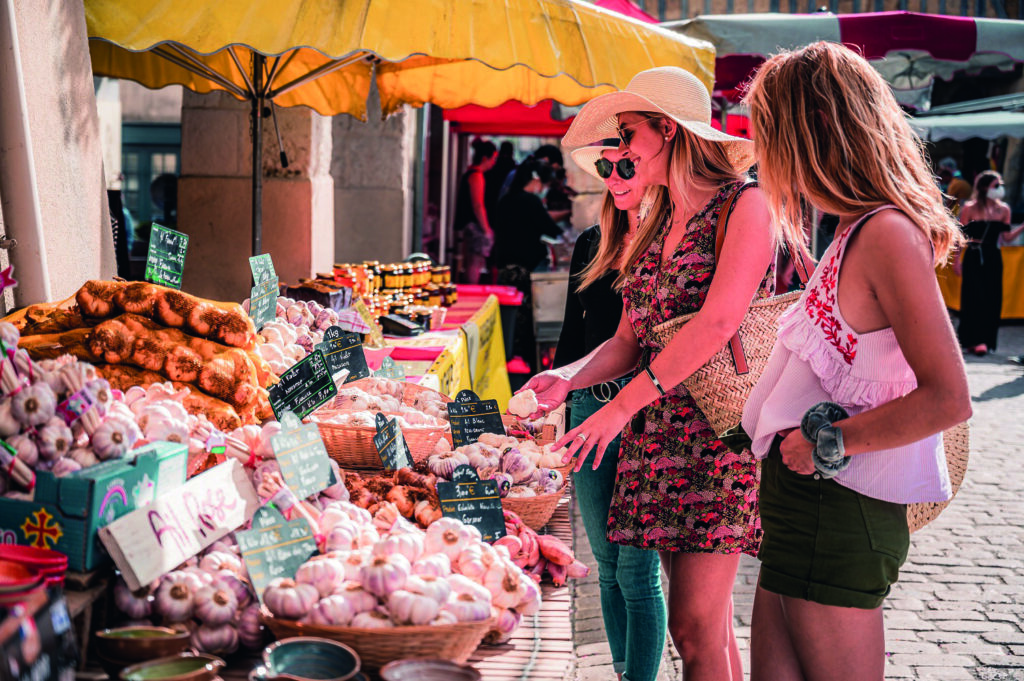
Nowhere is this more evident than at the Marchés des Producteurs de Pays, open-air markets that take place across the region-in summer, you’ll find evening markets in even the tiniest villages. These community-run events feature local producers who sign up to a national charter guaranteeing quality, freshness and transparency. They’re much-loved by locals and visitors alike – and with good reason. They’re not just a place to buy produce; they’re an event in themselves, where you can compose a meal from various stalls and sit down to eat it, often to the soundtrack of live music. You’ll find fruit, vegetables, meats and cheeses aplenty, as well as regional stars such as pruneaux d’Agen and local wines.
Meanwhile in Frespech, at the Marché paysan à la ferme on Friday mornings, around 20 local producers set up stall throughout summer, offering the best local produce and a chance to sit and eat while enjoying musical entertainment. Over in Gers, night markets are popular, such as the one at Lectoure, which runs from July 10 to August 21 from 6.30pm to midnight, with a lively mix of musical entertainment, exhibitors and, of course, street food. It’s a feast for all the senses and a great introduction to the culinary culture of Authentic Southwest. Let’s take a closer look at some of the signature products that define this delicious corner of France.
The Pruneau d’Agen IGP is the undisputed star of Lot-et-Garonne. Made from Ente plums, which thrive in the local climate, these dark, chewy fruits are oven-dried slowly for up to 24 hours to concentrate their natural sugars and soften their texture. It takes more than three kilos of fresh plums to produce just one kilo of prunes – a statistic that speaks volumes about their intensity. Rich in fibre, potassium and vitamin B6, they’re a darling of athletes and gourmets alike, equally brilliant in savoury dishes, such as braised duck, and in desserts. Prunes are a shapeshifter in the kitchen: sublime paired with blue cheese or Armagnac, folded into a clafoutis, or enjoyed simply as a snack.
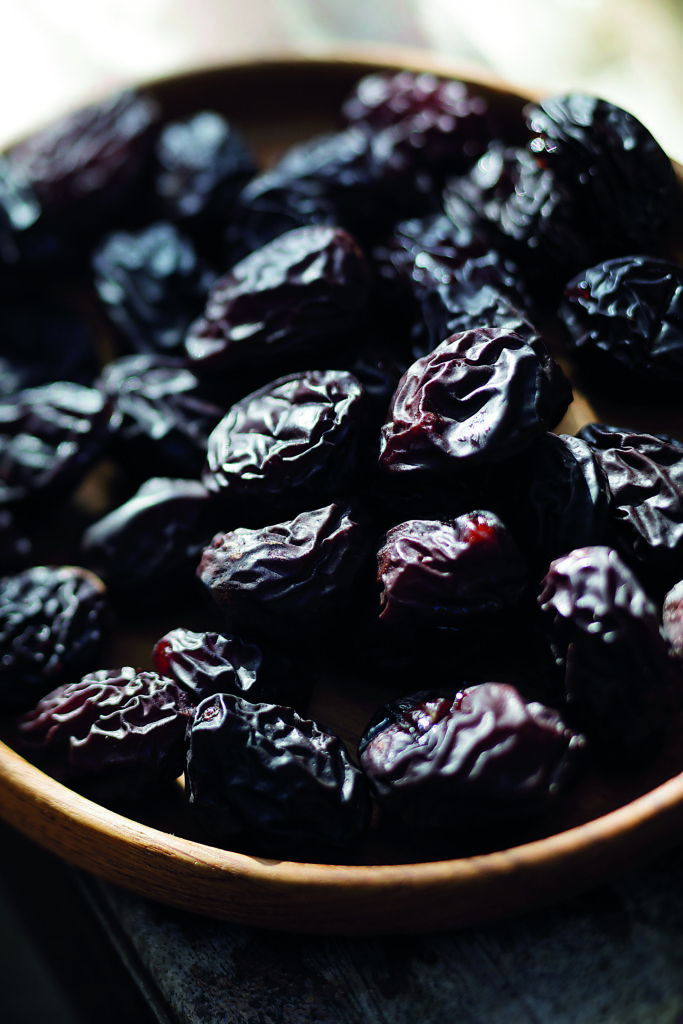
For a deeper dive, visit the Prune Museum in Lafitte-sur-Lot, which traces the fruit’s journey from monastery orchards to global delicacy. In Agen, prunes are more than a treat they’re part of the city’s DNA. Pick some up at the covered market on Place Durand, sample them coated in chocolate or steeped in Armagnac, or take a jar of jam home as a sweet souvenir. Another local gem is the hazelnut. In the gently rolling hills around Cancon, Lot-et-Garonne produces nearly 70% of France’s hazelnuts. Varieties such as Corabel, Pauetet and Ennis flourish here, yielding golden kernels with a satisfying crunch and buttery flavour. These nuts are a favourite of French chefs and chocolatiers, and are used in everything from pralines and nougats to gianduja and financiers. But they shine just as brightly in savoury dishes – tossed through salads, stirred into velvety sauces, or served with goat’s cheese and honey.
Fruits and nuts
Cancon is developing a reputation among nut connoisseurs, thanks to its role as the historic cradle of French hazelnut cultivation: it is home to the national centre for hazelnut research and development, as well as dynamic local cooperatives like Unicoque, which produces around 95% of France’s hazelnuts and promotes the crop through farm visits.
Then there’s the Marmande tomato, an emblem of summer in the fertile plains around the eponymous town. This voluptuous, deeply ridged fruit is known for its low water content and rich, tangy flavour. Its thick skin makes it ideal for stuffing or slicing, and its vivid red flesh is a far cry from supermarket tomatoes. Grown using traditional methods and harvested only when fully ripe, it has carried the Label Rouge since 2023 and is now aiming for IGP status to protect its authenticity. Each July, Marmande celebrates its star fruit with a tomato festival, complete with tastings, cook-offs and a healthy dose of civic pride.
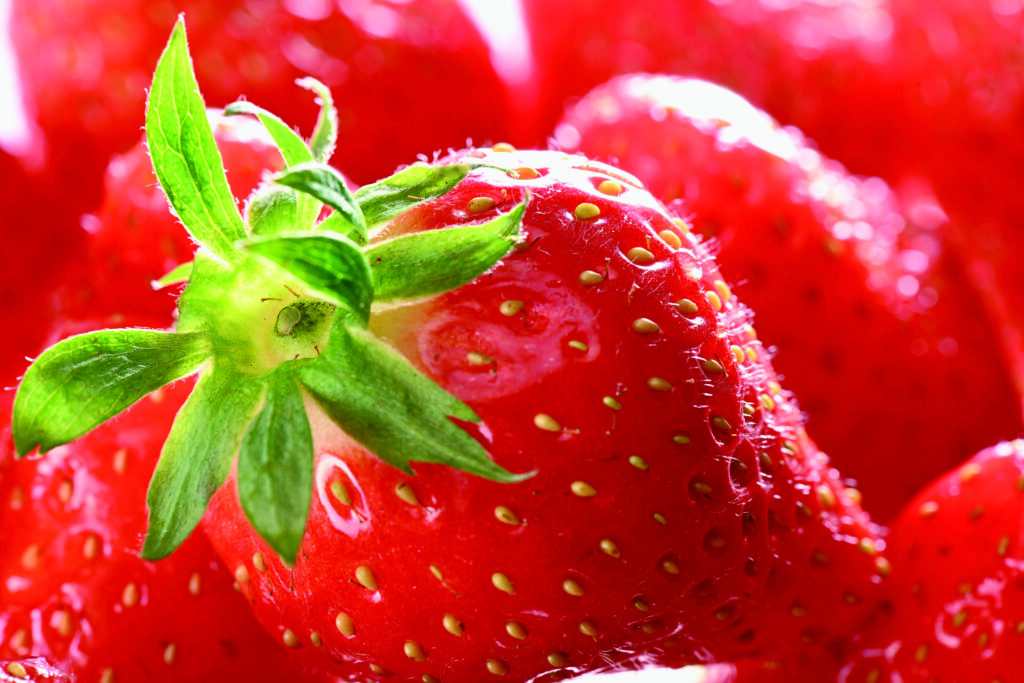
Lot-et-Garonne also leads France in strawberry production, boasting four Label Rouge varieties: Gariguette, Ciflorette, Charlotte and Mariguette. In the sun-drenched orchards of Lot-et-Garonne, strawberries are grown with a reverence usually reserved for fine wine. Gariguette and Ciflorette, the early risers, appear from March with their elongated shape and tangy sweetness. Charlotte offers rounder berries and a lush, candy-like flavour, while Mariguette-a cross between Gariguette and Mara des Bois – blends perfume and acidity with finesse. Grown outdoors and picked by hand only when perfectly ripe, these strawberries are intensely aromatic and full of flavour. They’re eaten simply with cream or sugar, or showcased in tarts.
France’s oldest brandy
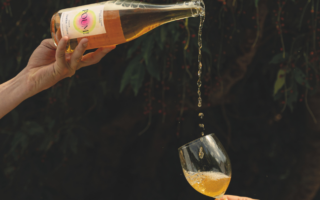
Cross into the Gers, and the landscape becomes one of rolling vineyards and Gascon gastronomy. This is the home of Armagnac, France’s oldest brandy, made from local white grapes and aged in oak barrels to develop its rich, complex flavour. Three terroirs define the spirit: Bas-Armagnac (light and fruity). Armagnac-Ténarèze (robust and structured) and Haut-Armagnac (elegant and floral). Its cousin, Floc de Gascogne, is a sweet apéritif made by blending grape juice and young Armagnac-a regional delight best served chilled. In the Gers, these wine and spirit traditions accompany meals from start to finish-from apéritif to digestif – offering a complete gastronomic experience rooted in local culture. The Côtes de Gascogne appellation is the second-largest producer of IGP wines in France, with 85% of its wines being white-a rarity in the southwest, where red dominates. Made from Colombard, Gros Manseng and Sauvignon Blanc, these aromatic whites are ideal for pairing with the region’s rich cuisine. Other notable Gers appellations include Madiran and Pacherenc du Vic-Bilh, which produce robust reds and elegant sweet or dry whites respectively.
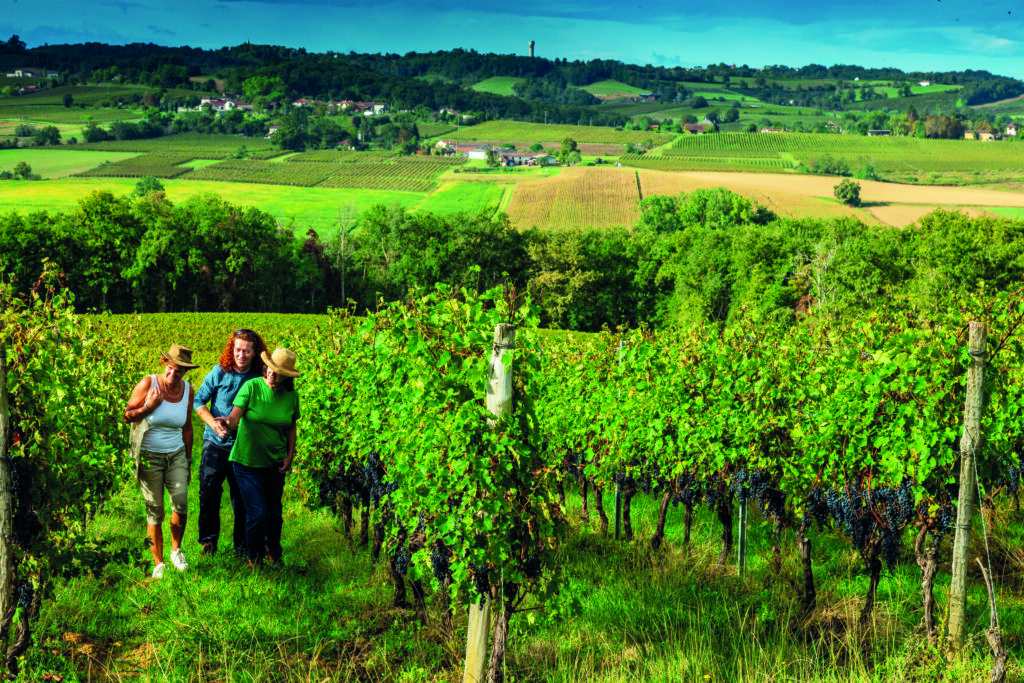
Wine lovers will also find plenty of events throughout the year the Flamme de l’Armagnac, from late October to January, celebrates Armagnac distillation with a series of lively gatherings, tastings, dinners around the still, and village festivities – a custom combining culture and gastronomy. Vineart en Gascogne (July 5 to August 9, 2025) unites wine and art through tastings, exhibitions and workshops. In March, Saint Mont’s vineyards host a weekend-long fête; August brings Les Instants Floc; and in November, the open days for Madiran and Pacherenc du Vic-Bilh round out the calendar. There are manifold ways to discover these wines and spirits, from vineyard hikes and bike tours to blending workshops and blind tastings – there are even escape games to enjoy.
In the market for game
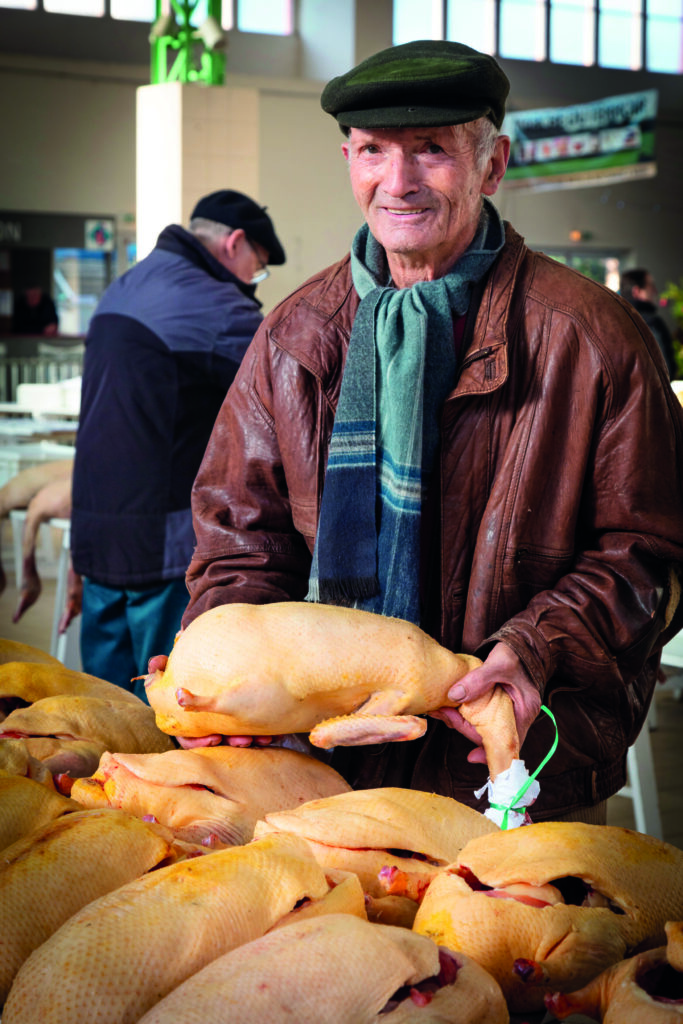
In terms of food, Gers is a paradise for lovers of duck and goose. The birds here are raised in open-air environments, resulting in meat that is tender, flavourful and ethically produced so you are sure to enjoy your magret and confit.
The region is especially known for its foie gras, and the practice of whole-animal cooking here honours both the animal and the land. No trip to the Gers is complete without a visit to one of its foie gras markets- unique in France – especially the legendary market at Samatan. Widely regarded as the national capital of foie gras, Samatan attracts seasoned buyers and first-time visitors alike. Each Monday morning in winter, a line forms ahead of Les Matin’Halles opening at 9.30am. Inside, regulars know their favourite producers, while novices and tourists wander the aisles, soaking up the spectacle. It’s a must-see for anyone curious about this deeply rooted tradition.
Gers is also home to heritage breeds such as the Noir de Bigorre pig, the Mirandaise cow and the Gascon hen – all protected as part of the slow food movement and valued for their flavour, biodiversity and traditional rearing methods. The Noir de Bigorre, an ancient breed of pig raised on a natural diet of grass, acorns and chestnuts, is a benchmark for sustainable gastronomy whose richly marbled meat has earned PDO status.
To wash it all down, look to the Côtes de Gascogne appellation, which offers aromatic white wines, made from Colombard, Gros Manseng and Sauvignon Blanc. They pair perfectly with the region’s rich cuisine. Meanwhile, in the Saint Mont area, winemakers are cultivating heritage grape varieties and preserving ancient vineyards like the Sarragachies plot, a living monument to Gascony’s wine culture.
A foodie heritage
Over in Tarn-et-Garonne, you’ll find the jewel-like Chasselas de Moissac AOP, a golden table grape (ie. it’s for eating rather than being used for wine) which is prized for its delicate sweetness and translucent skin.
Harvested entirely by hand to protect its fragile skin and preserve its distinctive bloom (pruine in French), it was the first fresh fruit in France to be granted AOC status, in 1971, a designation later converted to AOP under EU legislation. The cultivation area is strictly limited, covering parts of the Garonne valley around Moissac, where the climate and sandy-limestone soils contribute to its unique character. Chasselas de Moissac is a staple in desserts and is also often paired with foie gras and duck. In recognition of the skill and tradition involved in its cultivation, it is included in France’s National Inventory of Intangible Cultural Heritage.
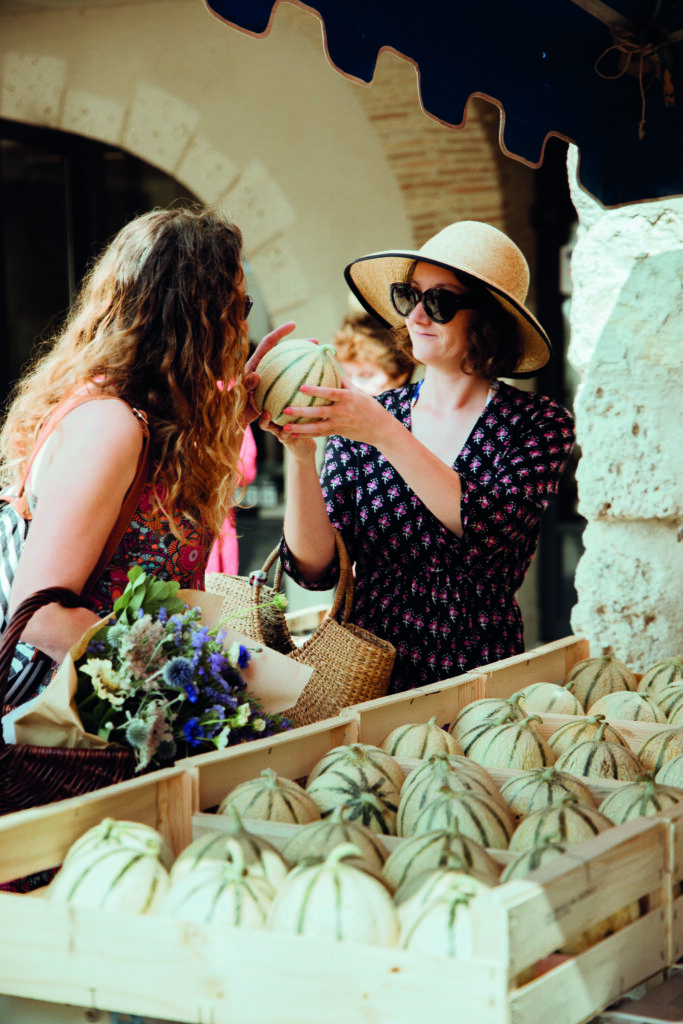
Then there’s the Melon du Quercy IGP, a sweet, orange-fleshed Charentais melon grown in the sun-drenched soils of Lot, Tarn-et-Garonne and Lot-et-Garonne. About 90 producers hand-harvest these melons at full ripeness, ensuring a flavour that is rich and fragrant. With its smooth, grey-green to yellow skin and honeyed aroma, it’s a favourite at summer markets.
The department also grows Lomagne white garlic IGP, a variety grown since the 13th century. Around 300 producers uphold its traditional farming methods, celebrated each July in Beaumont-de-Lomagne during the lively Fête de l’Ail Blanc, which includes tastings of garlic soup and pan tintat (bread rubbed with garlic), as well as the garlic peelers’ world championship.
In Authentic Southwest, the land and the people who farm it are closely connected, as you’ll soon discover on any trip to these parts. As a visitor, you can enjoy the region’s rich larder at markets, in restaurants, directly on the farm, over an evening meal in a village square, or at a lively summer guinguette. And of course, you can take a taste of it home with you-a delicious reminder of a remarkable region that really does capture the true flavour of France.

Looking for more French food and drink content?
In our magazine we offer a whirlwind tour of the best gastronomic destinations. Discover La Belle France’s renowned markets, quirkiest food festivals, most indulgent restaurants and foodie experiences.
Share to: Facebook Twitter LinkedIn Email
More in Authentic Southwest, Garlic, Occitanie, Prunes, Watermelon
Related Posts