Provence in a glass
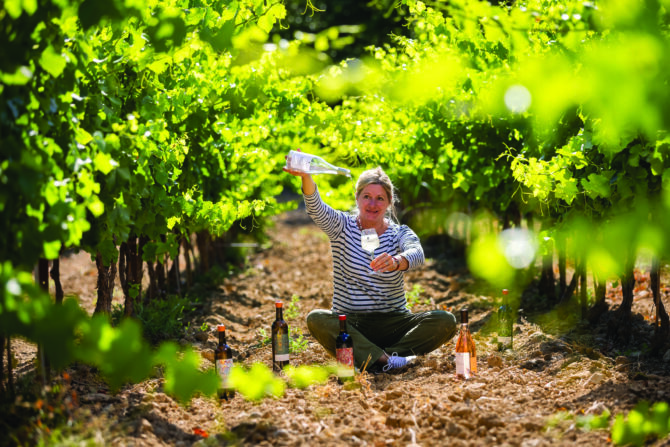
Former notary Emmanuelle Baude left the legal world behind to follow her dream of winemaking in Provence. At Domaine Tour Campanets, she crafts elegant rosés shaped by nature and passion
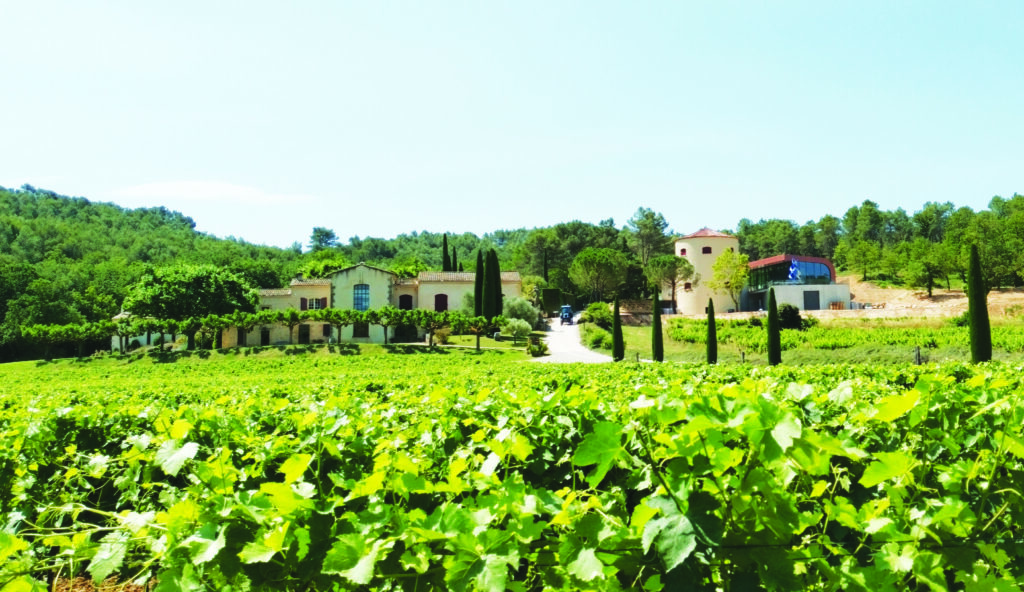
In the sun-drenched hills just north of Aix-en-Provence, surrounded by forest and swept by the Mistral wind, Domaine Tour Campanets is a world away from the rigid world of legal practice. Yet it is here that Emmanuelle Baude, once a practising lawyer, has created a new life.
“From lawyer to winemaker-it’s not the most obvious path,” she admits with a smile. “I worked as a notary for 10 years, and in 2010, I decided to take the plunge and began working on a plan to buy a vineyard with my father. I went back to school, enrolling at the Université du Vin in Suze-la-Rousse, in the Drôme Provençale. I then trained as a vineyard worker and cellar hand. In 2012, we purchased Domaine Tour Campanets.” The search led them to a remarkable estate: 15 hectares of vines encircled by ancient forest, limestone soil and clear Provençal light. “I was drawn to the vineyard’s unique terroir – surrounded by vines, forest, stones and swept by the Mistral wind,” she says. “I live and work here in rhythm with the land and the poetry of Provence.”
This intimate connection to nature is at the heart of Baude’s philosophy – and nowhere is it more evident than in her approach to rosé. “Rosé is such a joyful wine,” she says. “Rosé Tour Campanets is just perfect for simple moments like an apéritif, or a big party with friends. Le Bois des Fées adds an elegant touch to the occasion and creates unforgettable food and wine pairings. Have you tried it with a chicken pie or chicken tikka masala? So chic!”
Provence is the birthplace of rosé, and it is also where the style has been perfected over time. “Here in Provence, winemakers have long grown grapes specifically to make exceptional rosé,” Baude explains. “They’ve invested heavily in perfecting this light, fruity, fresh style. That expertise has become our identity and its success is thanks to the consumers, who are drawn to a wine that puts pleasure before pomp. It’s a wine that has been de-mystified.”
The terroir offers ideal conditions for the grapes that give rosé its signature aromatic brightness. “Provence offers the perfect conditions. Grapes like Grenache, Cinsault, and Syrah reveal all their fruity, zesty aromatic potential here – while preserving that lovely freshness that turns an ordinary after-work drink into a magical moment,” says Baude.
With a growing number of rosés on the market, Baude encourages wine lovers to trust their instincts when it comes to making their selection. “There are many styles – fruity, dry, aromatic, subtle. The right one is the one that brings you joy, depending on the setting and the dish. As for me, my favourite is always the one that best enhances the moment I’m sharing, whether that’s Tour Campanets or Le Bois des Fées.” She also makes room for admiration beyond her own cellar. “Clos Cibonne Rosé is a personal favourite,” she notes. “I love its boldness.”
When it comes to serving rosé, Baude recommends simplicity and care. “It should be well chilled, but not ice cold, so you don’t lose the aromas,” she says. “Serve it in a lovely glass with a slightly flared bowl. Enjoy it at lunchtime, as an evening apéritif – or whenever you like, in moderation.”
A perfect partner
As for food pairings, Baude loves the variety to be found in rosé. “For a classic apéritif, try a fruity rosé with green olive and almond tapenade. A rosé aged on fine lees pairs beautifully with a Mediterranean sea bass. And for something truly special, try a gourmet rosé with foie gras and pink peppercorns… It’s like sunshine in winter.”
One point she is keen to stress is just how complex and exacting rosé winemaking can be. “Rosé is actually the most technically demanding wine to produce,” she says. “It requires great precision in the cellar to obtain a pale colour and delicate aromatic presence. Rosé truly deserves its place at the gastronomic table.”
For those curious to experience the magic of rosé wines first-hand, Domaine Tour Campanets offers much more than a tasting. “Come and live the Campanets experience,” Baude says warmly.
Visitors can enjoy a guided tour of the barrel cellar, a tasting, or even a picnic in the woods. “And at the end of the day,” she adds, “you can sip a glass of rosé on our panoramic rooftop terrace. It’s a chance to disconnect completely and soak up the charm of our beautifully bucolic estate.”
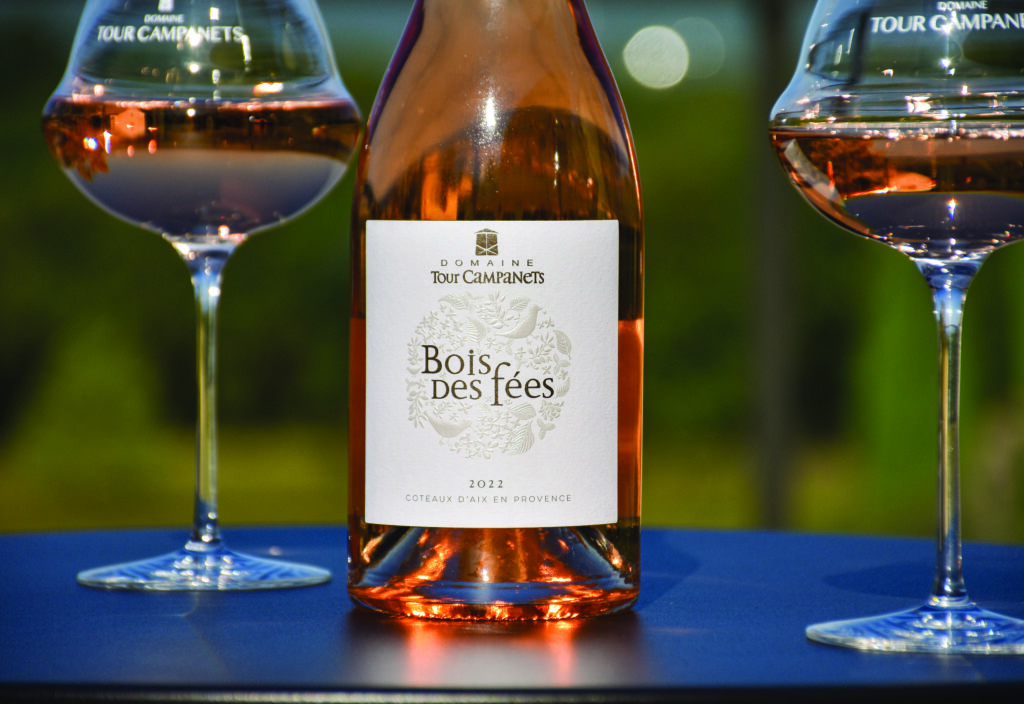
So make Domaine Tour Campanets a must on your next visit to Provence, for here Emmanuelle Baude has done more than change careers – she’s shaped a thoroughly modern Provençal rosé: vibrant, terroir-driven and just perfect for a summer’s day.
SPEND THE DAY
From the moment visitors arrive at Domaine Tour Campanets, they are invited to slow down and reconnect with nature. The day begins with a guided tour of the barrel cellar, where the estate’s wines mature in oak. This is followed by a tasting experience, designed not only to showcase the estate’s range of wines but also to evoke the spirit of conviviality and pleasure that defines life here.
The experience continues with a walk along the estate’s Five Senses trail Winding through vineyards and oak forest, the trail has been thoughtfully created to awaken the senses -inviting visitors to see, hear, touch, smell and taste the landscape in a way that is immersive and restorative. At midday, a forest picnic offers a chance to savour local, seasonal delicacies in the dappled shade of the trees, accompanied, of course, by a glass of rosé. And as the day draws to a close, guests are invited to head up to the panoramic rooftop terrace for a final moment of magic: a chilled apéritif enjoyed as the sun sets over the Provençal hills, bathing the vines in golden light.
And of course, it doesn’t have to end there you can always stay the night! The estate offers elegant, eco-conscious accommodation. Le Cabanon is a beautifully restored stone cottage that exudes rustic charm, ideal for a couple’s escape, while La Villa is a contemporary residence designed for families or groups of friends. Or you could opt for La Suite, a self-contained studio nestled deep within the estate, where birdsong is your only neighbour.
Looking for more French food and drink content?
In our magazine we offer a whirlwind tour of the best gastronomic destinations. Discover La Belle France’s renowned markets, quirkiest food festivals, most indulgent restaurants and foodie experiences.
Lead photo credit : Herve Fabre
Share to: Facebook Twitter LinkedIn Email
Related Posts