Le Cordon Bleu’s 130th Anniversary: From Parisian Magazine to Global Cookery School
It started out as a magazine and became a world-renowned cookery school. We look back at Le Cordon Bleu’s illustrious history as it marks its 130th anniversary…
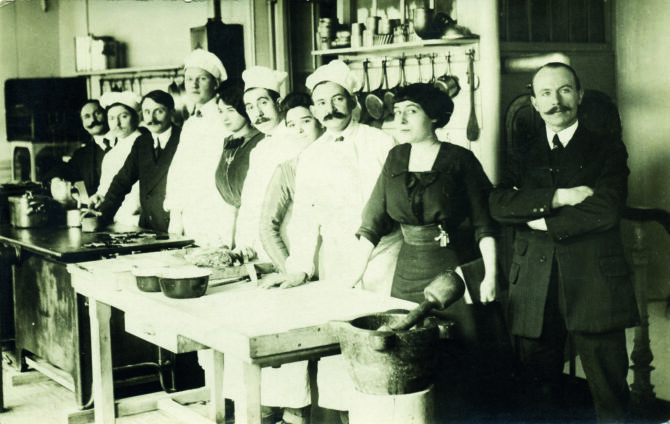
Le Cordon Bleu is celebrating its 130th anniversary this year. However, its journey began not as a cookery school, but as a magazine. when French journalist Marthe Distel published La Cuisinière Cordon Bleu, France’s first culinary journal. Aimed at educating its readership with novel recipes and techniques, the magazine proved so successful that in October that same year, Distel launched a small cookery school in Paris on the back of its popularity.
From the outset, Le Cordon Bleu was notably international. Its first student from Russia joined in 1897, followed by the first Japanese student in 1905, signalling its swift global reach. The institution’s standing was bolstered by praise from the press; Britain’s Daily Mail observed in 1927 that classes often included participants of “as many as eight different nationalities”.
In 1931, the school crossed the Channel when alumnae Rosemary Hume and Dione Lucas-who had trained at the original Paris campus-founded L’École du Petit Cordon Bleu in Chelsea, London. With a modest £2,000 loan, they began teaching cookery classes in two rooms on Jubilee Place, enjoying such success they had repaid their debt within two years. By 1935, the school had moved to larger premises on Sloane Street, opened a restaurant, Au Petit Cordon Bleu, and in 1936 published a recipe book.
A war and a coronation
World War II caused the London school to close temporarily in 1939, but its restaurant stayed open, adapting to shortages by using ingredients such as powdered eggs. Lucas left for the United States in 1942, where she later became a pioneer of television cookery. In 1945, the school resumed its activities in partnership with Constance Spry, the celebrated floral designer, and soon opened a country base at Winkfield Place. There, students could study a broad curriculum including cookery, flower arranging, dressmaking and etiquette.
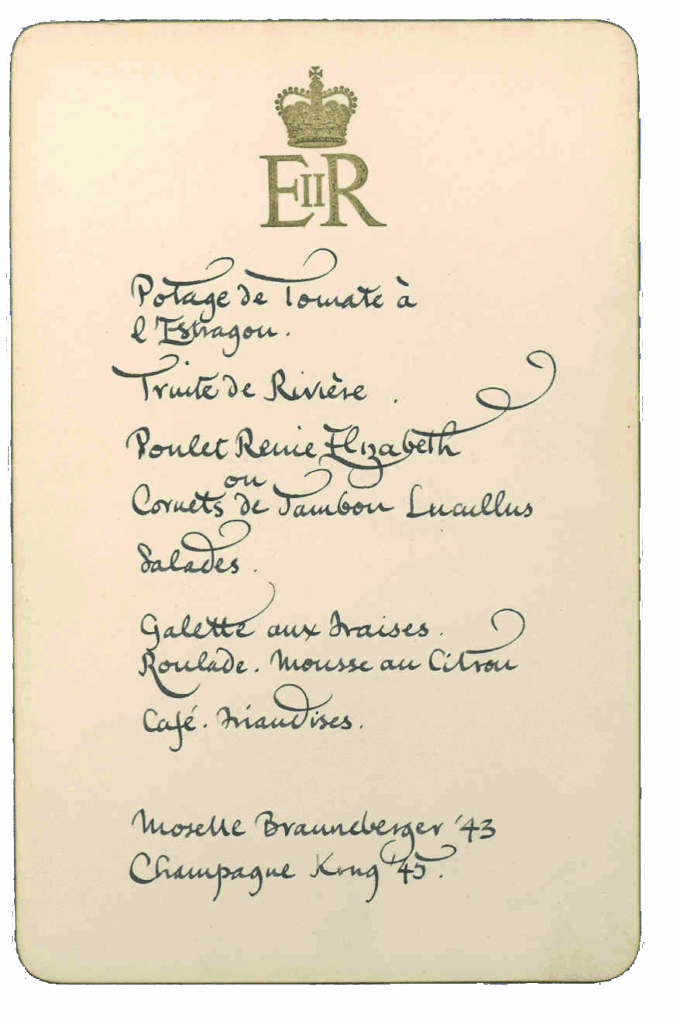
A notable milestone came in 1953, when the school was selected to prepare the Coronation luncheon for Queen Elizabeth II, and Rosemary Hume created the famous Poulet Reine Elizabeth, now known the world over as Coronation Chicken. That same year, the school relocated to 31 Marylebone Lane, opening a demonstration kitchen there in 1959, and eventually moving to a purpose-built facility at 114 Marylebone Lane in 1968.
A global enterprise
The next major chapter began in 1984, when André Cointreau – from the family behind Cointreau and Rémy Martin – took over as president and CEO. He acquired the London school in 1990, bringing it formally into the international Le Cordon Bleu network. Under his direction, the organisation expanded to more than 25 schools across more than 18 countries, training upwards of 20,000 students each year from over 130 nations.
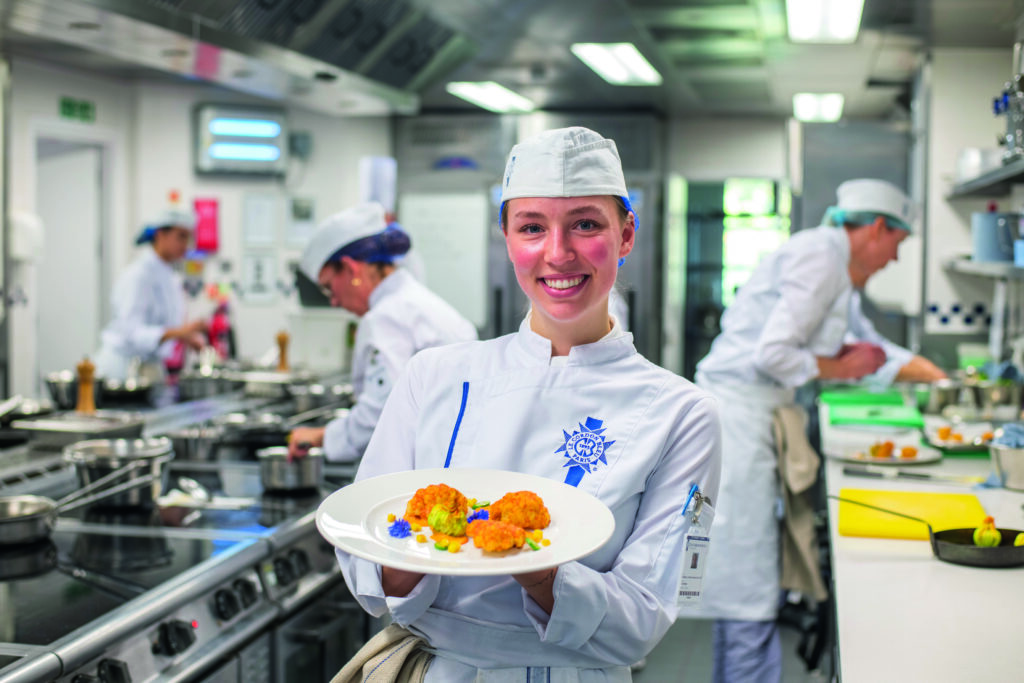
In 2012, Le Cordon Bleu London moved into its current home in Bloomsbury Square – a modern facility offering not only its renowned diplomas in cuisine and pâtisserie, but also programmes in management, wine, nutrition and gastronomy. New academic partnerships followed: in 2017, a BBA in Culinary Industry Management with Birkbeck, University of London, and in 2020, an MSc in Culinary Innovation Management.
From its origins as a pioneering magazine in late 19th-century Paris to a prestigious centre of learning in the heart of London, at 130 years old, Le Cordon Bleu remains synonymous with culinary excellence.
Looking for more French food and drink content?
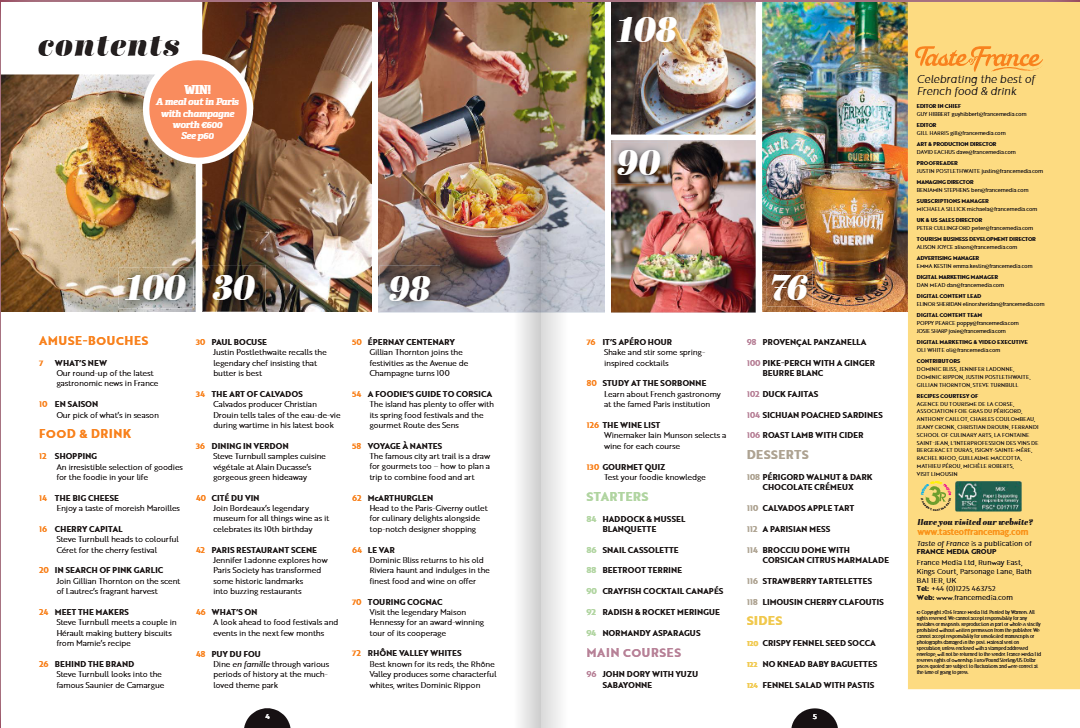
In our magazine we offer a whirlwind tour of the best gastronomic destinations. Discover La Belle France’s renowned markets, quirkiest food festivals, most indulgent restaurants and foodie experiences.
Share to: Facebook Twitter LinkedIn Email
More in Cookery course, Le Cordon Bleu
Related Posts