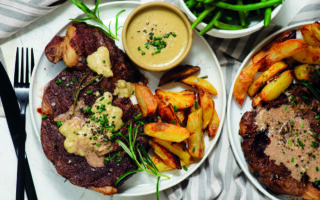
A different French dish for every day: An interview with @StephenCooksFrench
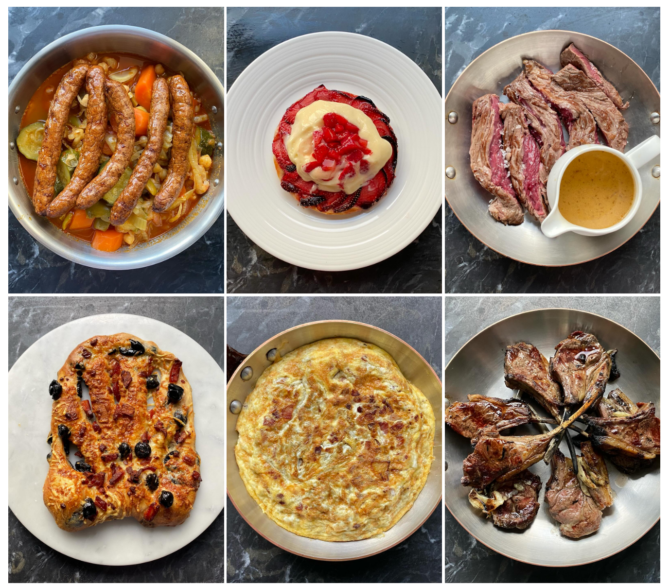
When home cook Stephen set himself the challenge of cooking a different French dish every day for a year, little did he know his Instagram account would end up being praised by Vogue. Today, Stephen Cooks French has evolved into a kind of virtual bouchon with a loyal band of followers. Here Stephen tells us about his love story with French cuisine…
What inspired you to start making a daily French dish?
Over the years I’ve set myself many cooking challenges – clarifying consommé, for example, or recreating menus from films such as Babette’s Feast. And in the summer of 2018 I decided to make a French dish every day for a year and post it on Instagram. It would help improve my cooking, I thought; it would also widen my French vocabulary. The variety of dishes I’d make – pastry, meat, fish, vegetables, desserts – would keep me on my toes, and photographing them would help me to identify the skills I needed to hone.
If there was a single inspiration it would be my late mother-in-law, Rolande: born in 1933 in Alsace, she was the best home cook I’ve known. Her style of cooking was resolutely old-fashioned French bourgeois – and I mean that as a compliment, for it is a cuisine that I adore. Rolande’s standards were high – her dining table was always set just-so and every dish was perfect. Her criticism was unsparing, but she was an excellent teacher who generously shared her astuces – those culinary tips passed down from one cook to another. I was aware, of course, that I’m English and live in the UK and – as Elizabeth David noted (in French Provincial Cooking) “a country’s national food appears completely authentic only in that country”. But authentic French cuisine or not – I work hard and spend hours every day in my kitchen.
How did your first trip to Paris influence your passion for French cuisine?
I was 19 I when visited Paris for the first time – it was also my first holiday abroad. I was gauche, naive, excited; keen to try anything and everything new. The displays in pâtisserie windows were a revelation, the jewel-like tarts enchanting me far more than the artwork in the Louvre. Guided by Miles Turner’s A Pauper’s Paris – which in pre-internet days was the guide to exploring the City of Light cheaply, I headed for Bouillon Chartier, an Art Deco restaurant popular with students and those on a tight budget. It seemed to me I had stepped into a magical world: the light was golden; the waiters’ white aprons cascaded to their ankles; bread was delivered in a wicker basket and service was brusque, if not terse. The food I ate that night was simple and, in retrospect, clichéd: snails – served in their shell, with strange looking tongs to hold them; a pichet of red wine; steak frites; a tarte au citron. To my amazement, at the end of the meal the waiter totted up my bill on the paper tablecloth. I was hooked – and when I returned home, I started reading about French food. I was a student and from then on, when I invited friends for supper I’d often make moules marinière – in those days, mussels were 95p a kilo. Add a bottle of chilled white wine and a baguette and you have a feast.
How did your relationship with François (Stephen’s husband) shape your approach to cooking and presenting food?
François is from Alsace – thanks to him and our friends in the region I’ve explored dishes and wines that would otherwise be unknown to me. Tarte flambée, for example – also known as flammenkueche – often described, misguidedly, I think, as Alsatian pizza: a thin bread base topped with fromage blanc, onions and lardons. Convivially, it can be sliced and served with an aperitif – a nicely chilled Alsace Riesling being perfect. For an interesting ingredient, there’s Melfort, a vinegar-like condiment that’s excellent in salad dressing. But there are many more aspects of serving food that nudge a meal towards the Gallic: sliced saucisson served with drinks; French breakfast radishes with salt and butter; salad, as a separate course after the plat principal; cheese offered before dessert. At home we use lots of French ingredients – cornichons, all manner of French mustards and vinegars, French flour, butter. That said, when French people stay with us, we usually serve cheeses from the British Isles – our artisan cheeses are as good as any in the world.
Do you ever find it difficult to find certain ingredients?
It’s not always easy to find the right cut of veal shoulder for blanquette de veau. And dandelion leaves – pissenlit – for salade lyonnaise are difficult to find. Also fromage blanc for the tarte flambée. But otherwise, most ingredients are available in London.
What’s the most challenging dish you’ve made to date?
François and I made a croquembouche – 144 profiteroles filled with crème pâtissière piled in a cone tower – and most thrillingly, boiling hot caramel. That was fun! Dangerous – but fun. Fortunately, no hands were scalded during the making of that dessert. Since starting Stephen Cooks French I’ve also worked my way through Le Grand Manuel du Pâtissier (now published in English) but while I enjoy learning new techniques, mostly I find good ingredients don’t need complicated cooking.
How has your cooking evolved since you began this daily endeavour?
More and more, I keep it simple – which doesn’t necessarily mean less work. For example, my favourite sandwich is a jambon beurre – baguette, butter, ham, cornichons. Very simple indeed. But if you make your own baguette (I do) then it’s not a dish you can rustle up in two minutes: I prep my baguettes the day before cooking, proof them overnight in the fridge and bake them in time for breakfast.
Do you have a favourite French dish?
It’s impossible for me to select a single dish – but I asked François for his favourite and he said poulet aux deux vinaigres: chicken with shallot, champagne vinegar and red wine vinegar, white wine, tomato, stock. It’s a Lyonnais dish and many recipes use cream – but I prefer to reduce the wine and vinegar right down for a piquant sauce.
What did it mean to you to be featured in Vogue’s list of soothing social media accounts?
The Vogue list of soothing media accounts was published in March, 2020 – a crazy time for the world, with Covid rampant and countries tumbling into lockdown like dominoes falling on a board; supermarket shelves were bare and people were confined to their homes – so I was astounded that anyone was paying attention to Stephen Cooks French. Still, I was flattered that they had. During the first lockdown: I worked my way through The Larousse Book of Bread and ran my home bouchon – two covers only, reservation not required, lunch served on the terrace, every dish fait maison. With shopping trips restricted, I’d plan a weekly menu, write it out in French and pin it up in the kitchen. I think I was one of the few people who didn’t make banana bread, though.
Do you have plans to compile your recipes into a cookbook?
There are many wonderful French cookery books out there – I know, I have hundreds, in English and in French – but while I have a bulging file of recipes I’ve worked on, I don’t plan to approach a publisher.
Are there any new projects or goals you’re excited about?
Matthew Wryle, chef at London’s Maison François, is publishing his cookery book later this year – I’m very much looking forward to working my way through that. His recipe for gougères is divine – they’re filled with a delicious cheesy custard and topped with a crunchy craquelin. We have them every time we dine there and they are sensational.
What has this experience taught you?
You learn every time you cook – even if the dish goes wrong. There’s truth to the old cliché that you learn more from your mistakes than you do from success. I also follow Julia Child’s advice that if something goes wrong – don’t tell anyone! They probably won’t know anyway.
What’s your top tip when it comes to preparing French dishes?
The same as preparing any cuisine – if you’re following a recipe, make sure you’ve read it carefully. And set out all the ingredients and your batterie de cuisine before you start.
What would be your French foodie dream come true?
In France, I seek out restaurants with historical décor – the Rococo revival Le Grand Café in Moulins, for example, where according to legend Coco Chanel performed in her youth; or the beautifully-restored, 100-year-old Terminus Nord, opposite the Gare du Nord in Paris (a great place to dine if you’re travelling by Eurostar). Next on my list is the opulent, Belle-Époque Le Train Bleu at the Gare de Lyon.
Who’s your culinary hero?
La Mère Brazier, the first woman to win six Michelin stars – in 1933, decades before any man achieved the same success. Born to a poor farming family, her childhood was hard and she gave birth to a son outside of marriage when she was just 19. But at the age of 26 she opened her own restaurant in Lyon and is regarded by many as the mother of French cooking. I have her cookery book and use it often.
What’s next for you?
Next for me is a new kitchen – the first we’ve designed ourselves. I’m not looking forward to the builders’ rubble or cooking everything on the barbecue for a month, but I am looking forward welcoming my friends round for a celebratory lunch!
Follow @stephencooksfrench on Instagram for more
Here’s Stephen’s simple, summery, prepare-ahead French menu for four diners. If you really want to push the boat out, serve thinly-sliced saucisson sec with an aperitif, add a freshly-dressed green salad after the main course and follow the French style of serving cheese before dessert. Bon appétit!
Entrée: Haricots verts with pickled shallot
A very simple starter, elevated by an excellent red wine vinegar (I use Martin-Pouret Vinaigre d’Orléans) and the best extra virgin olive oil you can find.
Haricots verts with pickled shallot
- 250 g of fine French beans
- 1 banana shallot
- Red wine vinegar
- Extra virgin olive oil
- Sea salt flakes
- Bring a large pan of salted water to the boil and cook the beans for 3-5 minutes, depending on how you like them. As soon as they’re cooked, drain them and plunge them into an ice bath – this arrests the cooking and ensures they remain vibrantly green.
- Mince the shallot as finely as you can; put it in a ramekin and cover it with the red wine vinegar. Leave for at least 20 minutes.
- When you’re ready to serve, drain the beans, arrange them on plates and dress them with the extra virgin olive oil. Place a teaspoon of the pickled shallots on the beans and add a pinch of sea salt flakes.
Plat Principal: Tomates farcies (stuffed tomatoes)
Tomates farcies (stuffed tomatoes)
- 2 tbsp olive oil
- 4 large tomatoes
- 1 onion (finely chopped)
- 1 garlic clove (finely chopped)
- 500 g veal mince (or use beef or pork if you prefer)
- Salt and pepper
- Tablespoon of tomato purée
- Heaped teaspoon of piment d’Espelette
- A handful of black olives (pitted and cut in half)
- A handful of chopped flat-leaf parsley
- 2 eggs (beaten)
- 2 slices of wholewheat bread (made into bread crumbs)
- 250 ml of hot beef stock (made from a cube or stockpot is fine)
- Cut the tops from the tomatoes, scoop out the flesh, season the insides and let them drain on a rack.
- In a frying pan, soften the onion, add the veal mince and let it colour gently, then add the piment d’Espelette, tomato purée, and season. Transfer the mix to a bowl and leave it to cool a little
- When the mix is cool enough to handle, add the breadcrumbs, parsley and olives, then mix in the beaten egg. Check the seasoning.
- Fill the tomatoes with the stuffing and place them in a deep-sided baking dish. The stuffed tomatoes can either be baked now or later. Just before you put them in the oven, pour the hot beef stock into the dish and cover with silver foil. Bake for 30 minutes at 180°C.
- Serve with rice.
Dessert: Pêches Cardinal
Pêches Cardinal

- 4 ripe peaches
- 250 g caster sugar
- Half a teaspoon of vanilla essence
- 250 g raspberries
- Icing sugar – to taste
- Optional: a tablespoon (or two of Crème de Framboise)
- Toasted (flaked almonds)
- Put the sugar and vanilla essence in a pan, add about 1 litre of water and over medium heat, stir until the sugar has dissolved. Bring the syrup to the boil, add the peaches and simmer them until cooked; unless they are very fresh, this can take 8-10 minutes.
- Once they’re cooked, remove them and when they’re cool enough to handle, skin them. Once the syrup has cooled, put the peaches back into it and refrigerate.
- In a blender, put 250g of washed and hulled raspberries, add a tablespoon of icing sugar and the Crème de Framboise and whizz; taste the mix and add more icing sugar if it’s needed. Pass the raspberry mix through a nylon sieve into a bowl and refrigerate.
- To assemble the dish: place a peach on each plate, spoon over the raspberry sauce and scatter with the flaked almonds. Serve the remaining sauce in a bowl.
Share to: Facebook Twitter LinkedIn Email
More in French food, Interview
Related Posts