Worth Its Salt: The Story Behind France’s Iconic Fleur de Sel
Steve Turnbull lifts the lid on Le Saunier de Camargue, the iconic salt brand from the south of France…
Salt is salt, right, even if it’s French? Well, not if it’s fleur de sel from Le Saunier de Camargue. This sea salt is not only prized by chefs, but it is also synonymous with the south of France. The story behind it goes back as far as antiquity, when the saltwater lagoons around Aigues-Mortes, in what is now the Petite Camargue area of the Gard department, were first worked by the Greeks and Romans.
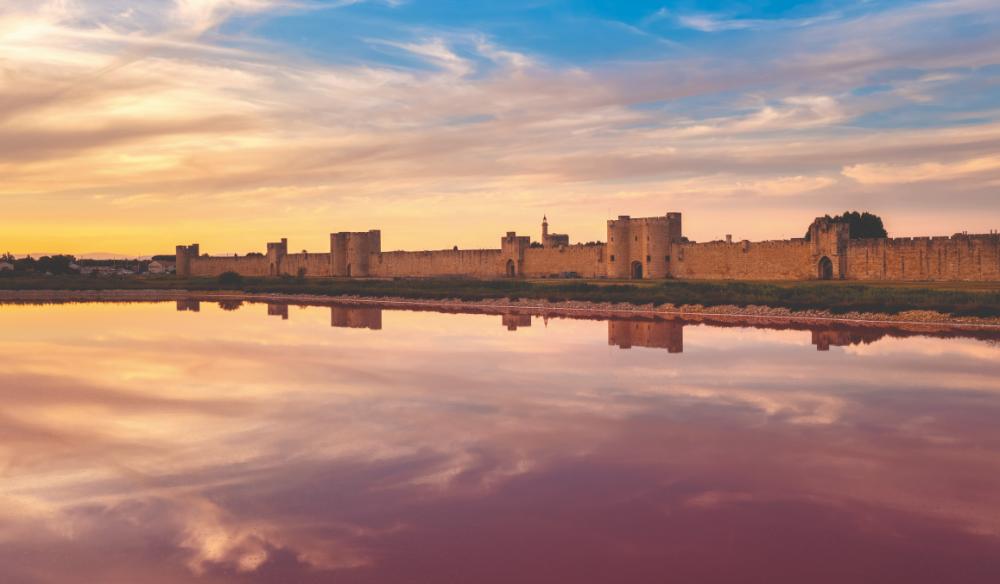
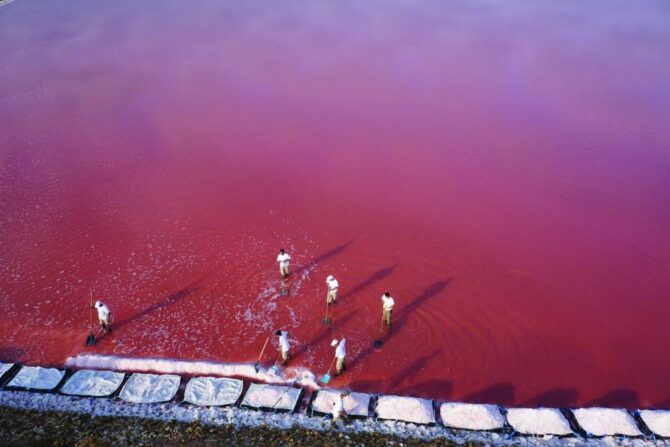
Pretty in pink – Aigues-Mortes reflected in the salt lagoons @La Compagnie du Salin du Midi
In the 13th century, King Louis IX developed Aigues-Mortes into a fortified town and salt production hub. Later, in 1856, multiple small producers joined forces to form the Salins du Midi company, and in 1995 the Saunier de Camargue brand was created, with fleur de sel its flagship product.
Today, the company is part of the Compagnie des Salins du Midi et des Salines de l’Est group, which operates on the Atlantic and Mediterranean coastlines of France. But it remains family-run, with artisanal values at its core – the sauniers (salt workers) still harvest by hand during the warmer months, when the water channelled from the sea evaporates under the sun and wind, leaving a pure white residue of salt. This contrasts with the strikingly pink colour of the water, caused by the microalga Dunaliella salina, which is rich in carotenoids. The shrimp eat this and the flamingos eat the shrimp, which is why they too turn pink.
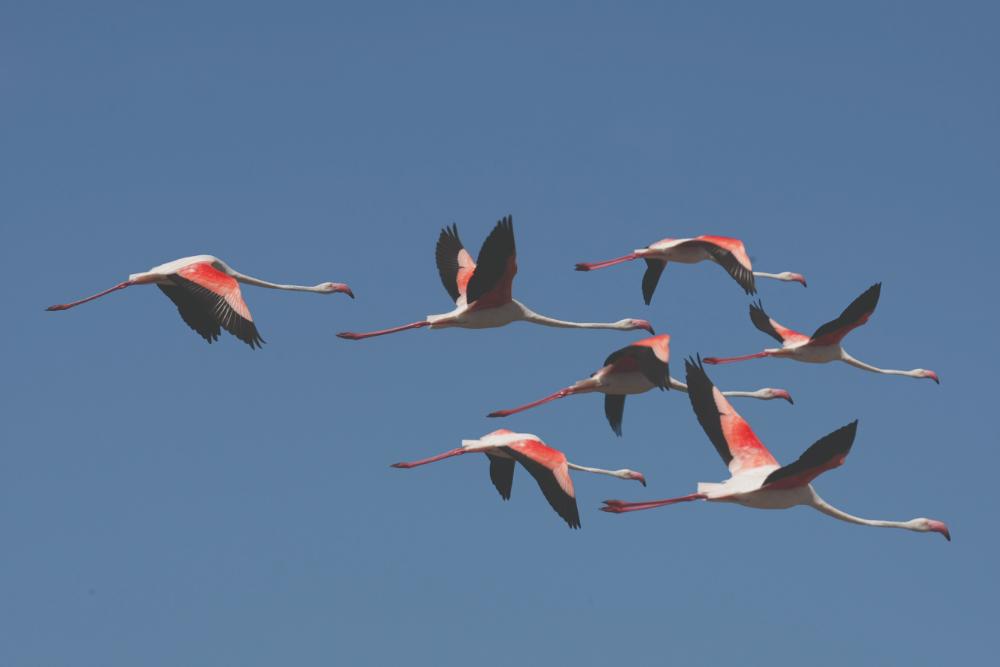
Camargue Flamingos flying in formation © La Compagnie du Salin du Midi
The name Aigues-Mortes comes from the Latin aquae mortuae, meaning dead waters, although the 8,000-hectare salin (salt production site) – one of the largest in Europe – is very much alive and supports a rich biodiversity. It’s protected by the Natura 2000 designation and by Salins du Midi’s commitment to sustainability, which includes the creation and maintenance of nesting islets for wild birds.
The best way to appreciate all this first-hand is to take a guided tour by petit train. This explains the difference between gros (coarse) and fin (fine) salt production, and includes a visit to the small but fascinating exhibition centre. Here, you’ll learn more about the Salins story and discover the other brands in the company’s portfolio-including Baleine table salt, which dates from 1935 and bears an instantly recognisable blue whale. Elsewhere, as you weave around the bassins, you’ll witness crystalline ‘petals of salt on the surface of the waters, blooming into a flaky crust -hence, fleur de sel (flower of salt). This is carefully raked and scooped by the saunier using traditional tools, after which the salt is dried out and packaged.
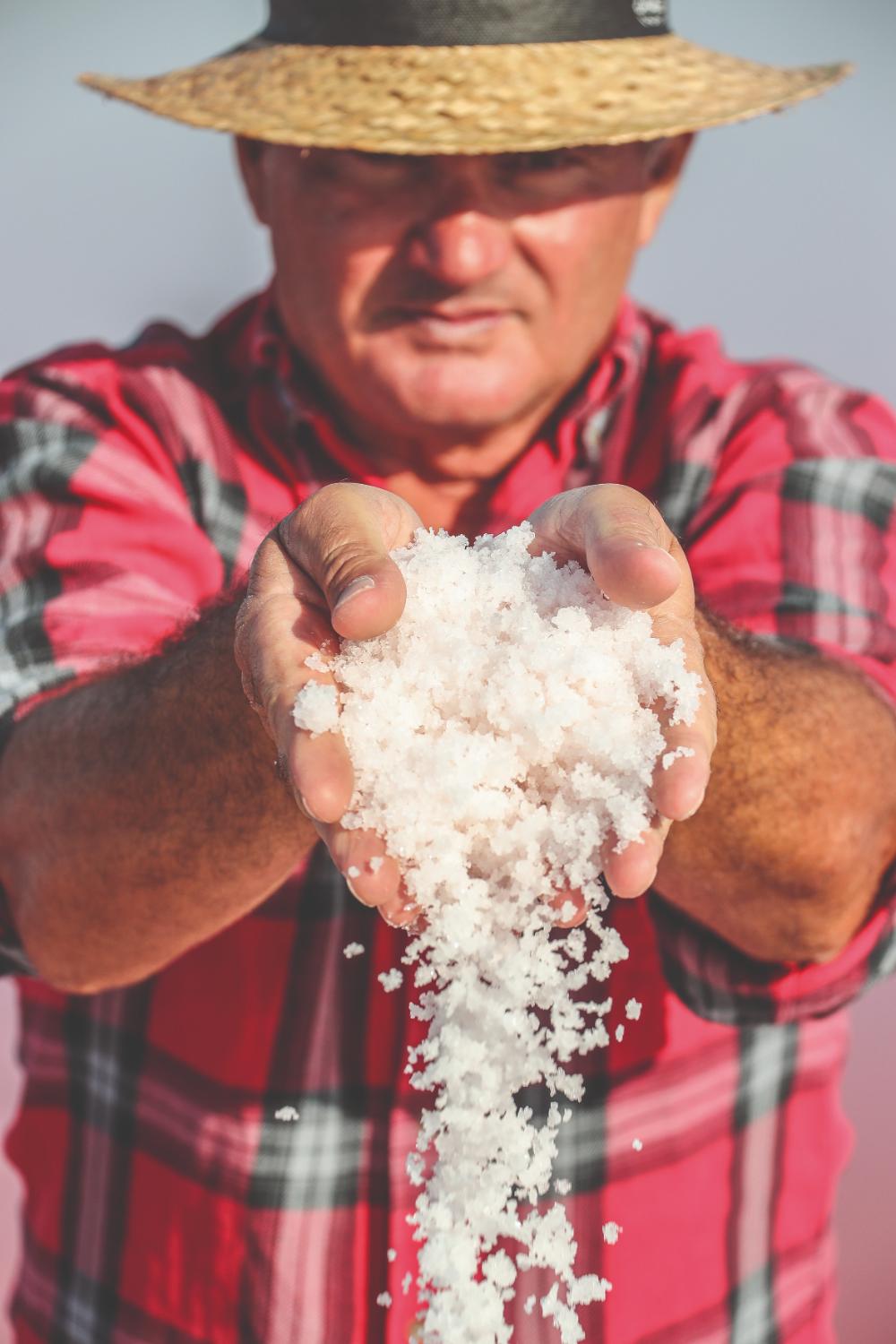
Saunier showing off the salt © La Compagnie du Salin du Midi
The famous Le Saunier de Camargue fleur de sel container features a drawing of a salt worker and a cork lid, which keeps moisture from clogging the salt crystals and – equally important-sends a strong premium/natural branding message, in line with the Salins du Midi’s eco-certification. Don’t make the mistake of using fleur de sel in cooking, though-it’s a ‘finishing’ salt, designed to be sprinkled on food at the end to enhance the flavour. It also acts as a garnish and adds to the texture. The residual brine prevents the crunchy flakes from dissolving quickly, so they melt pleasingly on the tongue. They deliver a complex but well-rounded flavour profile with notes of magnesium and other minerals, and even an aroma of violet. Little wonder this Sud de France classic is known as the ‘caviar of salt’.

From generation to generation – young sauniers working the salt
Of course, health experts are right to warn us of the risks associated with salt consumption. But with Le Saunier de Camargue’s fleur de sel, a little goes a long way. Head of international marketing Léa Arlix explains: “It is essential to remind people that the salt consumed at the table represents only a limited portion of daily intake, while the majority comes from processed foods. Fleur de sel allows for precise seasoning, so a smaller quantity is enough to enhance dishes. Moreover, sea salt is saltier than refined salt.”
Culinary inspiration
The fleur de sel also comes in a colourful range of aromatic flavours (all organic), including Herbes de Provence, Truffes and Piment d’Espelette, so the culinary possibilities are endless. You’ll find plenty of recipes on the Saunier de Camargue website – sweet as well as savoury. One of Léa’s favourite tricks is to sprinkle fleur de sel on chocolate cake, creating a similar effect to salted caramel.
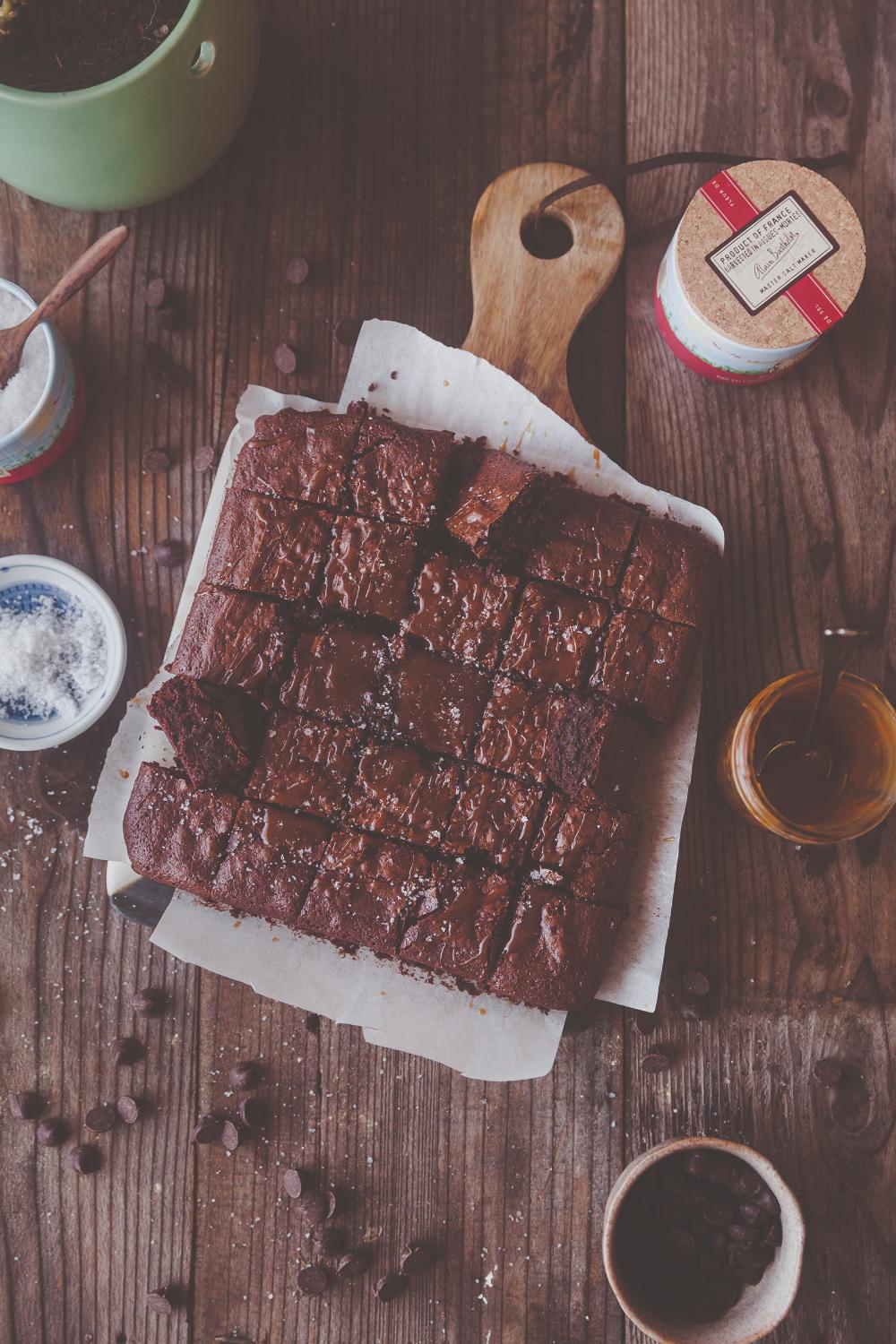
Sweet and salty chocolate cake © La Compagnie du Salin du Midi
Surprisingly, just 10% of the salt produced by the Salins group is for food (the rest is industrial), with fleur de sel representing just a small fraction of the total (around 66,000 tonnes per year). But this underlines the premium nature of the untreated and additive-free product, which has been protected by the IGP (Indication Géographique Protégée) label since 2024. You can find the standard 125g container in any French supermarket, as well as specialist food shops and online sellers, from around €3 upwards-not cheap, but well worth its salt.
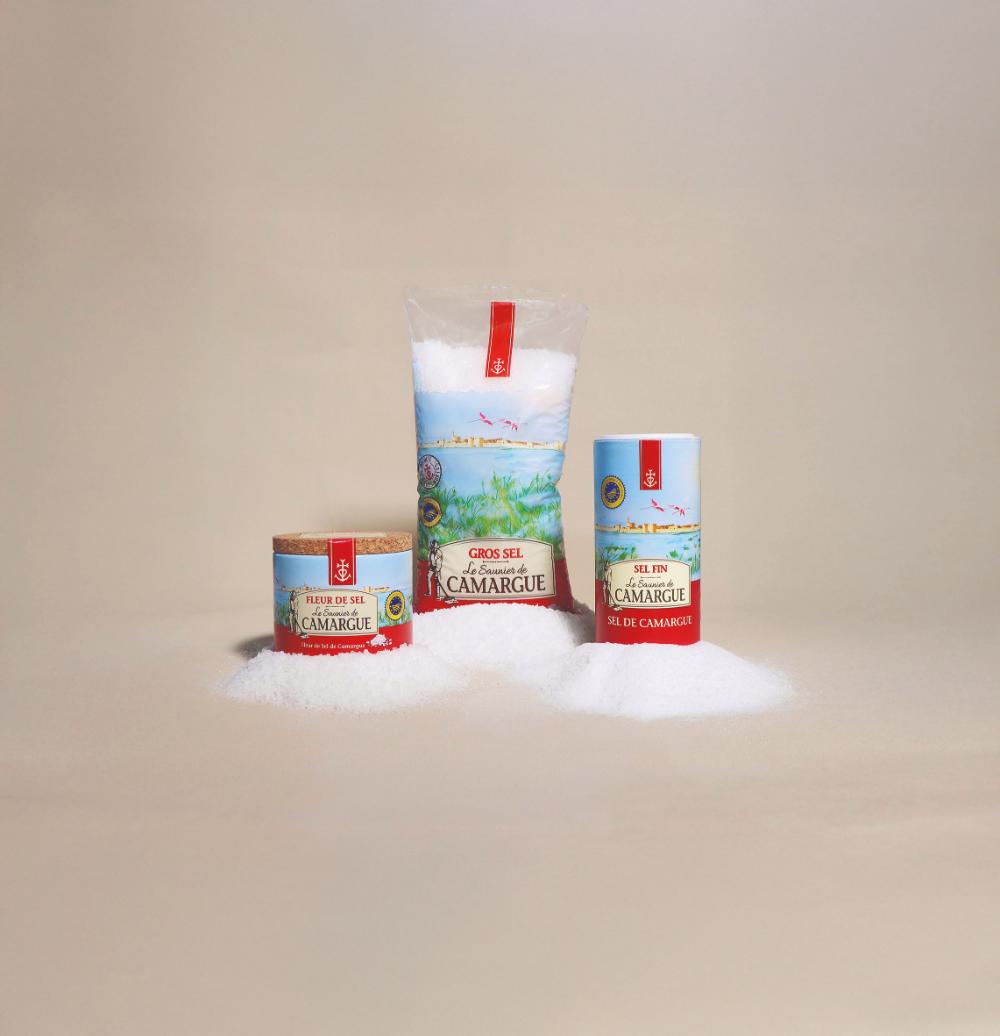
Trio of salts in different textures © La Compagnie du Salin du Midi
With stiff competition from the other market leader in the premium salt sector, Fleur de Sel de Guérande (produced on the Atlantic coastline), the Salins du Midi company can’t afford to be complacent. But the claim that its fleur de sel is the “number one reference brand, used by everyday cooks and chefs alike” is backed by solid sales statistics in France and overseas, and the testimonials of professionals (the company makes a range for them too).
Saunier de Camargue is certainly steeped in heritage values, reinforced by a strong regional identity and sustainable approach. Altogether, this is what makes it unique.
Looking for more French food and drink content?
In our magazine we offer a whirlwind tour of the best gastronomic destinations. Discover La Belle France’s renowned markets, quirkiest food festivals, most indulgent restaurants and foodie experiences.
Lead photo credit : Sauniers shovelling the salt ©La Compagnie du Salin du Midi
Share to: Facebook Twitter LinkedIn Email
More in Fleur de Sel, French Salt, Salt
Related Posts