The Story Behind Normandy’s Apple Brandy
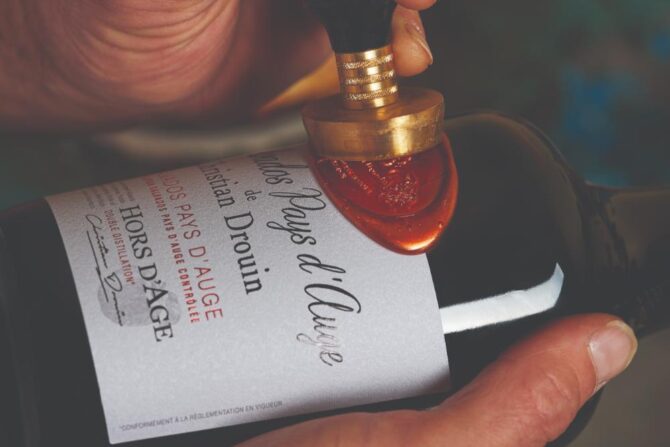
In his latest book, Calvados producer Christian Drouin opens a door on the magical world of Normandy’s apple brandy…
Renowned Calvados producer Christian Drouin is one of the world’s leading ambassadors for Normandy’s apple brandy. Owner and chairman of Calvados Drouin, he has conducted hundreds of seminars worldwide and published books in France, Canada, Japan and the United States. In The Art of Calvados: A Journey into the Heart of Normandy, he explores the spirit’s history. production and cultural significance from its medieval origins to the present day. In this extract, we join the story during the Second World War…
calvados WW pic
World War II was of decisive importance for Calvados, giving it, if not an enhanced image, at least international notoriety. Even before the war broke out, many Jews, communists, and opponents to the Nazi regime from Germany and Eastern Europe took refuge in France, where they discovered Calvados in Paris bistros.
The famous German writer Erich Maria Remarque is partially to thank for the knowledge of Calvados spreading across the world. In his 1945 novel Arch of Triumph, the action takes place in refugee circles during the winter of 1938-1939; the hero, Ravic, a German surgeon who fled to Paris, sought peace of mind in the spirits served on Paris bistro counters, and in particular, in Calvados, which flows endlessly from beginning to end of the novel.
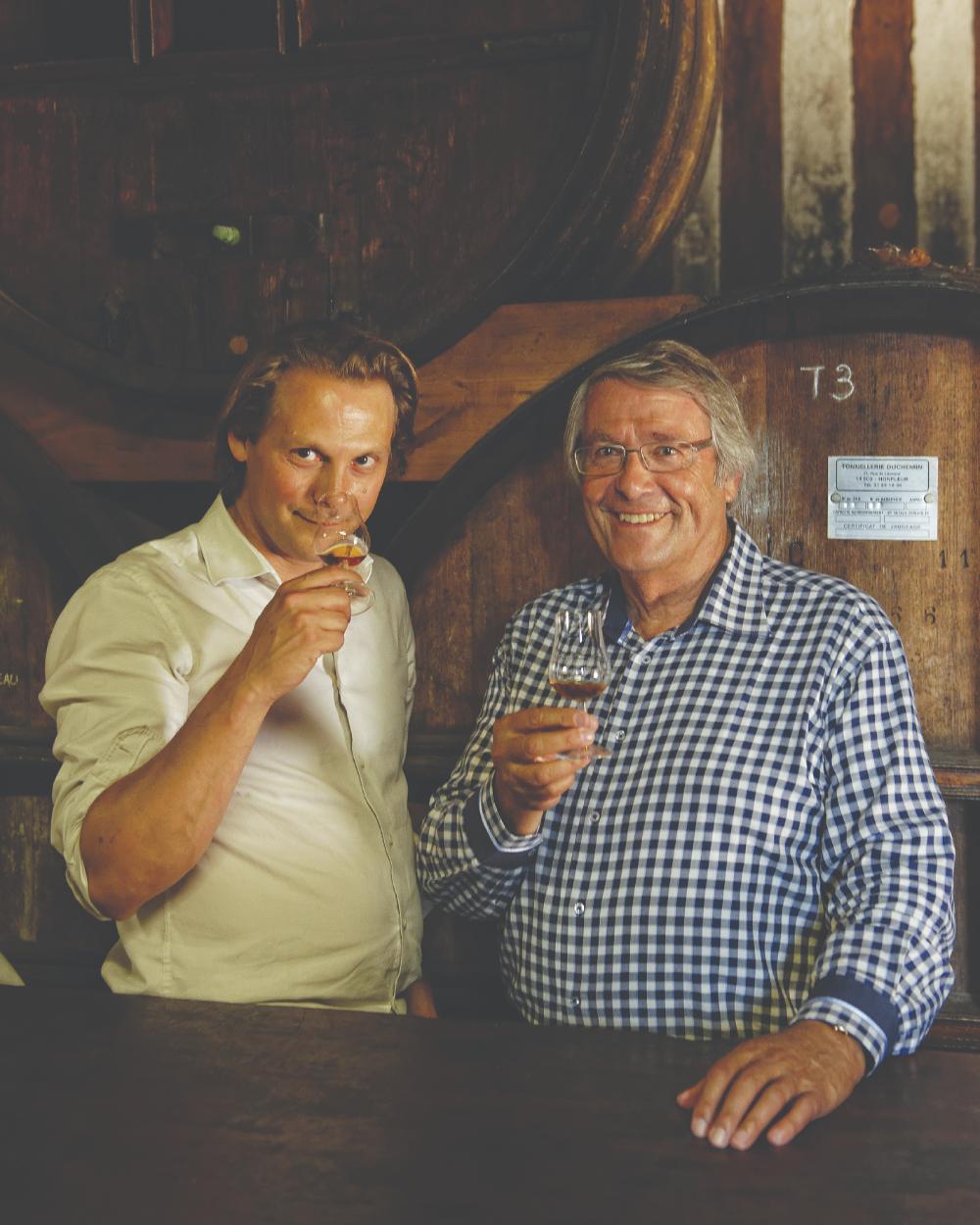
Guillaume and Christian Drouin
Arthur Koestler, a Hungarian Jew and former communist militant who became a major 20th century author, successfully reached London. When he returned to France after Liberation, he reminisced about the virtues of Calvados, as in an anecdote described in the book co-written by Arthur and Cynthia Koestler called Stranger on the Square (Hutchinson 1984). Cynthia, his secretary, who much later became his wife, describes how one day in 1948, to her great surprise, Arthur asked her to stay for dinner.
He was expecting friends: the English publisher Hamish Hamilton, his wife and their son: “We sat down to an orgiastic meal at the candlelit dining table. Soup, followed by fish and entrée, were brought in… White and red wine were in abundance… The guests were enjoying the kind of food and wine which could not be had in England, where food rationing was even more severe than during the war.
“After the meat course they began to feel that they could take no more and apologetically explained to their host that they were no longer in training after living in puritan England. At this point Arthur said he would give them something which would miraculously dispel the feeling of overeating; it would burn a passage into their gullets and they would be able to enjoy the rest of the meal. He paused dramatically. It was called, he said, a Trou Normand. He then produced four little glasses and filled them up with Calvados. He urged everybody to follow his example and swallow the drink in one gulp.”
Word soon spread
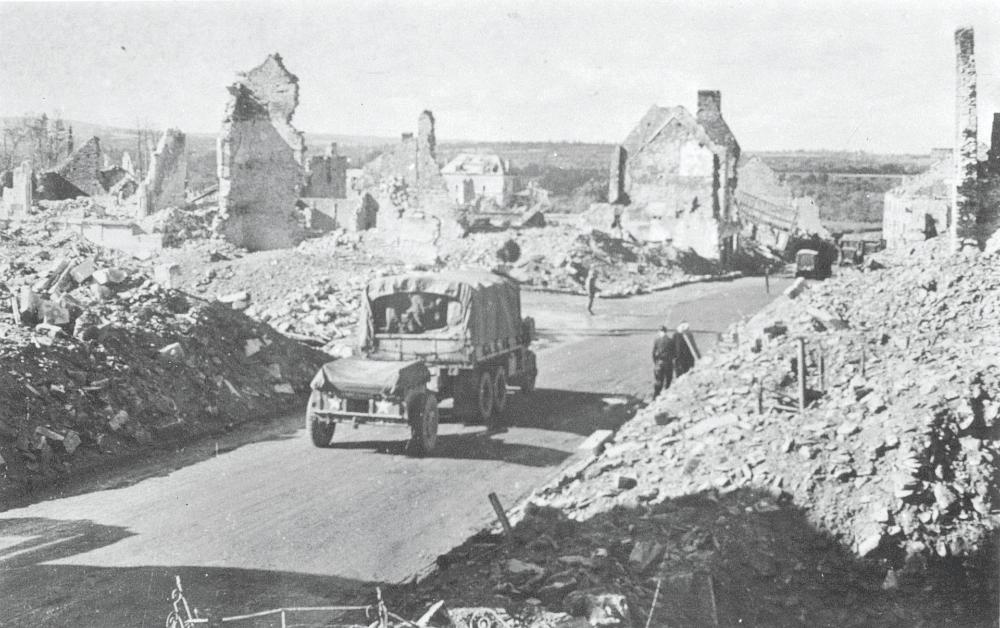
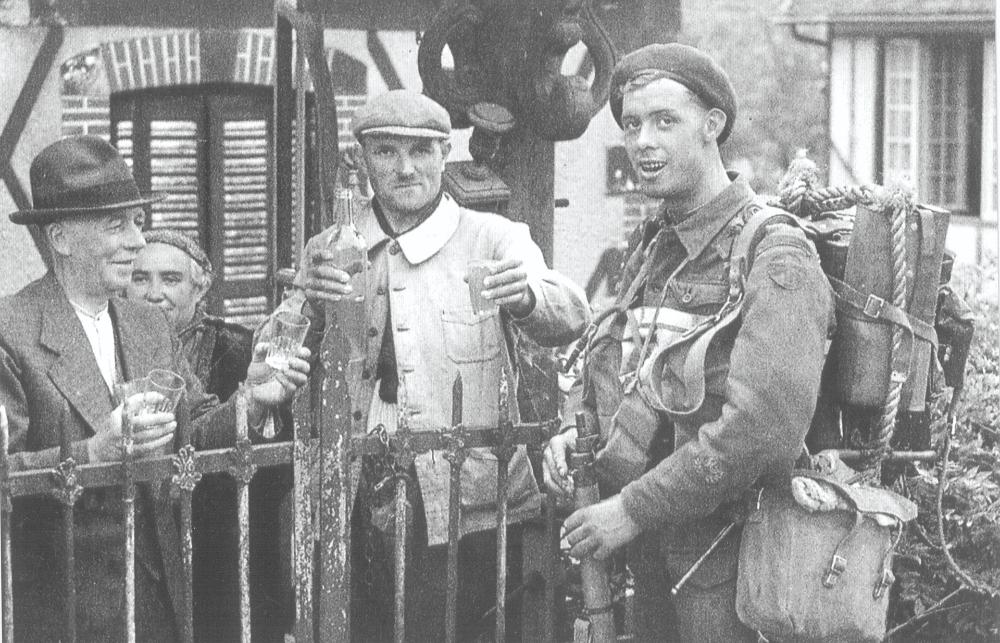
The international renown of Calvados owes lot to these writers and others, like George Simenon, who had Inspector Maigret observe the rite of coffee-calva, a simple mixture of Calvados and coffee, at bistro counters. Calvados is closely bound up with the darkest hours in French history. The horrifying martyrdom of Normandy clearly saved the rest of France, and Calvados always lay at the heart of events. During World War II, Normandy was first occupied by the Germans and then liberated by the Allies, which enabled Calvados to be discovered by people of all nationalities taking part into the conflict.
calvados WW pic
With the arrival of German troops in Normandy, distillers tried to hide their stills, as the occupiers were on the lookout for copper to make weapons. Others were prepared to sell their Calvados to the occupiers, or later to the allies. Some of the occupying troops had no compunctions about helping themselves, and happily looted the cellars. Even the French state requisitioned the available alcohol. As a result, a large number of distillers tried to a hide their Calvados reserves. The minister of agriculture at the time, Leroy Ladurie, who hailed from Normandy, worried about the stock of Calvados – which, unlike Cognac, was not protected by an appellation and could therefore be requisitioned by the State to supply the army and make ammunition. To protect Calvados and eau-de-vie de cidre stocks from being requisitioned by the French government and German occupying forces, he gave apple brandies Appellation d’Origine Contrôlée (AOC) and Appellation d’Origine Réglementée (AOR) status in 1942.
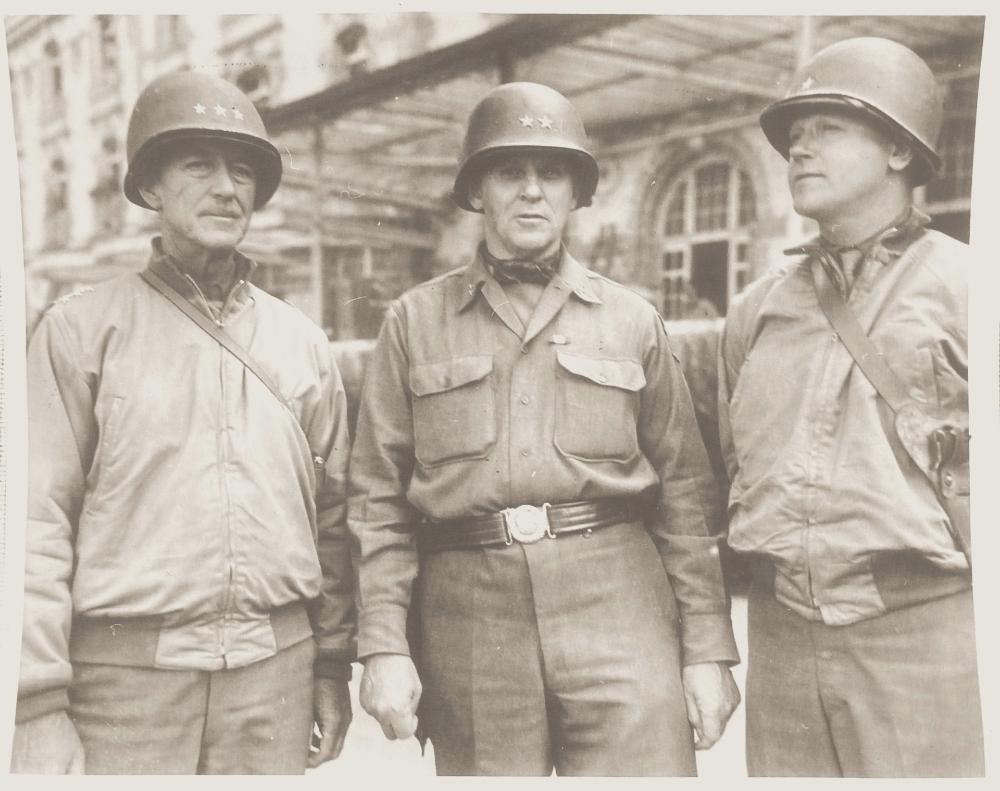
None of these measures managed to save the stock of old Calvados, which disappeared with the plundering of both the occupying forces and the liberators, the bombardments, and, finally, the devastating Battle of Normandy. The cellars of many châteaux were looted. Some of the châtelains, whose estates were requisitioned by German and then American officers, occasionally managed to hide their most valuable bottles. Count Louis de Lauriston showed me a few eau-de-vie de cidre bottles distilled in the 19th century that his family had successfully hidden under the rafters of one of his castle towers.
A time to drink
The Occupation did not, however, prevent peasants from continuing to distill their cider throughout that period. Since distillation never truly ceased, Allied soldiers then in turn discovered Norman apple brandy after the landing. As the stocks of aged Calvados had vanished, the freshly distilled, un-watered available spirit was quite sharp. American soldiers called Calvados applejack’. after the American spirit obtained by mixing apple spirit and neutral alcohol. They also called it white lightning’ because of its strength. So as to be able to stand appalling scenes, soldiers on both sides drank without any moderation. Many American Gls got their first taste of Calvados during the battle of Normandy.
The Art of Calvados by Christian Drouin is published by White Mule Press, price £26.99
Looking for more French food and drink content?
In our magazine we offer a whirlwind tour of the best gastronomic destinations. Discover La Belle France’s renowned markets, quirkiest food festivals, most indulgent restaurants and foodie experiences.
Lead photo credit : Hors d'âge stamping
Share to: Facebook Twitter LinkedIn Email
More in Apple brandy, Brandy, French spirits, Normandy
Related Posts