French Wine and Food Pairings: From Starters to Desserts
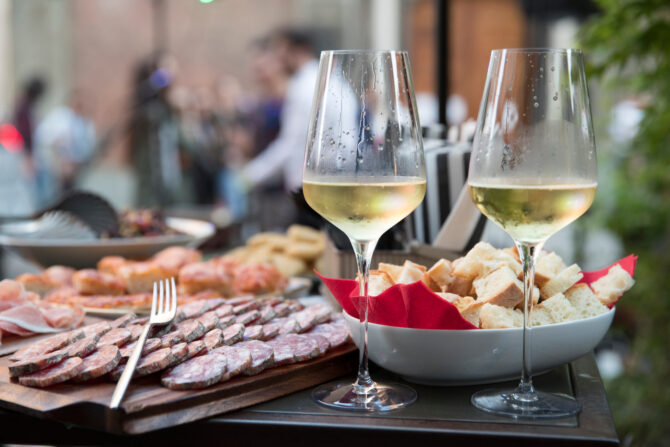
Understanding French wines and finding the perfect pairing is no easy task. Wine from each region has different terroir, climate, and story, and all of these components affect the wine’s taste.
France’s wine regions are deeply rooted in tradition. Regions such as Bordeaux, Rhône, Loire, Burgundy and Champagne’s centuries-old methods reflect the diversity and heritage that make French wine so influential.
As a sommelier and former wine writer, Matthew Day delivers an ‘ultimate French wine masterclass’ with the London Wine Academy, in which he shares his expertise on France’s wine regions and what pairs best with each bottle.
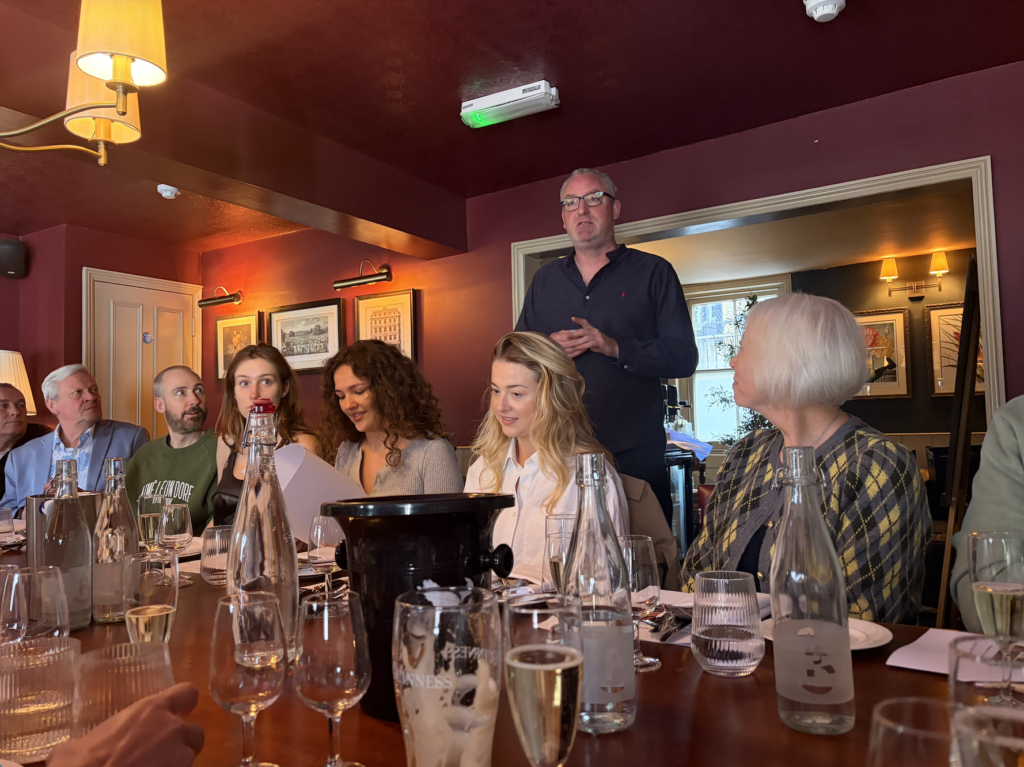
This session is a relaxed blind tasting, where we’ll sample a selection of wines alongside carefully matched dishes to learn how and why these flavours work together.
Matthew begins the masterclass with a simple principle to live by: “What grows together, goes together.” A mantra heard time and time again in the wine world because, despite all the jargon, understanding how grapes relate to their regional gastronomy is what really matters.
How to Taste Wine
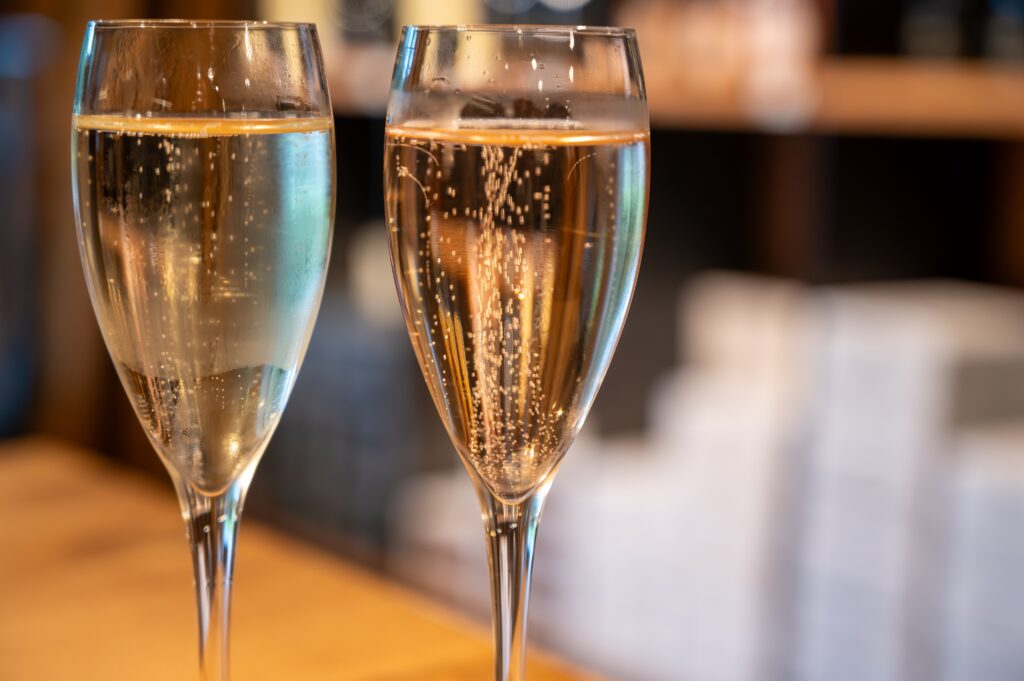
A flute of Crémant de Loire is served as our palate cleanser as Matthew starts describing how to taste wine properly. First, you judge the wine’s appearance, although we are told that “appearance does very little to tell us about the region of the wine.”
Instead, it’s really just telling us how old the wine is. Wines that haven’t spent much time ageing in barrels or bottles tend to look lighter and more vibrant. As they age, though, they usually take on a richer, more golden hue.
Next comes the nose, where you can check the wine’s condition and take in its aromas. After a quick swirl of the glass, just a flick of the wrist, the aromas will be released, bringing them out of the glass before you lean in for a closer smell.
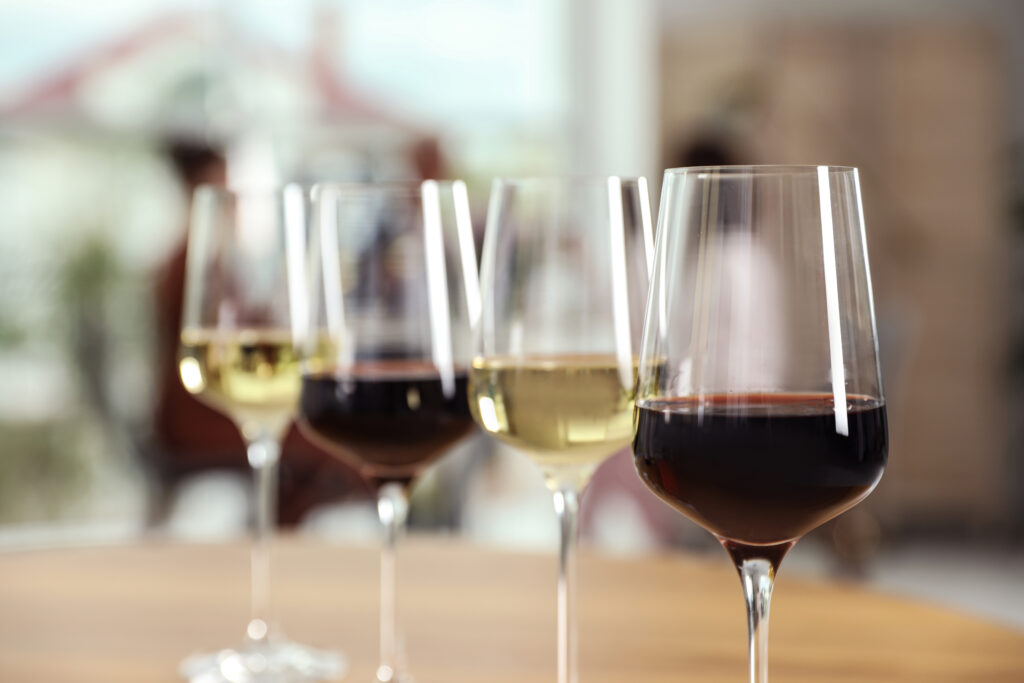
Finally, it’s time to taste. Rather than simply taking a sip, Matt encourages us to ‘bibble’ the wine by moving it around the mouth to coat the palate before swallowing. He demonstrates with a slightly theatrical gurgling motion, head tilted down, which helps bring out the tannins and fuller texture of the wine.
These are the guidelines we’re given for the blind tasting, just as the first bottle is opened.
Why Wine Pairings Matter
“What the French don’t do is drink wine without food,” says Matthew. “A good food and wine pairing is where the taste of the food and wine are balanced.”
He explains that, for example, a more acidic wine can cut through richer, heavier foods, helping to refresh the palate between bites. “By having a neutral palate, you want to keep eating, that’s what makes a good pairing,” says Matthew.
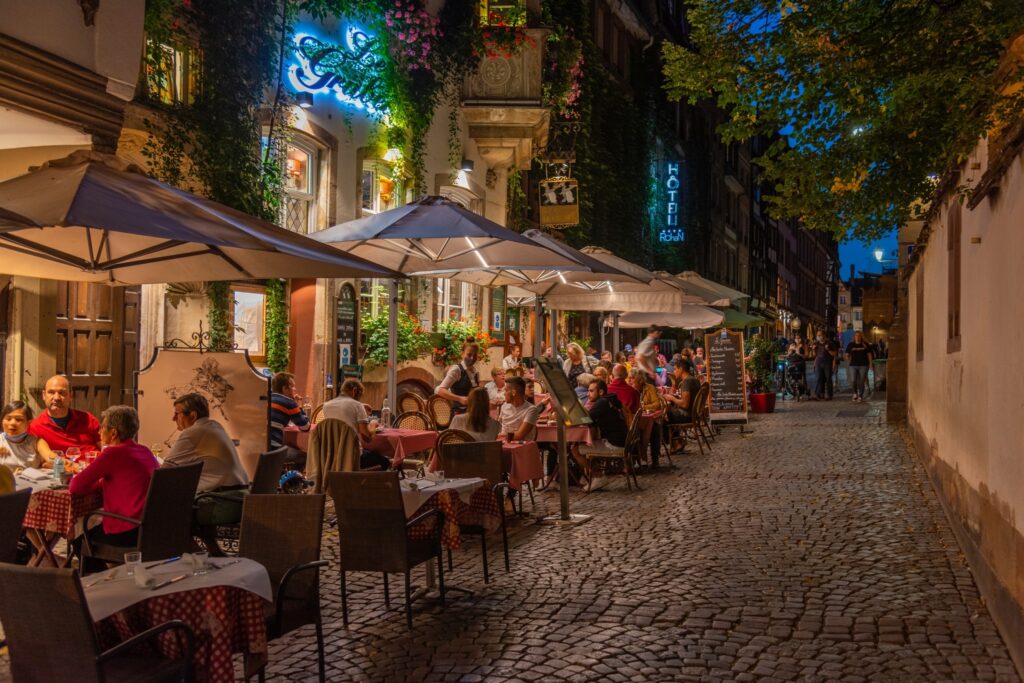
This idea sits at the heart of why wine is so important in France. Eating is a central part of the culture, and meals often stretch over several hours. When wine is thoughtfully paired with the dishes, it adds a flavourful component to the dining experience, helping to prolong the enjoyment of the meal.
Pairings for Starters
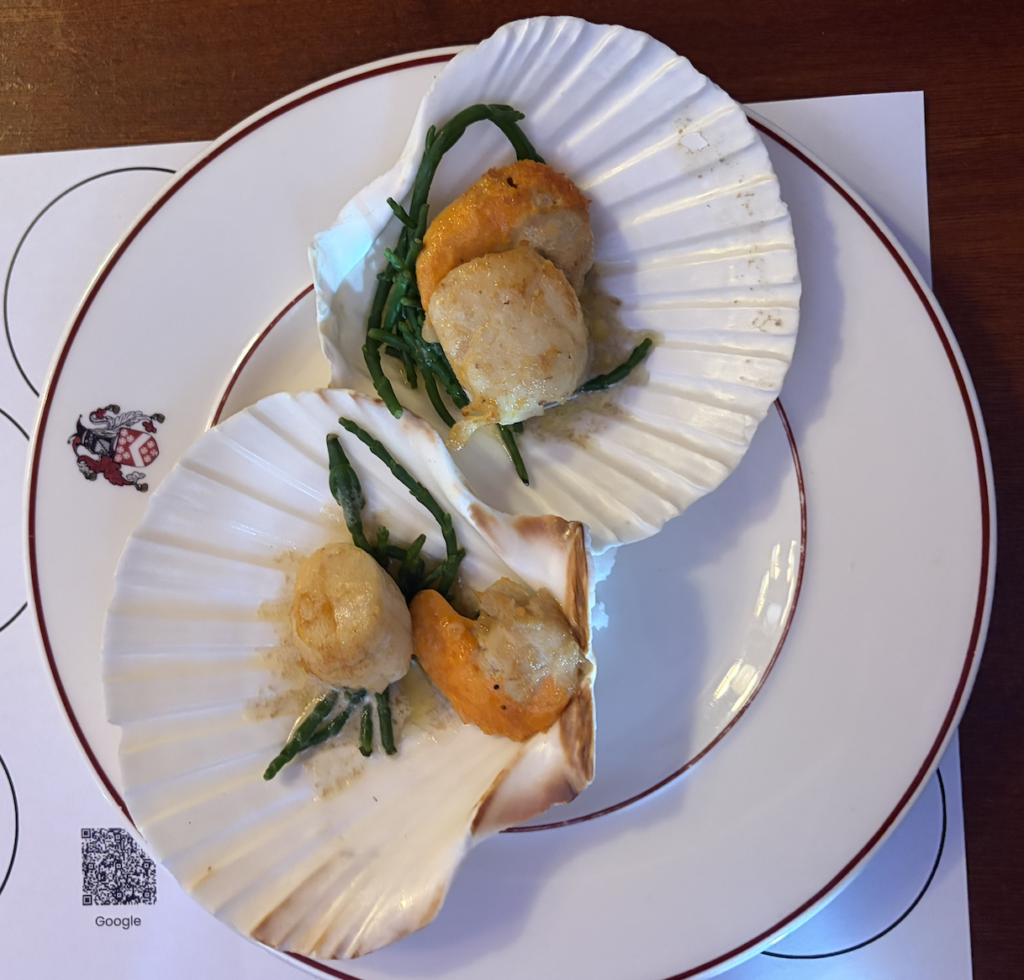
There are few things better suited together than a crisp glass of white wine and a seafood dish. It’s a classic pairing, and for good reason. In this masterclass, a glass of Macon-Villages Chardonnay from the Deux Roches is paired with a beurre blanc scallop.
Its high acidity cuts through the rich, buttery flavours, working in contrast to create that all-important, balanced, neutral palate. The result is a refreshing combination that keeps the palate lifted and ready for the next mouthful.
“Chardonnay likes to grow anywhere and everywhere, it’s in Champagne, Burgundy and many other appellations across the world,” says Matthew. “It’s the most common white wine grape of all.”
When it’s time to move on to regional red wines, Matthew offers a surprising revelation: the widely believed pairing of Argentinian Malbec with steak is, in his view, a myth. “The flavours just don’t align the way people expect, they’re far too acidic,” he explains.
A pairing that does work well, however, is slow-cooked beef with a glass of Gamay. As our slow-braised beef, potatoes and vegetables are served, our glasses are filled with Fleurie from the Gry-Sablon domaine, from Beaujolais.
Made from a thin-skinned grape, it delivers notes of strawberry, banana and mixed berries, making it an exceptionally versatile wine.
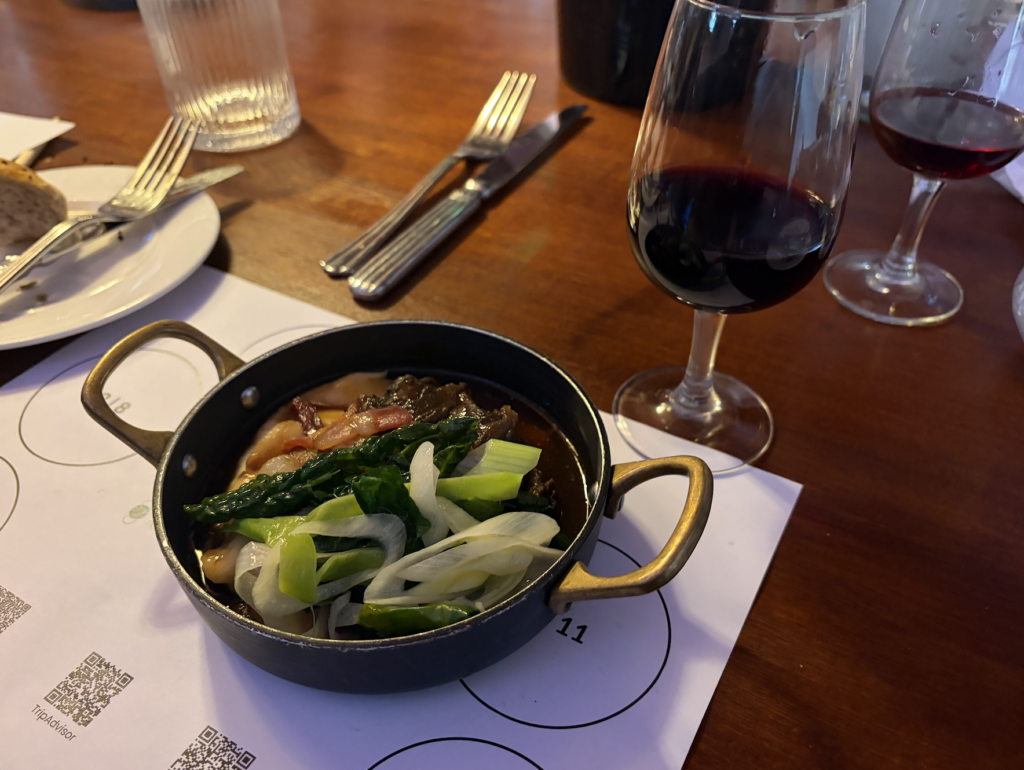
Beyond beef, it also pairs nicely with lighter dishes such as charcuterie and cheeses, as well as richer, meatier fish.
What to Pair with Mains
The flavours of lemon, grapefruit, gooseberry and elderflower all form the base of Sauvignon Blancs in France.
Our glass of Touraine Sauvignon Blanc from the Vaublins domaine in the Loire Valley is paler compared to Chardonnay, which is often yellower in appearance.
Matthew describes this wine as having “less legs” than the Chardonnay, as Sauvignon Blancs are more aromatic, medium-bodied and acidic in flavour.
These flavours mean its cleaner taste would pair delightfully with goat’s cheeses and white meats, such as roast chicken and pork tenderloin.
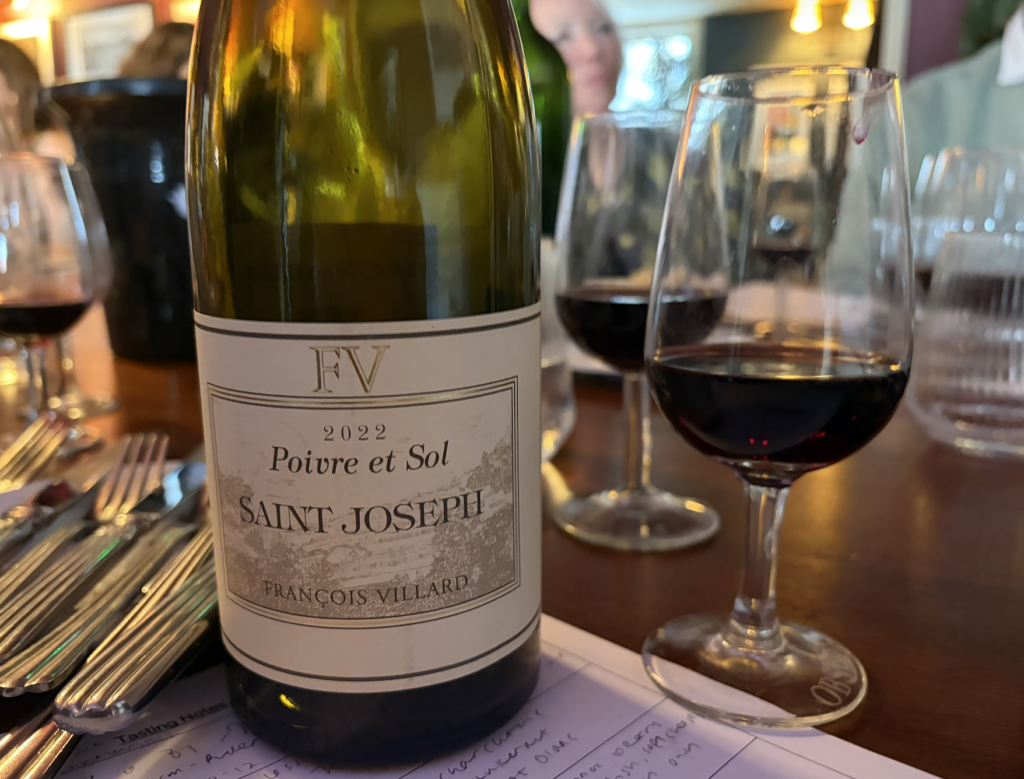
Saint Joseph Poivre et Sol from the François Villard domaine in the Northern Rhône was the next wine in our tasting.
This high-quality Syrah held a special meaning for a fellow masterclass attendee beside us, who immediately recognised it as the wine served at his wedding to his French bride.
True to its name, this medium-bodied wine offers notes of pepper alongside black fruit and violet. As one of the Northern Rhône’s leading appellations, it pairs beautifully with hard cheeses and roasted red meats such as lamb.
A glass of Château Lucas Lussac Saint-Émilion is poured for us, a well-regarded wine from Bordeaux’s Right Bank, where the clay-rich soils are considered among the finest in the region.
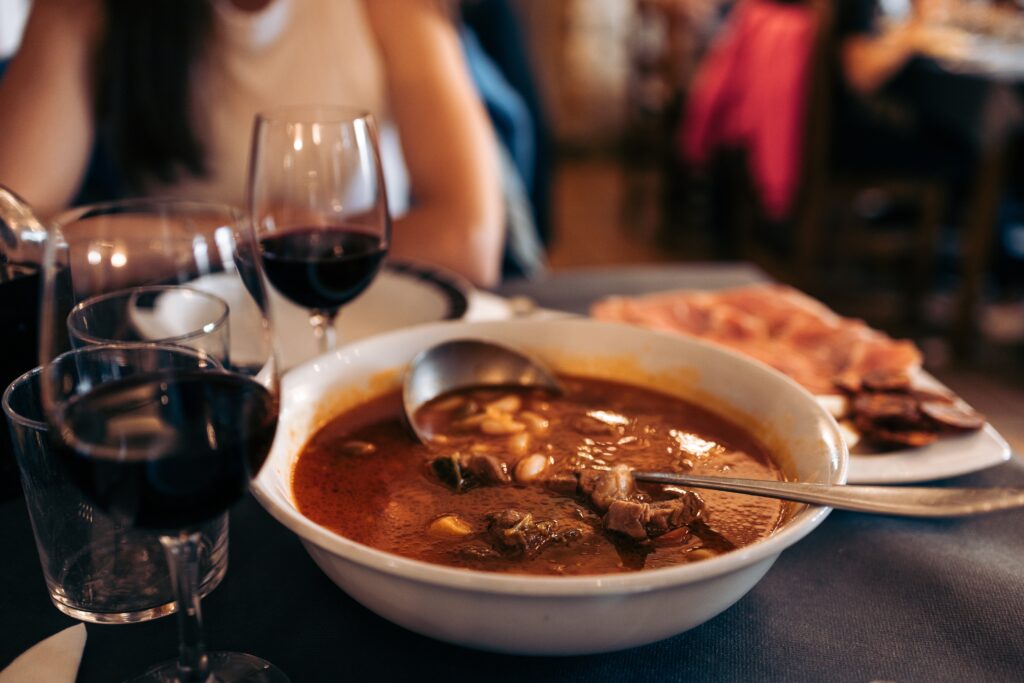
Typically composed of an equal blend of Cabernet Franc and Merlot, it is deep in colour and richly flavoured, with notes of raspberry, plum and oak that pair beautifully with dishes such as duck confit, stews, and mushroom-based recipes.
A Sweet Dessert Wine Pairing
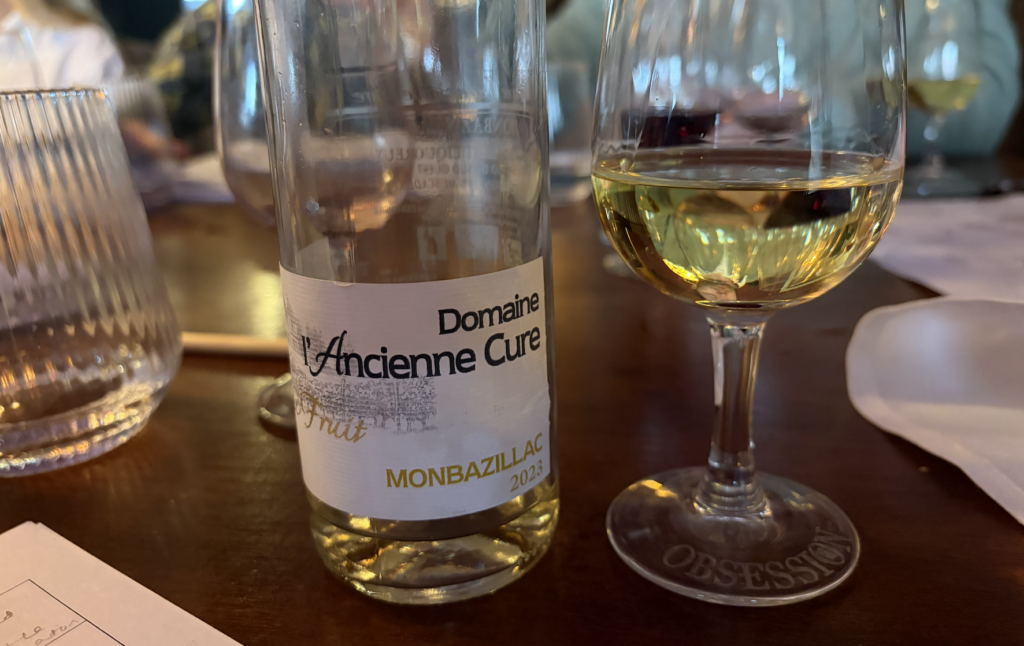
The final wine in this masterclass is a sweet one. A Monbazillac from the L’Ancienne Cure domaine is poured into our glasses just as a warm tarte tatin is served in front of us.
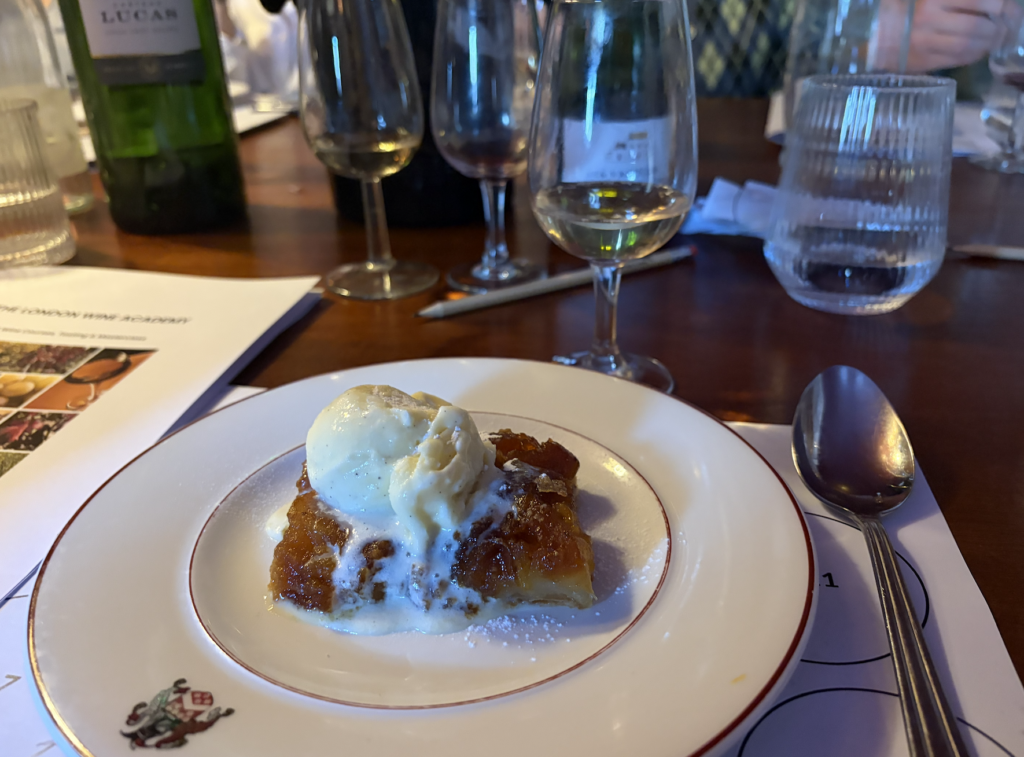
Hailing from the Dordogne region, this sweet wine isn’t made using added sugar; instead, its richness comes from late-harvest grapes that become naturally concentrated on the vine.
Dessert wines like this typically have a deep golden hue and don’t require long ageing, as they can be enjoyed at a relatively ‘young’ stage. The bottle we tasted was just three years old.
The tarte tatin proves an ideal match, its caramelised sweetness and slight tartness working in harmony with the wine. Together, they create the final balance needed to round off the meal on a perfectly matched note.
By the end of the masterclass, it feels like we’ve had a proper French-style meal, with the experience lasting just over two and a half hours. As we make our way out, we agree that the idea of wine pairing feels far less intimidating and much more intuitive.
What begins as a complex subject rooted in regions, grapes, and terminology gradually becomes a simple yet powerful guiding principle: balance, where the ‘right’ pairing elegantly proves how food and wine must work together rather than compete.
Matthew’s insight that “what grows together, goes together” ties everything back to the importance of place. French wine, at its core, is inseparable from the food that grows with it.
Once you begin to understand those connections, pairing becomes less about rules and more about instinct.
Matthew Firth and I were guests of the London Wine Academy. Visit their website: https://londonwineacademy.com
Book ‘The Ultimate French Wine Masterclass’ here.
Share to: Facebook Twitter LinkedIn Email
More in French food, French wine, French wine course, Wine Pairings
Related Posts

By Josie Sharp