A brief history of the world’s oldest champagne house
Dom Thierry Ruinart was a 17th-century Benedictine monk and renowned scholar who left his home in Champagne for the prestigious Abbey of Saint-Germain-des-Prés near Paris, a prestigious centre for learning. During his time there, he noted the rising popularity of sparkling wine among France’s elite. It was this observation which served as an inspiration to his nephew, Nicolas Ruinart, who quit his job trading linen in favour of the wine business and, on September 1 in 1729, founded Ruinart, the very first champagne house, in Reims.
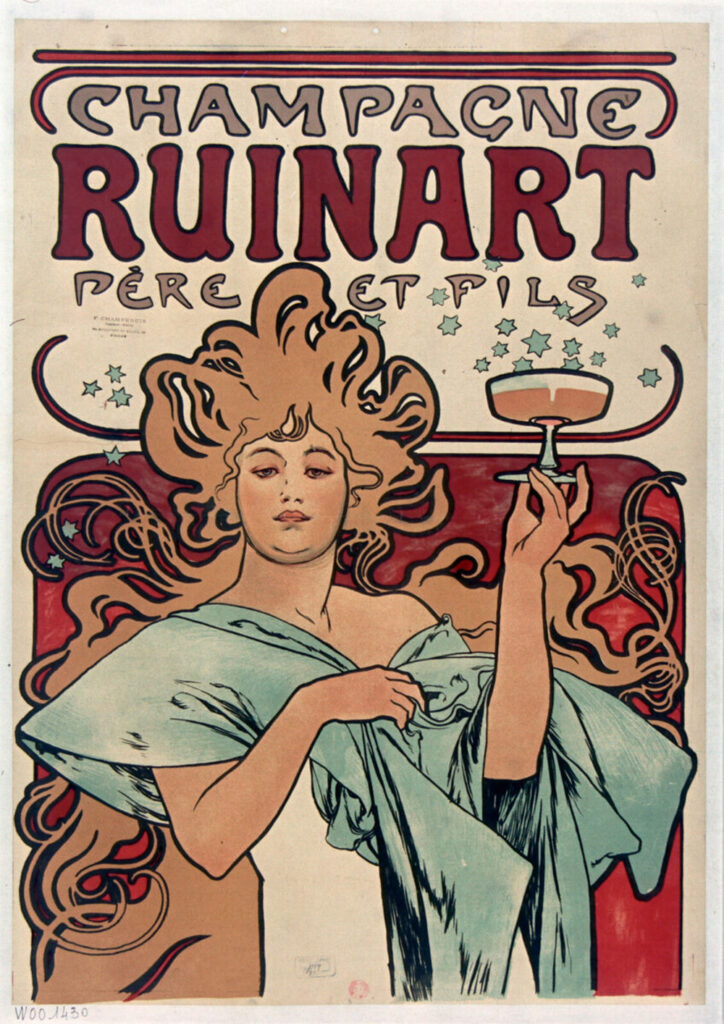
At first, Ruinart’s champagne was only sold locally. However, a decree signed by Louis XV in 1728, permitting the transportation of wine in crates of 50 to 100 bottles, significantly expanded the market. Nicolas was quick to seize this opportunity, as evidenced by meticulous entries in the Maison’s first account book, detailing shipment dates, vineyard acquisitions, and supplier transactions. The venture became so lucrative that by 1735, just six years after its founding, the Maison dedicated itself entirely to champagne production.
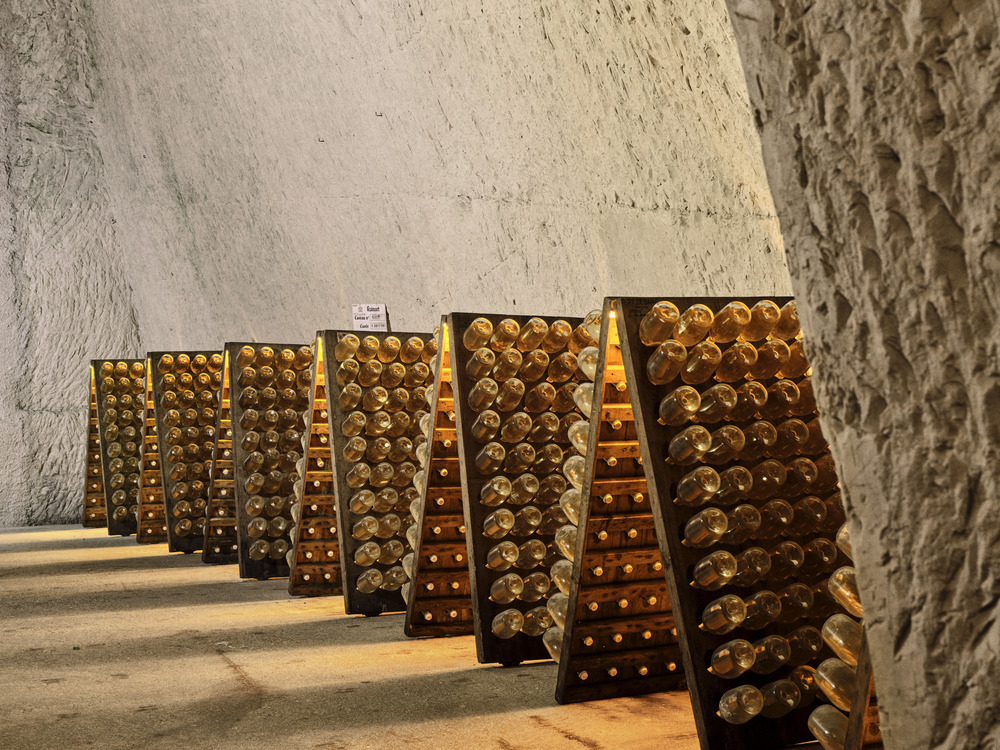
In 1768, the Maison shipped its bottles in wooden crates for the first time, an innovation which further boosted sales. Around the same time, Ruinart acquired ancient crayères (chalk cellars) beneath the city of Reims which it used to store its bottles.
Ruinart’s customers were mainly aristocrats in France and Belgium, and from 1760 onwards, the Maison gradually expanded throughout Europe. Nicolas, followed by his son Claude, travelled to Germany and the UK to develop the business, while their successor, Edmond Ruinart de Brimont, extended their reach to Russia in 1827 and the United States in 1831. François-Irénée Ruinart, the founder’s grandson, was just as enterprising, inviting King Charles X to Reims Cathedral, where he was crowned on May 28, 1825.
Almost a century later, Europe was in the grip of the First World War. Reims endured 1,051 days of bombardment, leaving 90% of the city in ruins. Undaunted, André Ruinart de Brimont moved the Maison’s operations into the crayères, where work persisted under the dim light of oil lamps. According to legend, when water pipes in the caves leaked, André adapted by relocating his desk onto a raft. Such resilience and innovation have defined Ruinart throughout its 296-year history. In 1764, the Maison became the first to ship rosé champagne across Europe, and its pioneering efforts continued into the 20th century with vintage and Blanc de Blanc wines.
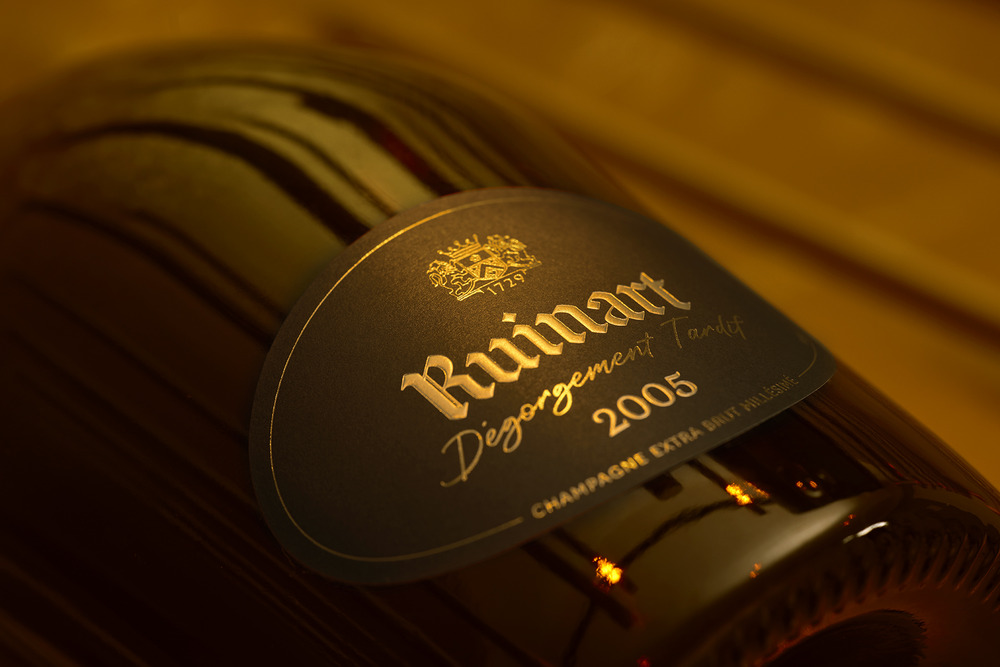
A recent innovation has been the release of four vintage brut champagnes (2004, 2005, 2006, 2007) that have undergone late disgorgement. Instead of disgorging an entire vintage at once, cellar master Frédéric Panaïotis keeps some bottles stored sur pointe (upside down) without lees, pausing their aromatic development. The layer of dead yeast cells forms a barrier between the cork and wine, limiting oxygen exposure and aroma exchange and allowing the wine to rest for decades before disgorgement and tasting. Panaïotis said: “One key aspect of long ageing lies in extended contact with the yeast. With these late disgorgements, slowly matured in the coolness of the Crayères, Maison Ruinart illustrates the capacity of its vintages to improve over time, while preserving the unique character of each harvest.”
In autumn 2024, Ruinart welcomed visitors to its refurbished premises at 4 Rue des Crayères in Reims after three years of renovations. You can also join a guided tour of the chalk cellars, which are listed by UNESCO, and sample two of Ruinart’s cuvées, so you can experience the magic of this historic champagne house for yourself.
Latest Posts:
- Sablé Biscuits with Strawberry Crémeux and Basil
- Booze-Free Calvados: What Normandy Offers Beyond Cider
- A Foodie Weekend in Montpellier
- Black Angus Sirloin Steak with Courgette Five Ways
- Tiana Salles: Bringing the Flavours of Nepal to France
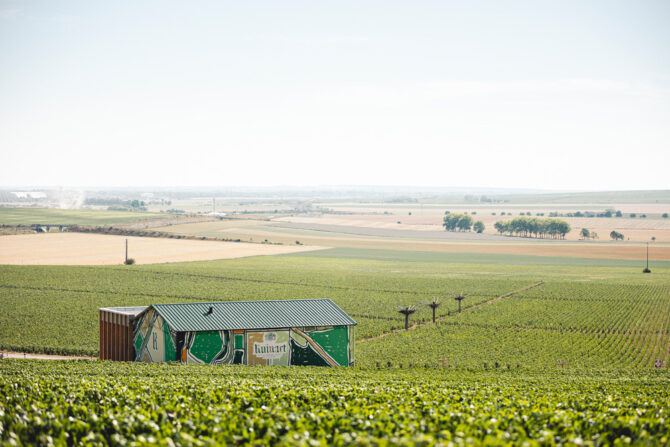
Lead photo credit : Maison Ruinart's vineyards © Mathieu Bonnevie
Share to: Facebook Twitter LinkedIn Email
Related Posts