Château La Garde – classic Bordeaux from Pessac-Léognan
There are properties in Bordeaux that proclaim their pedigree at first glance: grand façades, regimented tree-lined avenues, a sense of history worn like a medal. And then there are estates such as Château La Garde, which prefer to speak in a quieter voice, one that rewards attention, curiosity and time. In Pessac-Léognan, understatement is not a weakness; it is a virtue, and La Garde is one of its most eloquent expressions.
Set on the gently undulating gravels south-west of Bordeaux, La Garde does not shout for recognition. Yet to step into the vineyards and cellars is to encounter a property acutely aware of its place, its soils and its responsibility to express both in wine. Nowhere is this philosophy more clearly articulated than in the château’s mosaic tasting, a compelling, almost pedagogical experience that lays bare the complexity of Pessac-Léognan terroir.
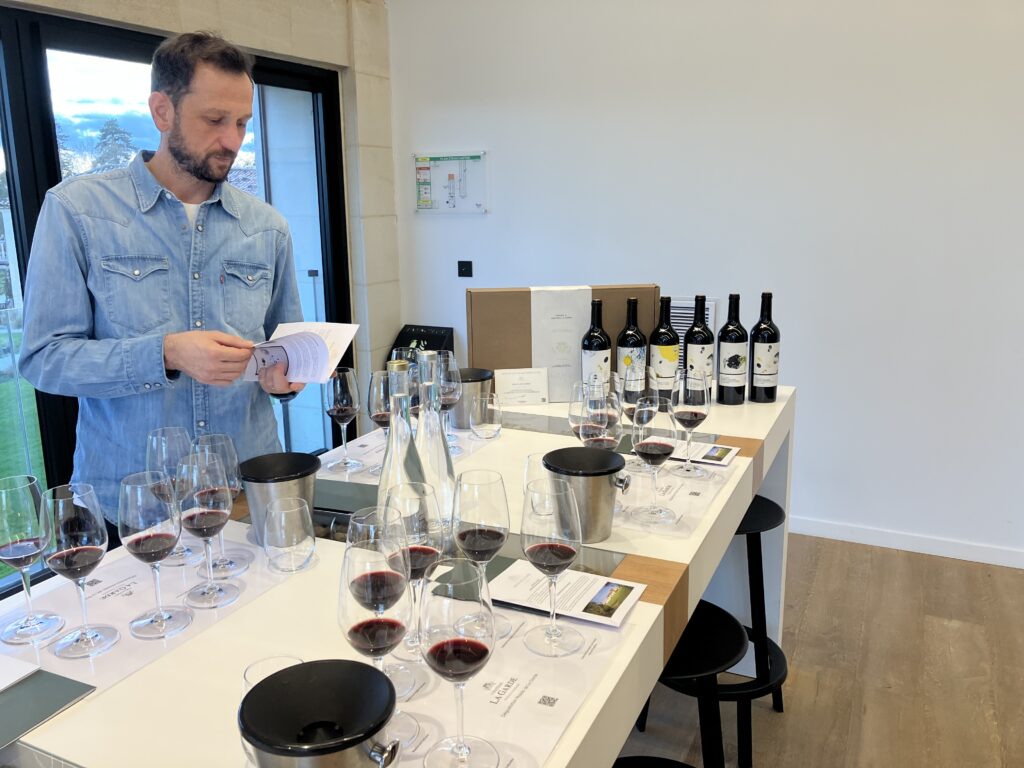
The mosaic wine tasting
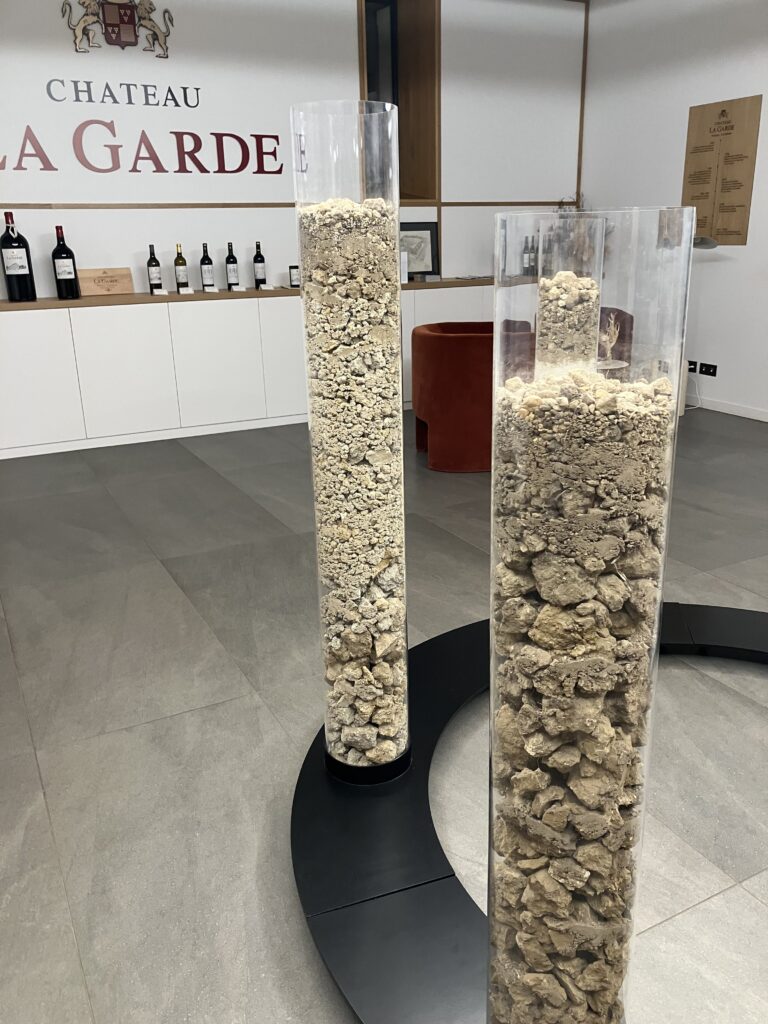
The mosaic tasting is not theatre; it is revelation. Glass by glass, parcel by parcel, the wines chart the subtle shifts in soil composition: deep gravels, pockets of clay and seams of sand and limestone. The way these soils interact with Cabernet Sauvignon and Merlot is demonstrated in fascinating comparative tastings in the bright, new tasting room at Château La Garde. One senses how marginal differences in exposure, subsoil and particularly water availability can alter tannin grain, aromatic lift or the cadence of the finish. It is an exercise that demands concentration but repays it richly, allowing the taster to understand that the final blend is not a formula but a changing dialogue between the land and the winemaker.
This is where Pessac-Léognan distinguishes itself from its more frequently revered neighbours. Saint-Émilion, with its limestone plateau and medieval grandeur, offers a verticality both literal and metaphorical that has long seduced the wine world. The Médoc, by contrast, is a triumph of scale and consistency, its great gravel outcrops delivering Cabernet Sauvignon of structure and longevity, codified by the enduring 1855 Classification. Pessac-Léognan sits apart, less rigidly defined and more quietly complex.
Unlike Saint-Émilion, where the limestone imprint can be unmistakable, or the Médoc, where the hierarchy of crus shapes expectations, Pessac-Léognan thrives on nuance. Its gravels are interlaced with clays and sands; its reds are complemented by some of the finest dry whites in Bordeaux. The appellation resists easy generalisation, and this has perhaps contributed to its relative discretion on the global stage. Yet it is precisely this freedom, unencumbered by historical classification, that allows estates like La Garde to innovate without abandoning tradition.
La Garde – a château with exceptional attention to detail
At La Garde, innovation is never ostentatious. It is rooted in observation, in the patient study of each plot, and in the conviction that elegance arises from restraint. The mosaic tasting underscores this point with clarity: the best parcels are not those that dominate but those that contribute balance and energy to the whole. The finished wine, as a result, is not an exercise in power but in proportion: fresh, finely textured and confidently poised. Extensive research has been undertaken and continues, with particular regard to water availability over time in different soil compositions, the key to the influence of terroir.
In the winery attention is given to the fermentation tanks. For the main wines of Château La Garde and the second wines called Terrasse de la Garde, specially designed stainless-steel tanks are used with different shapes depending on whether the grapes are Merlot or Cabernet Sauvignon, since they react differently in fermentation. It is a serious commitment to quality and expression, since each tank represents a significant investment and there are many.
Some special cuvées are fermented and aged in terracotta amphorae, reminiscent of fermentation vessels used by the Greeks and Romans centuries ago.
In stylistic terms, La Garde’s reds occupy a compelling middle ground between the opulence often associated with Saint-Émilion and the stern classicism of the Médoc. There is ripeness, but it is tempered by tension and an edge that speaks of the underlying gravel and patchwork of soils. The tannins are polished and elegant rather than imposing, the oak subtly integrated rather than overt. These are wines that invite return visits to the glass, revealing more with air and time.
If Saint-Émilion trades on drama and the Médoc on grandeur, Pessac-Léognan and La Garde in particular trade on intelligence. The wines do not demand admiration; they earn it. The mosaic tasting makes this abundantly clear, offering not a marketing narrative but an honest account of how place influences wine.
A new dimension to wine tourism
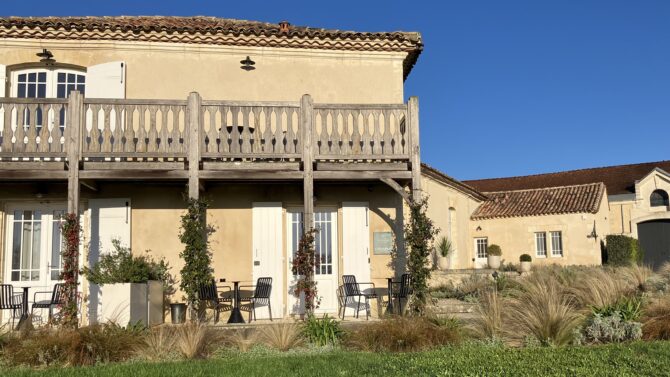
You can experience all this and more for yourself. Château La Garde has fully embraced the concept of wine tourism, with three luxury suites in a stone outbuilding that opened last year. Set overlooking the vineyards and distant woodlands, the peaceful environment is a haven for local wildlife, with deer and a multitude of bird species around the château, the suites and the winery. Powerful binoculars are available in each room for guests to observe and attempt to identify different birds.
The winery and barrel cellar are open for tours, together with the airy tasting room with huge glass windows looking over the vineyards. The mosaic tasting as previously described is a unique experience not to be missed. A delicious breakfast featuring local products is served in the dining room, where a flavoursome table d’hôte dinner can also be arranged with advance notice, accompanied of course by wines from the château.
Several different tours and tastings can be enjoyed, together with cookery classes in a superb environment. All should be booked in advance, along with the accommodation. La Garde was awarded a gold distinction in the Best of Wine Tourism awards of 2025.
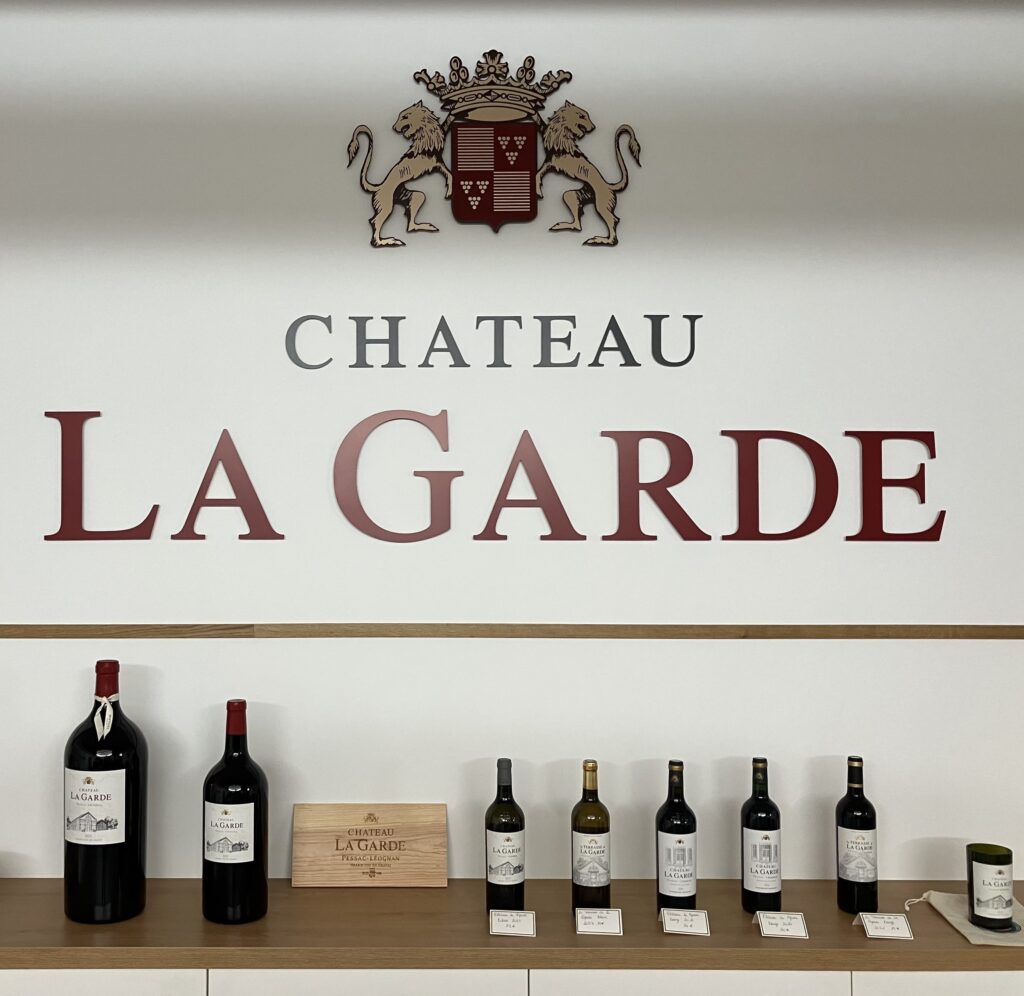
Château La Garde is a very worthy member of the Maison Dourthe group of wine châteaux, an organisation built on excellence whose roots go back to 1840.
In an era when Bordeaux is sometimes caricatured as monolithic or overly conservative, Château La Garde stands as a reminder of the region’s capacity for quiet precision and innovation. It is a beacon not because it dazzles but because it illuminates. For those willing to look beyond the obvious landmarks of Saint-Émilion and the Médoc, La Garde offers a compelling lesson in why Pessac-Léognan remains one of Bordeaux’s most rewarding and intellectually satisfying appellations.
About the Author
Richard Esling BSc DipWSET is an experienced wine journalist, writer, educator and consultant. With experience in the wines and spirits industry spanning several decades, he is a member of the prestigious Circle of Wine Writers and an International Wine Judge. www.winewyse.com
Looking for more French food and drink content?
In our magazine we offer a whirlwind tour of the best gastronomic destinations. Discover La Belle France’s renowned markets, quirkiest food festivals, most indulgent restaurants and foodie experiences.
Lead photo credit : Les Chambres at Chateau La Garde - Richard Esling
Share to: Facebook Twitter LinkedIn Email
More in Chateau, Wine, Wine tasting
Related Posts