What is the Maillard Reaction?
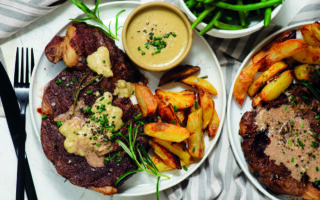
If you’ve ever wondered why a roast chicken smells irresistible or why a properly seared steak tastes so much better than a pale one, you’ve already encountered the Maillard reaction.
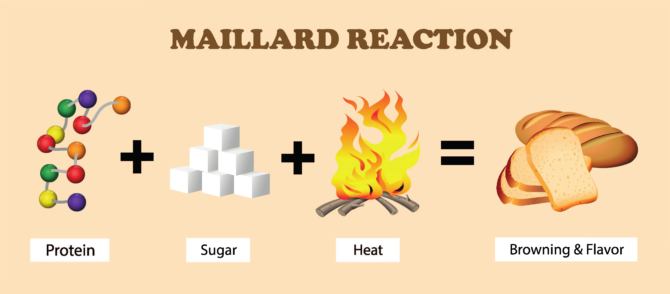
It all goes back to French chemist Louis-Camille Maillard, who in 1912 was studying human metabolism. While heating amino acids and sugars together in the lab, he noted how they browned and released complex aromas. He published his findings that same year, identifying what was, in effect, an entirely new set of reactions. It’s the process that occurs when heat transforms proteins and sugars into hundreds of new flavour compounds. In simpler terms: it’s what makes food brown – and, crucially, delicious.
This is not the same as caramelisation, which concerns sugars alone. The Maillard reaction is more complex and more savoury. It’s responsible for the crust on bread, the golden skin on a roast chicken, the deep flavour of grilled meat and even the aroma of coffee. Without it, cooking would be a rather beige, flavourless affair.
Heat is the key to producing the Maillard reaction. Too low and food simply cooks; too high and it tips into bitterness. The Maillard reaction becomes noticeable at around 140°C to 165°C, when colour deepens and flavour follows, and accelerates as temperatures rise. Below about 120°C, there is little more than gentle cooking, while above roughly 180°C the risk is burning rather than browning. It also relies on dry heat: moisture holds temperatures down, which is why meat is patted dry before searing and why overcrowding a pan is a cardinal sin. Without space, ingredients release steam and that moisture prevents browning, so instead of a delicious golden crust, you end up steaming your food into submission.
Of course, chefs have always used this process, long before it had a name – after all, like Maillard, they recognise when something smells good.
Lead photo credit : Shutterstock
Share to: Facebook Twitter LinkedIn Email
Related Posts