Inside Le Café by Nicolas Rouzaud: The Connaught Pastry Chef’s New London Café
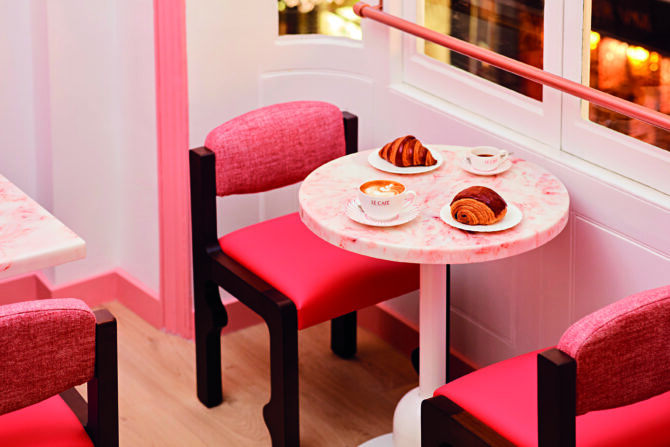
French pâtissier Nicolas Rouzaud, who is best known as executive pastry chef at The Connaught in London, is blurring the line between haute pâtisserie and everyday café culture at Le Café by Nicolas Rouzaud in Burlington Arcade. Poppy Pearce pays a visit…
There exists a fundamental divide in French food culture. On one side sits fine dining: haute pâtisserie, Michelin-starred restaurants, experiences reserved for special occasions. On the other sits café culture: the daily ritual of stepping into a neighbourhood boulangerie, leaving with a baguette tucked under your arm, the simplicity of sustenance woven into everyday French life.
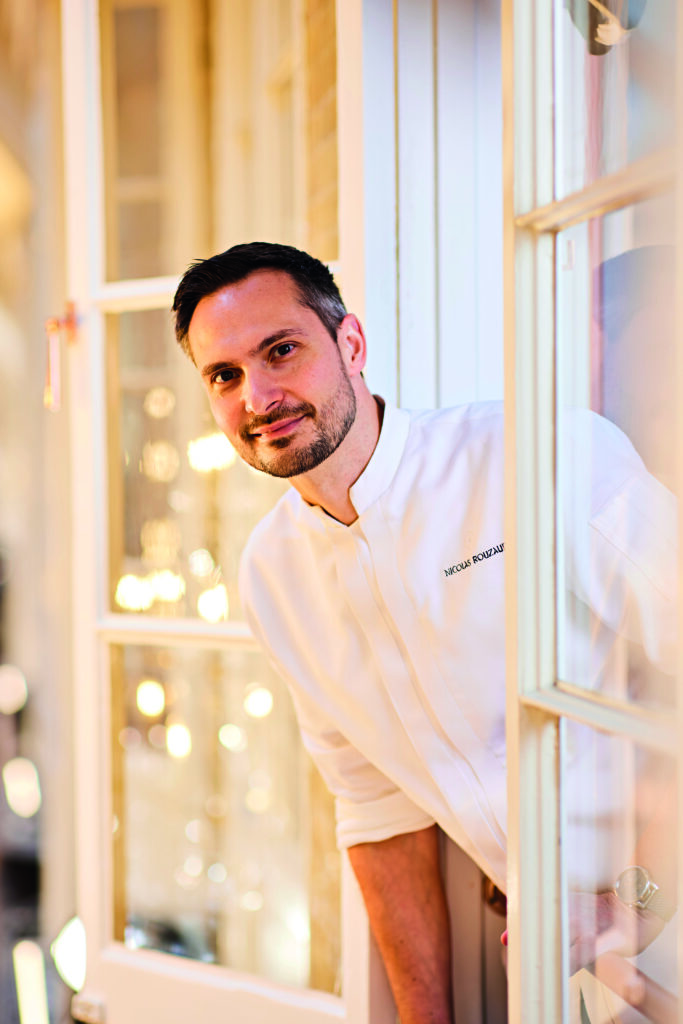
These two worlds have long been separate. But when I sit down with French pastry chef Nicolas Rouzaud in his newest venture, he poses a question that feels both obvious and oddly radical: what if they don’t have to be? Rouzaud belongs to a new generation of pastry chefs redefining the boundaries of their craft. Born in Toulouse and shaped by the rhythms of his family’s orchard, his work seamlessly blends French tradition with modern innovation – refining timeless recipes through seasonality and elegance.
From Toulouse to The Connaught: Rouzaud’s Pâtisserie Training
“In France, we didn’t have specific coffee shops,” Rouzaud says, reflecting on his childhood. “It was mostly pâtisseries or boulangeries. You go there, buy your bread or cake-mostly for the weekend or celebrating something-and you eat it at home. Most of the time you are not eating in the shop.” Café culture, as he describes it, was never about lingering or socialising; it was an in-and-out rhythm that left little room for pause.
Fine dining, by contrast, asks for your full attention and then some. This is the world he inhabits at London’s Nicolas Rouzaud at The Connaught, where pastries are treated with near-reverence. “Luxury pâtisseries are like jewellery shops,” he says. “There are endless details, and a lot of structure. They require so much work and attention.”
Sitting across from him, it is clear he is less interested in choosing between these worlds than in dissolving the divide altogether.
This approach didn’t appear overnight. Rouzaud began his apprenticeship at 17, moving through France’s highly specialised system – Bordeaux, Grenoble, Brussels, Nîmes before refining his craft at Paris’s Le Bristol Paris under Éric Frechon. There, in the rarefied world of three-Michelin-star dining, he absorbed a level of precision that now underpins everything he does.
“I learned the pastry side of the restaurant,” he says. “I learned how to make ice cream. I learned how to cook hot food like soufflé. I learned all the different textures that you cannot have in a pastry shop.”
Seasonality: Why Rouzaud Only Bakes With Fruit in Season
But the real foundation was laid much earlier, in his family’s orchard in southern France. “It starts in April with the first strawberry, until September with the figs. The sensation when you’re a child and you pick raspberries straight from the bush and they are warm from the sun-that is just amazing.”
“I remember when it was plum season in September, my mum would throw them in the pool and I would dive in and eat them while they were still warm.” Hearing this made me smile, and slightly envious too. You get the sense that for Rouzaud, seasonality isn’t a trend or a buzzword; it’s something he has lived and thinks of fondly. “I will always work with the season,” he says simply. “In all my pastry with fruits, you always have fresh fruit on it. Always.”
It’s also where he begins to push against one of modern pastry’s quiet compromises: consistency at all costs. “I prefer to stop serving a pastry for one or two days if the ingredients are not in season,” he says, “instead of serving a product that is not perfect.”
For Rouzaud, the challenge is not choosing between haute pâtisserie and café culture, but reconciling them.
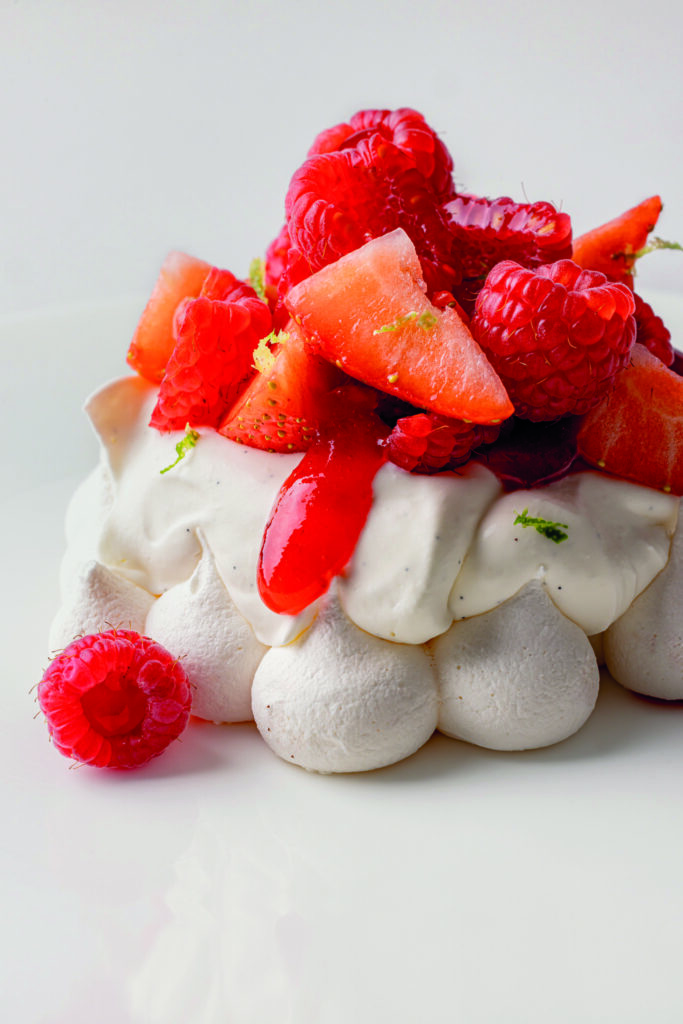
“Let’s take the Saint-Honoré,” he says. “If I make the piping a bit simpler, but use the same recipe, it will still taste the same. It would require less work, and so the price is a bit more accessible.” The quality remains; only the expression changes. It’s an idea that has been forming for years – something closer to a French all-day brasserie combined with a coffee shop: less formal, more lived-in, but still anchored in the same tradition.
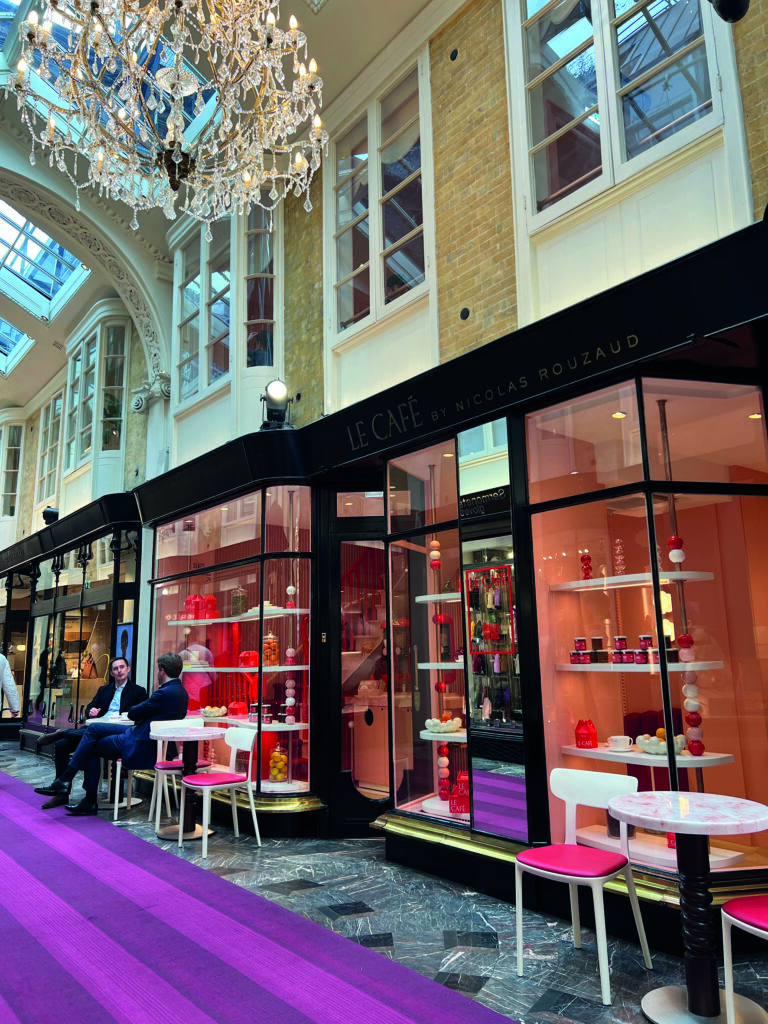
It now takes shape in Le Café by Nicolas Rouzaud, tucked inside Burlington Arcade.
What Is Le Café by Nicolas Rouzaud Like?
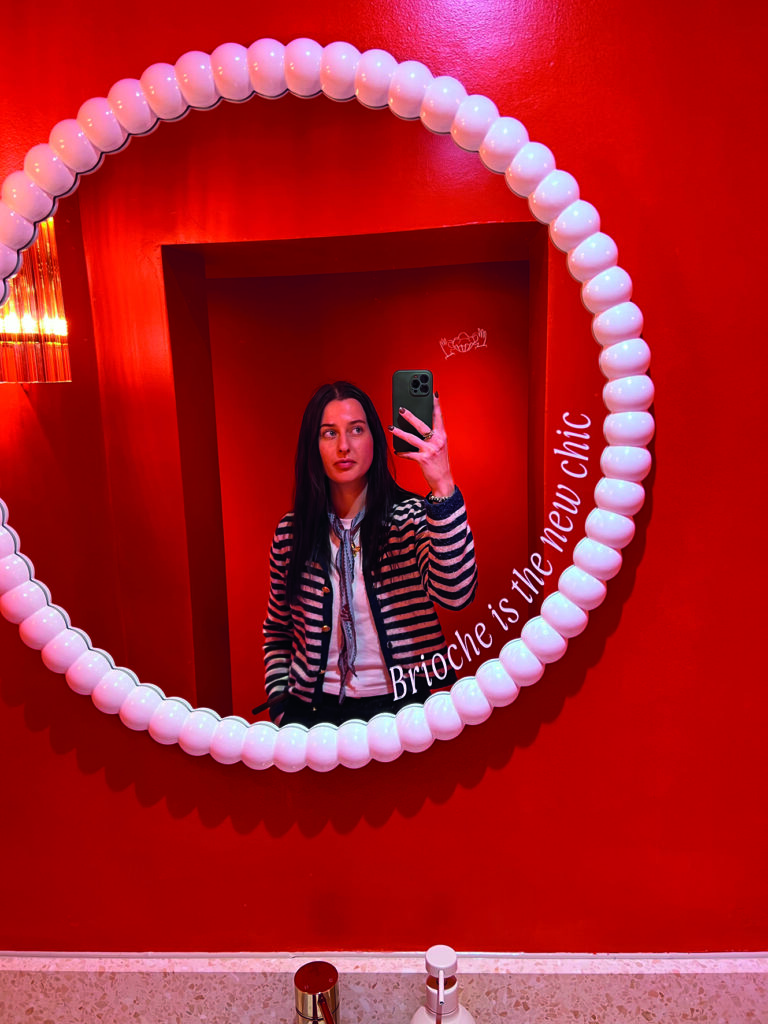
When I meet him there, the difference is immediate. It is neither the brisk, transactional pace of the boulangerie of his childhood nor the studied precision of haute pâtisserie, but rather something in between -people are lingering, gossiping and working on laptops. Rouzaud later tells me he was involved in everything, from the staff uniform to the takeaway packaging to the art. I find myself absent-mindedly humming along to the music before complimenting him on it, only to learn he chose the playlists too. Even a quick stop in the bathroom feels exciting – bright red, scented with Rouzaud’s own line of hand products, and, admittedly, worthy of the obligatory mirror selfie.
The Brioche à Tête: Le Café’s Signature Dish
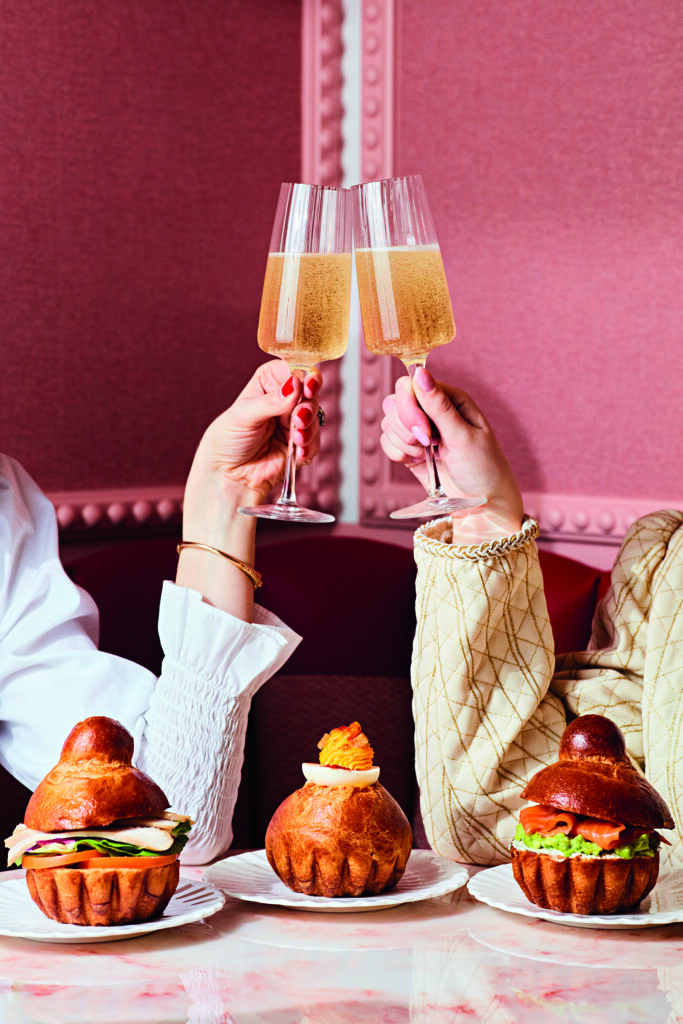
His philosophy comes into focus through one deceptively simple offering that takes centre stage on his menu: the brioche à tête. Recognisable by its small ‘head’, it’s a traditional form that has largely disappeared, mostly because it takes too much time to make. For Rouzaud, that’s precisely the point.
“My father, when I was a teenager, would buy brioche and remove the inside, putting egg, ham and cheese inside, before putting it back in the oven,” he says. “Then you eat it with your hands, and when you open it, everything is oozing with cheese.”
It’s not exactly refined, and it’s definitely not plated with tweezers – and yet, it may say more about classical French food culture than any perfectly executed dessert.
Tradition Reimagined: The Future of French Café Culture
On my visit, a limited-edition Chinese New Year version-bright with passion fruit and citrus-carries that same idea forward.
Around me, other tables lean into more comforting options, such as soup served in brioche, generous and rich, but handled with the same care as anything served in a dining room. Rouzaud already speaks of expanding the concept-three or four more, perhaps beyond London, maybe even back to Paris.
With UNESCO now seeking to protect French cafés and bistros as cultural heritage, the instinct might be to preserve them as they are unchanged, untouched. But Rouzaud sees it differently: culture cannot be preserved by freezing it-it has to be lived.
His answer is a concept that blends the warm familiarity of a French brasserie with the ease of a modern coffee shop. By lowering price without sacrificing quality, Rouzaud is opening the door to a wider audience -adapting haute pâtisserie and café culture into a format that can travel far beyond France, without losing its unique identity.
Lead photo credit : © Steven Joyce
Share to: Facebook Twitter LinkedIn Email
More in brioche à tête, Burlington Arcade, Éric Frechon, Food and Drink, French brasserie, French café culture, French pastry chef, French Pâtisserie, French restaurants in London, haute pâtisserie, interviews, Le Café by Nicolas Rouzaud, London cafés, Mayfair, Nicolas Rouzaud, Saint-Honoré, seasonal baking, The Connaught, Toulouse, UNESCO French cafés
Related Posts