How did French fizz become the drink of choice for celebrations?

It wouldn’t be the festive season without une coupe (or several) of champagne, which in France is an essential part of the celebrations. But when and how did this particular French fizz become synonymous with special occasions the world over?
In Champagne: A Global History, Massachusetts-based wine and food journalist Becky Sue Epstein explores the history, culture and global influence of champagne and its sparkling siblings. Part of Reaktion Books’ Edible series, it traces the origins, evolution and worldwide appeal of sparkling wine, from its medieval roots in France to its transformation into a symbol of luxury across the globe.
The tradition of celebrating with champagne began with French royalty, who had enjoyed the wines of Champagne since the end of the fifth century AD when their reigning monarch, Clovis, was baptised in the cathedral at Reims. It became a tradition for the kings of France to be crowned in Reims Cathedral, and to mark the celebration with the wines of Champagne. As far back as the 11th century, the wines of Ay in Champagne were well known outside the region because Pope Urban II came from this area. The French king François I prized Champagne’s wines in the early 16th century, as did Henry III later in the century, when one of his trusted advisors married into the Sillery family from the area near Reims. The advisor’s wife brought her family’s wine to the court, and from then on Sillery wine was in demand. Though now rarely recognised outside of Champagne, Sillery was one of the first significant champagnes.
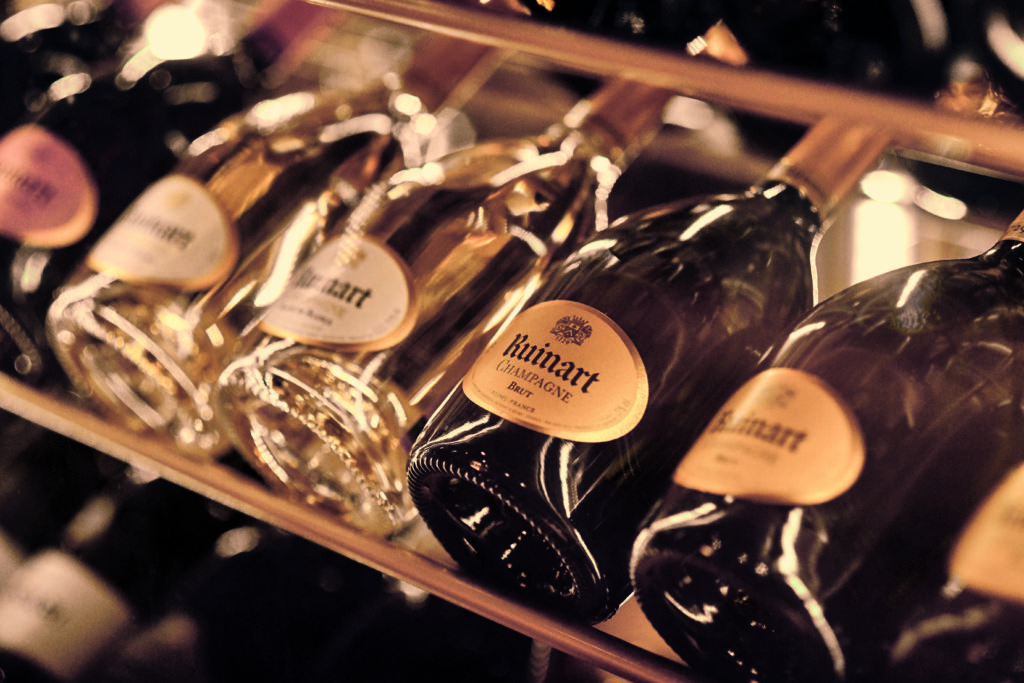
Eighteenth-century winemakers in Champagne learned to stabilise the production of their sparkling wine, enabling them to create and service markets in countries as distant as the USA and Russia. Many of today’s champagne houses originated in the 18th century, in addition to Ruinart, there were pioneers like Moët, Piper Heidsieck and Gosset, whose champagnes are among the best known even today.
Through the 1700s and early 1800s, this evolving industry was impeded by sporadic climatic and economic factors, including periodic poor grape harvests and wars that encompassed France as well as Champagne’s export destinations. But the merchants of Champagne were aided by political events as well. Early in the 18th century, the champagne business was really set in motion by new transportation policies. In its native land. champagne’s popularity had continued to expand. As in other countries, royal courts in France during most of the 18th century were legendary for their excesses. The ruling regent of France from 1715 to 1723 was the powerful Philippe II, Duc d’Orléans, who apparently spent much of his time under the influence of champagne. An often quoted 1716 letter from the duke’s mother contains a claim that her son drank only the wines of Champagne, which were basically wholesome, being so gentle and frothy.
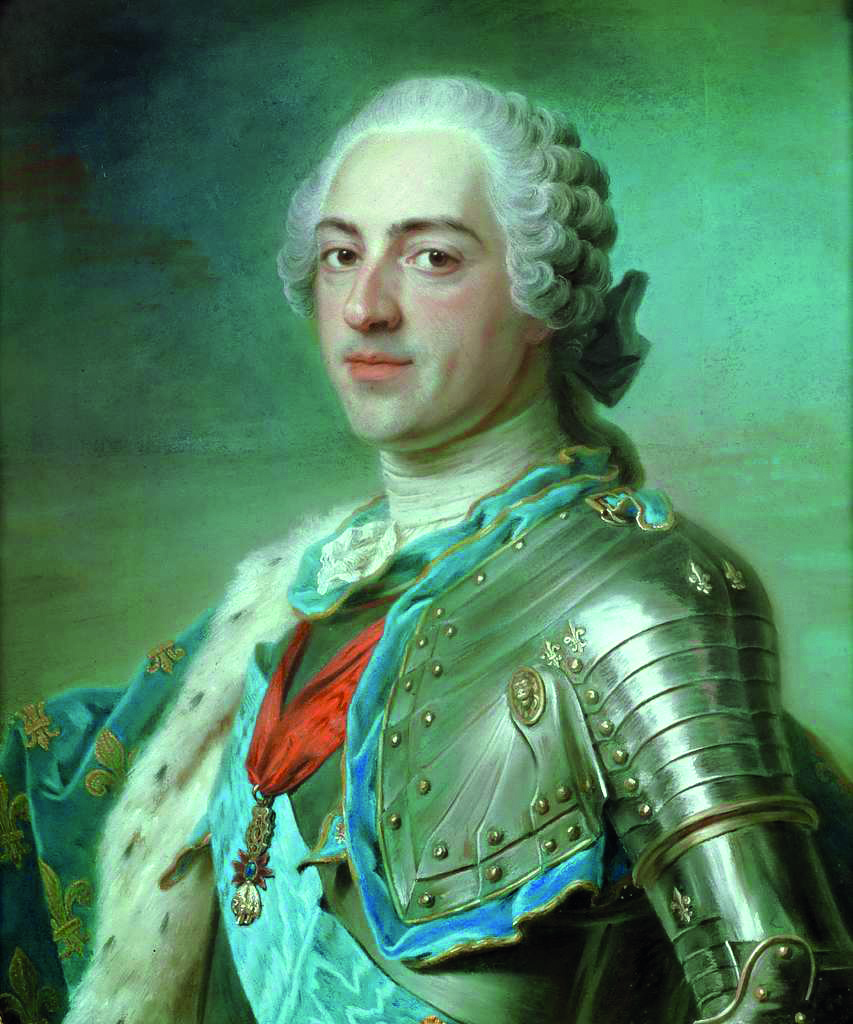
With a few sips-or more likely a few glasses – everyone became wittier, more attractive and much less restrained. Philippe’s handsome nephew, King Louis XV, subscribed to this theory when he took the throne in 1723. This affinity no doubt contributed to the champagne producers having the king’s ear. In 1728, the champagne industry was changed by a royal decree allowing the wines of Champagne-and only Champagne – to be transported in bottles. (All other wines had to be shipped in barrels.) This momentous ruling guaranteed that authentic, bottled sparkling wine could be sent directly to consumers not only in France, but in England, Holland and other countries.
Soon, a variety of merchants, honest and otherwise, attempted to enter the champagne business. Some of them became bona fide producers, like pioneer Nicolas Ruinart, who had been a wool merchant. Ruinart didn’t have his own vineyards, but he and his father began to bottle and age champagne. He began selling champagne to his existing wool customers. In 1730, he sold only 130 bottles, but the champagne business grew so rapidly that by 1739, Ruinart had just about given up his wool trade to deal in wine. Nicolas’s son, Claude, was even more of a marketer, and became a man of influence in Reims. Some brokers began to make the champagne themselves, like Claude Moët, who grew grapes in Champagne.
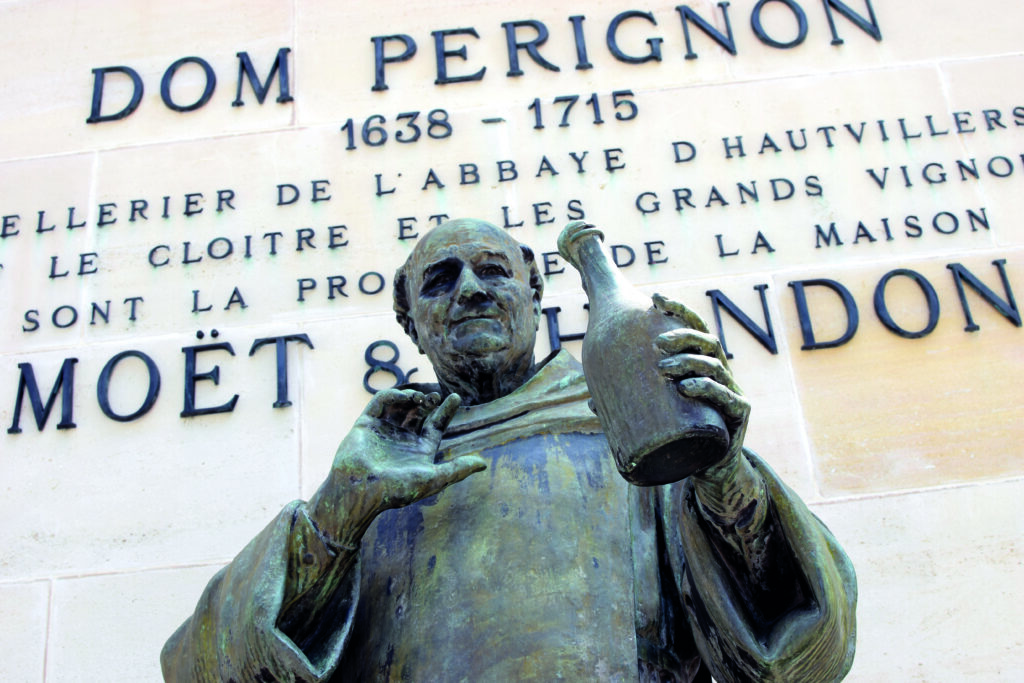
Though the firm Moët & Chandon dates its establishment from 1743, Moët himself had been a wine trader since the early part of the century when he began to travel to the royal palace at Versailles to sell his wines in person. He was able to gain audiences with influential people not only because of his strong salesmanship, but because of his pedigree: an ancestor of his had fought with Joan of Arc in the 15th century.
In 1735, Louis XV publicly took an additional interest in this favourite royal beverage, and regulated the amount, type of bottle and closure to be used for the sparkling wines of Champagne: there should be no less than 750 ml (25 oz) in a bottle, with three strings to be used in tying on the cork. The bottle (flacon) was bulb shaped with a long, narrow neck. Sometimes the coat of arms of the producer was imprinted on the glass. Champagne was gaining its own identity in the wine world.
Soon after quantities of champagne were ordered by the tastemakers in Paris and Versailles, demand for this new, sparkling beverage multiplied further.
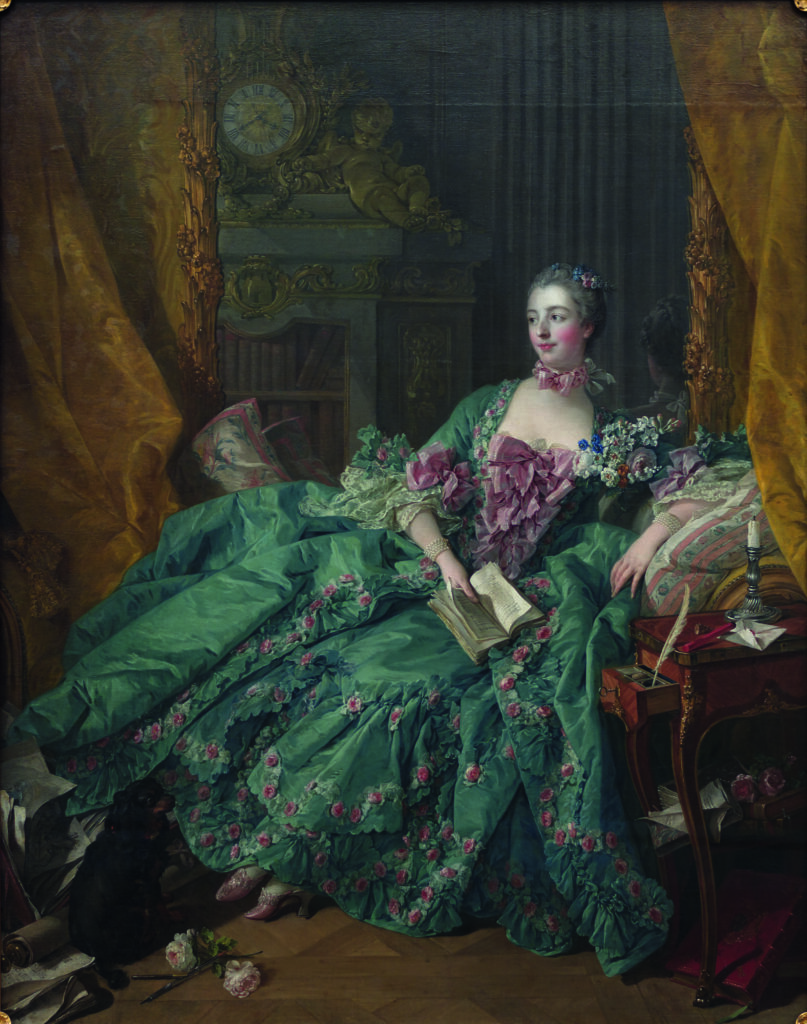
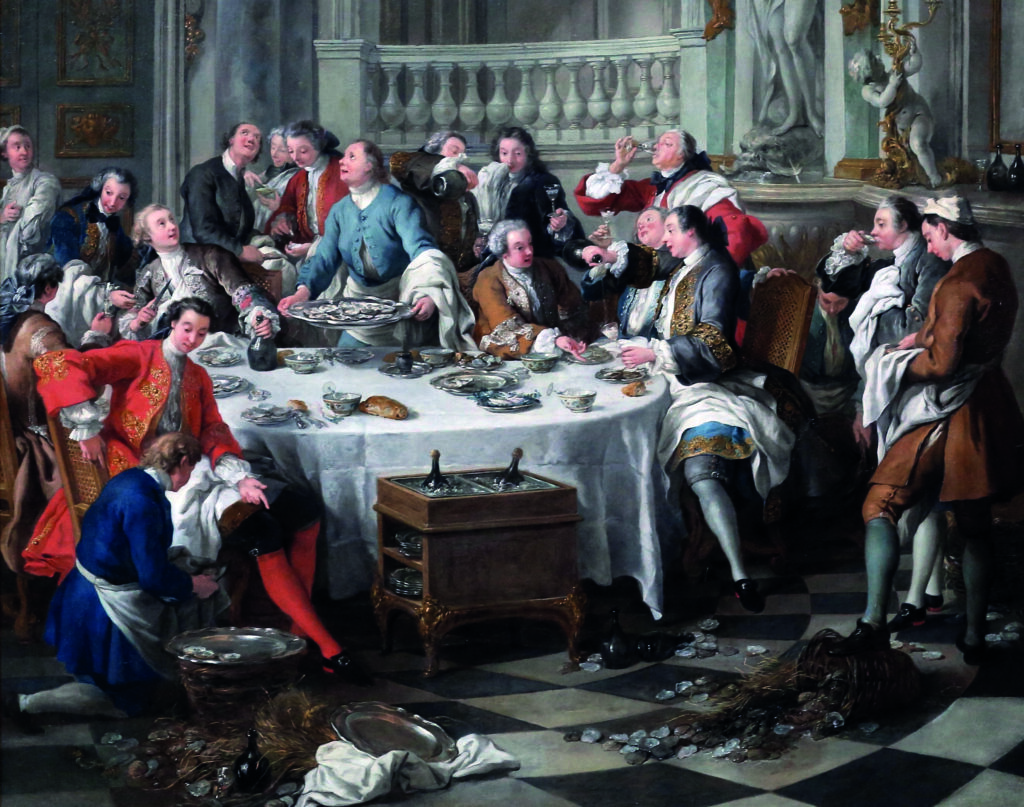
By the mid-1700s, Claude Moët was supplying champagne to Louis XV’s mistress, Madame de Pompadour, and producing more champagne than the entire rest of the region. Champagne was being served at all important events in the court. As early as 1735, the king had commissioned several paintings of an idealised champagne lifestyle by well-known artists of the era, including Le Déjeuner d’Huîtres by Jean François de Troy and Le Déjeuner au Jambon by Nicolas Lancret.
Once Moët got his contract to supply the court at Versailles, he was still taking great chances because champagne producers commonly lost 20% or more of their bottles during production, storage and transportation – and sometimes as much as 90%. Somehow, Moët kept his losses low. By 1762 he was the largest champagne producer in the region, also exporting to clients in England, Germany, Russia and Spain.
Ragingly popular at the French court, champagne’s influence swelled rapidly. Monarchs of the time were absolute and terrifying in their power. If they – and their wives, influential courtiers and mistresses -wanted to drink champagne, everyone raised their glasses and drank champagne.
Champagne became the most sought-after libation of celebration for the elite in the capitals of the Western world as the 18th century moved forward.
Late in the century, 1776 was both a bad and a good year in champagne commerce. It was the beginning of the US War of Independence, with the British blockade of American ports. In Champagne, producers experienced the highest ever rate of breakage of bottles, which was blamed on particularly explosive yeasts. But during the same year, French champagne commerce was deregulated and it was no longer under royal supervision. Now, anyone who desired could enter the field and try their hand at brokering champagne.
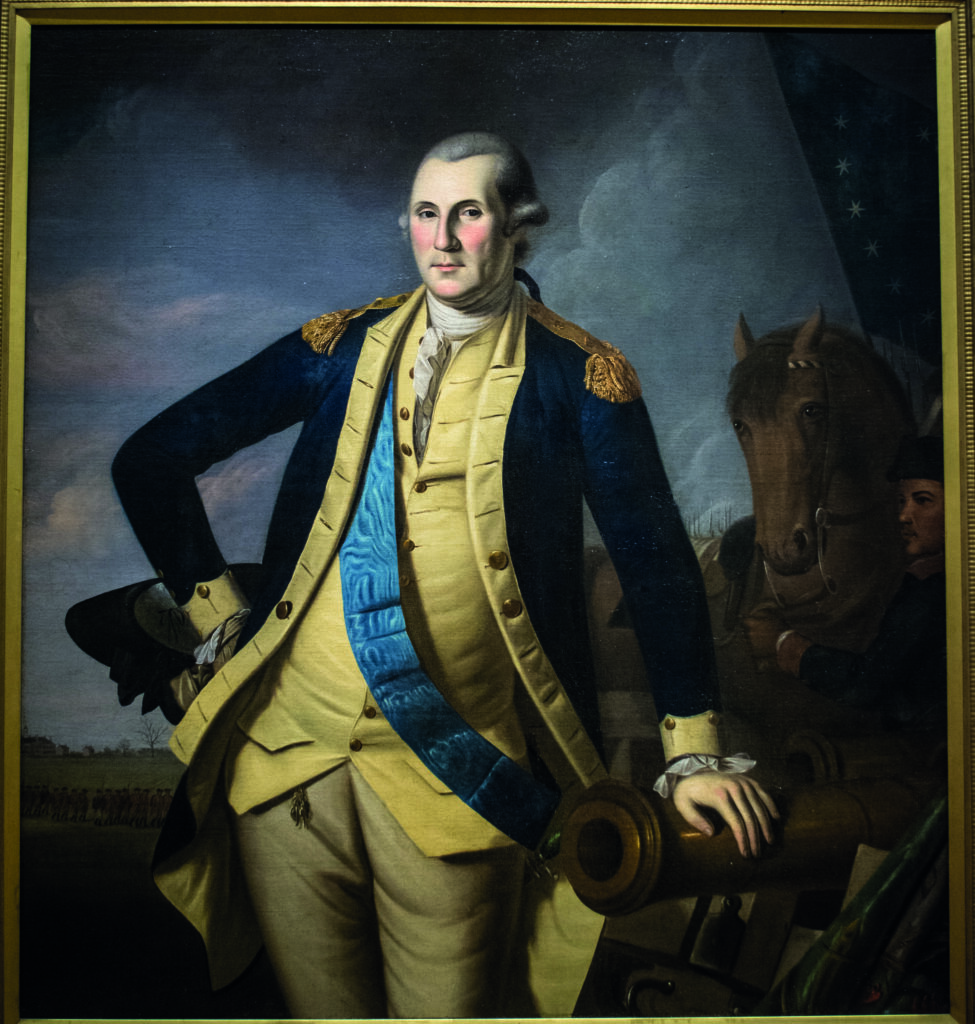
After the French Revolution the monasteries were disbanded, and, with demand skyrocketing, anyone who could get their hands on grapes or wines was making champagne. George Washington, the first president of the anti monarchist 32 United States, served champagne at a state dinner in 1796: champagne consumption was no longer just for the titled aristocracy.
Extract from Champagne: A Global History by Becky Sue Epstein is published by Reaktion Books, priced £12.99/$19.95
Looking for more French food and drink content?
In our magazine we offer a whirlwind tour of the best gastronomic destinations. Discover La Belle France’s renowned markets, quirkiest food festivals, most indulgent restaurants and foodie experiences.
Lead photo credit : Shutterstock
Share to: Facebook Twitter LinkedIn Email
More in Champagne, Drinks, History
Related Posts