Bouchons, estaminets and winstubs: Regional dining in France
Alexander Lobrano eschews the fine-dining which earned France its reputation as culinary capital of the world and goes in search of the homely cooking to be found in the bistros and taverns in the north and the east of the country…
That much-revered gastronomic monument known as French cooking is deliciously chimerical, because it’s difficult to describe. Suffice it to say that the five mother sauces (béchamel, velouté, espagnole, hollandaise and tomate) invented by Marie-Antoine Carême during the 19th century and later codified by August Escoffier gave France a global reputation for spectacular succulence.
These sumptuous sauces primarily appear in cuisine bourgeoise preparations and luxurious restaurants rather than the canon of French home cooking. The daily diet of the Gauls is no less delectable, however, since it includes a variety of enduring favourites, such as boeuf bourguignon, quiche Lorraine, cassoulet and bouillabaisse, among others.
What all of these dishes have in common is their origins in the regional kitchens of France, which are the eternal bedrock of French gastronomy.
Discovering the regional kitchens of France is one of the great pleasures of travelling in the country. Some regions even have unique restaurant idioms that specialise in serving their regional dishes, notably the supremely cosy but little-known estaminets of northern France, the bodacious bouchons of Lyon and the epicurean winstubs of Alsace. All three are places I’ve been in love with ever since 1 discovered them because of their hearty, satisfying food cooked to nourish hard-working people, as well as their contagious conviviality. French regional cooking is also the quintessential expression of terroir, whereby produce grown in a specific place according to specific methods is revered.
The bouchons of Lyon
Truth be told, my relationship with the bouchons of Lyon wasn’t exactly a love story from the start. In fact, during my first meal at one, I found myself thinking it served me right to come up against such frightful food for duping the friend I was travelling with, another penniless student in London, into stopping off in the city en route to Rome for Christmas with the promise that Lyon had one of the world’s great military museums. It doesn’t, though. The reason I wanted to stop here was that I’d read about the city’s bouchons in my guidebook and on a raw, wet winter’s day they sounded wonderful. So we left our dirt-cheap triangular hotel room with a single porthole-like window looking onto an air shaft and went to one of the bouchons the guidebook recommended.
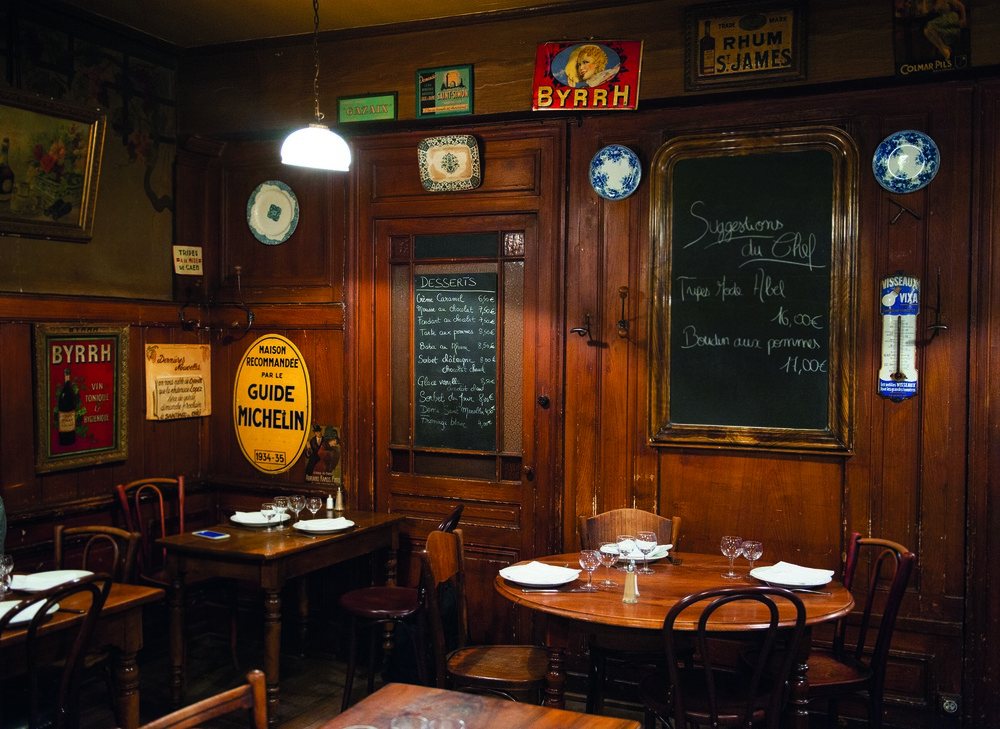
The guidebook described bouchons as a “friendly sometimes boisterous places serving delicious Lyonnais comfort food, especially offal, for affordable prices”. A list of five were given and we chose the one nearest our hotel. On our way, I found myself wondering about offal-specifically, what it was. As far as I knew, it had never figured in the diet of my suburban upbringing in New England, so a surprise of some sort was looming.
It wasn’t only that I spoke very bad French, but nothing on the menu at the bouchon was even remotely familiar. Finally, the waitress, with carrot-coloured hair and a thick grey cardigan buttoned over her ample bosom, suggested we try tablier de sapeur, a dish neither of us knew, and we agreed. When I translated this name with my pocket dictionary, it offered up the very puzzling ‘fireman’s apron’. What could that be? Eventually a large, thin square of something in an appealing crust of browned breadcrumbs arrived with some sauce rovigote, a sort of herby mayonnaise. It looked rather good, like a French version of wiener schnitzel, but it had a bizarre, rubbery texture and was very, very chewy. This is disgusting said my friend.
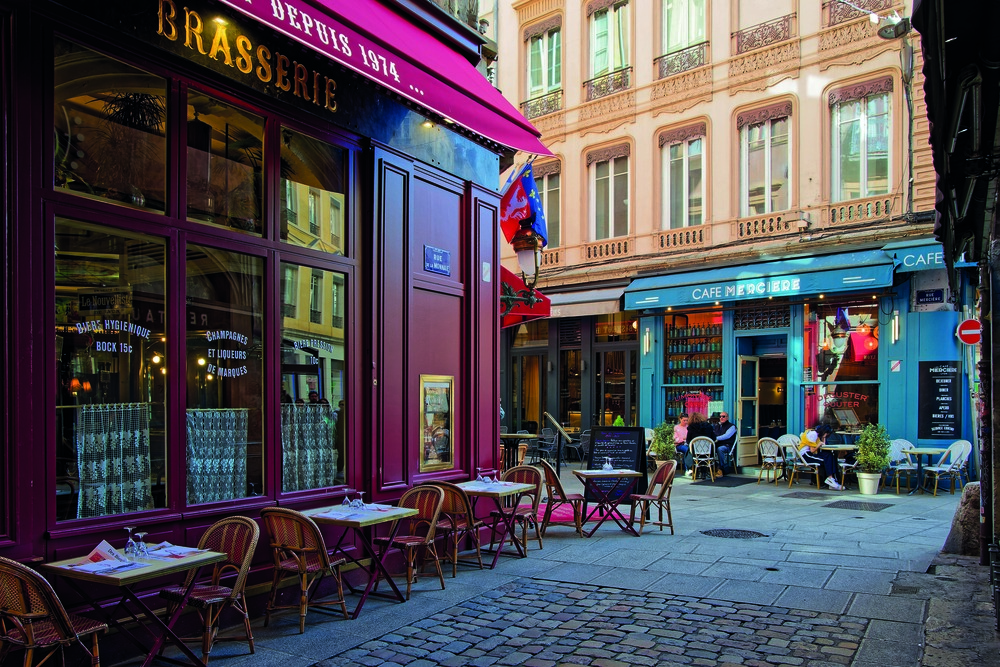
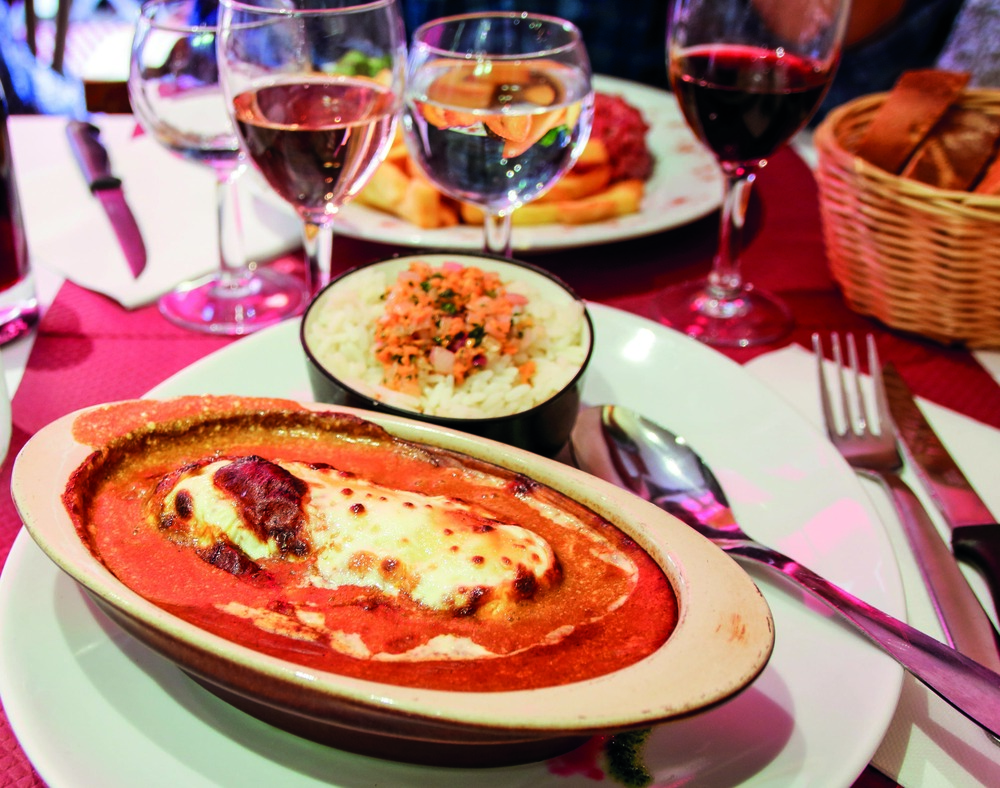
Suddenly, a friendly-looking older man at the next table piped up in perfect English. “It’s tripe, from the stomach of a cow and the name of the dish you’re eating comes from the rubber-coated canvas aprons firemen wore in France in the past.” These nice travelling salesmen thought it was hilarious to come across two American kids eating tripe for the first time and kindly offered us snifters of Armagnac as a reward for our daring. So we went home tipsy, if still hungry, and on the way, my friend vowed he’d never forgive me for taking him to a bouchon as long as we lived. For my part, I couldn’t wait to try one again, because of the little piece of poulet sauce écrevisse (chicken in a creamy, terracotta-coloured crayfish sauce) one of the men let me taste. On my next trip to Lyon, I discovered the one that’s still my favourite.
MY FAVOURITE: Le Garet, Lyon
A meal at Le Garet is an intimate and bawdy pleasure that never disappoints. This small, dark, bric-a-brac-filled bouchon on a narrow side street in downtown Lyon is profoundly French, reliably jovial and insistently communal. This doesn’t mean you can’t have a quiet meal on your own, but to do so is to miss the point. This is why, as a solitary diner, I’ve often shared a table here, my most memorable tablemate being a voluble priest. He suggested we share a bottle of Saint-Joseph instead of the plonk served in heavy glass carafes and when I hesitated, he said, “The church is buying”. I had a big salade Lyonnaise-curly endive with croutons, chunks of bacon and a coddled egg, quenelles de brochet fluffy pike perch dumplings in a crayfish sauce; cervelle de canut a fresh creamy cheese seasoned with shallots, garlic, herbs and olive oil; and finally a scoop of cassis (blackcurrant) sorbet drowned in a generous pour of Marc. After lunch, we walked together as I headed for a tram stop. Then he gestured at the church across the street. “This is my stop and if you ever have anything you need to confess, you know where to find me,” he said.
7 rue Garet, Tel. (33) 04 78 28 16 94. Average lunch for two €120.
HIGHLY RECOMMENDED:
La Meunière, Lyon
This century-old restaurant is packed by its many regulars at every service and what fascinates is that they’re such a mix of ages and outlooks, all brought together by a love for this happy place, which is decorated with old paintings and kitchen utensils. Come hungry and tuck into the all-you-can-eat appetiser option, which includes pork muzzle salad, lentils with cervelas sausage and veal trotters. And then try the veal kidneys in port sauce or maybe a flank steak in a sauce of Saint-Marcellin cheese.
11 Rue Neuve, Lyon ist arrondissement, Tel. (33) 04 78 28 62 91, www.lameuniere.fr
Prix-fixe menus: Dinner €35/€38; lunch €26.50/€23.
ALSO EXCELLENT: Les 4G, Lyon
In an outlying part of the city, this bouchon was voted Lyon’s best last year and has a down-to-earth bare bones décor of a big bar inside the front door and tile floors. Expect Lyonnais specialities like marrow bones, tripes, lamb brains, quenelles and calf’s head with sauce gribiche. A warm, friendly and distinctively Lyonnais atmosphere. 27 rue Gorge de Loup, 9th arrondissement, Lyon, Tel. (33) 04 37 46 56 42. www.facebook. com/les4g. Average lunch for two €80.
The estaminets of Le Nord
Dashing through Dunkirk or Calais on their way to holidays elsewhere in France, very few people know that there’s some seriously good cooking to be found in the snug brick taverns that dot the high streets of tidy villages in the Pas de Calais and Le Nord. These places are known as estaminets-from the Walloon staminë, or cowshed, a corruption of the Flemish word stamen, meaning a post to which a cow is tied at the feeding trough.
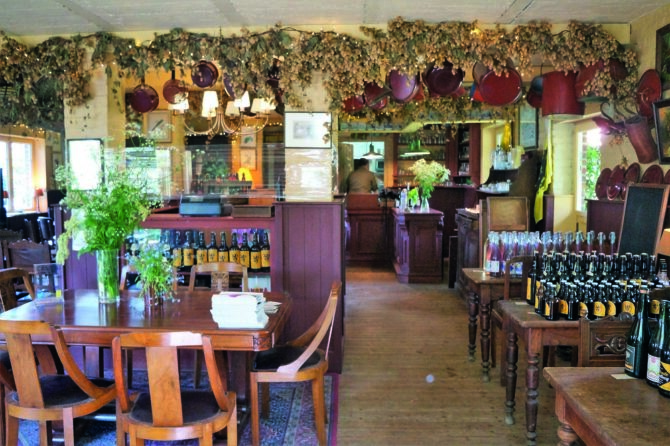
Before TV became commonplace in the 1970s, estaminets were the heart of these rural places, where people might stop by two or three times a day, for a morning coffee, a bite to eat at noon, or a big mug of suds after work. As well as bars lined with regiments of shiny metal beer spigots with porcelain handles, estaminets often have bare wooden tables, sideboards filled with local faience, large fireplaces used for grilling meat and sausages, and games darts, billiards, table football and more. There’s nothing fancy about them and their devotees, myself included, wouldn’t have it any other way.
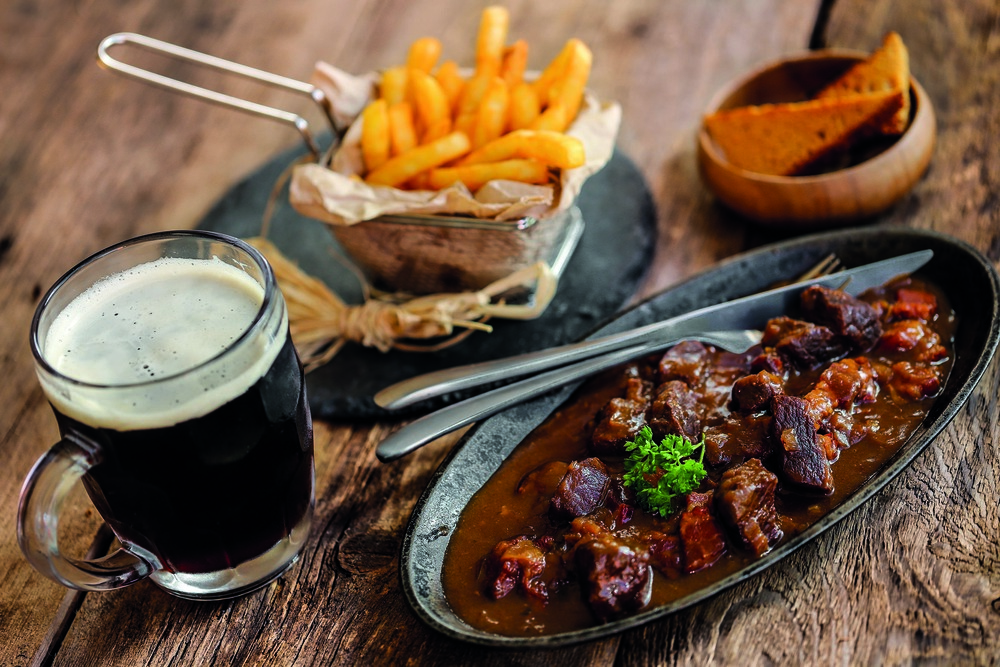
I first discovered them more than 30 years ago when I was on assignment in Antwerp with Patrice, a Parisian photographer who’d grown up in Cassel, in French Flanders. We were hungry and, frankly, hung over when he diverted us from our route back to Paris to have lunch at a now-gone estaminet, which was exactly what the doctor ordered. We ate smout, a spread of lard with chopped shallots (it sounds horrific, but it’s truly delicious), devoured a dozen deep-fried croquettes filled with béchamel and crevette grises, the tiny grey prawns from the North Sea, and then stuffed ourselves on carbonnade, or beef stewed in ruddy brown beer and served with a heap of hot, crispy frites.
MY FAVOURITE: L’Estaminet du Centre, Godewaersvelde
The closest I’ve come to finding an estaminet meal as ecstatically good as that first one is this one in a tiny village with a Flemish name which means ‘may God bless the fields.
The dishes I loved at my first estaminet all figure on the menu here, too, along with other moreish ones, including chicken in a sauce of Maroilles, the tangy northern French cheese that was the lactic favourite of several French kings. The homemade potjevleesch-rabbit, chicken, veal and pork stewed in white wine with carrots, garlic, shallots, cloves and juniper berries is subtly flavoured, deeply soothing and palpably nourishing, especially since it comes to table with a mountain of hot fries cooked in beef suet and a big green salad. Don’t miss the mousse de speculoos (crispy, spiced biscuits) for dessert either. 11 rue de Steenvoorde, Godewaersvelde.
Tel. (33) 03 28 42 21 72. Average lunch for two €100.
HIGHLY RECOMMENDED:
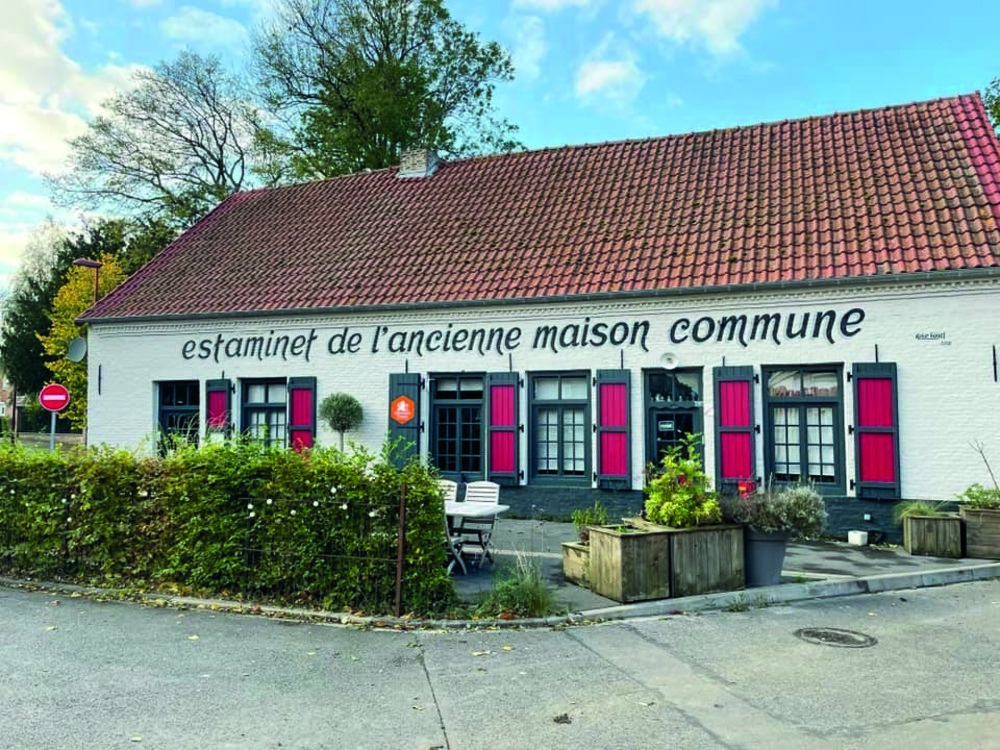
T’Oude Wethuys – L’Estaminet de l’Ancienne Maison Commune, Hondeghem.The white-painted brick façade and neatly-trimmed potted boxwoods give this old tavern an appealingly natty appearance, which accurately promises some really good eating inside. Settle in over a bottle of Bracine, the really good dark beer brewed just down the road, and after a slice of flamiche, an open tart made with cream, eggs and Maroilles cheese, tackle a feast of hearth-grilled farmhouse sausages and racks of ribbekes, baby pork ribs anointed with a burnt-orange spice mix that includes nutmeg, turmeric, pepper and cloves.
105 rue de la Place, Hondeghem, Tel. (33) 03 28 41 39 59. Lunch for two €80.
www. estaminetdelanciennemaisoncommune.fr
ALSO EXCELLENT: Anosteke Estaminet, Blaringhem
This stylish estaminet with a contemporary décor of exposed brick, oak parquet floors and Scandinavian-style wooden furniture offers an excellent selection of freshly-brewed beers. Start with the tarte aux chicons (chicons is Northern French slang for endives) or the coddled egg with Maroilles and lardons, and then have the Weish (melted cheese beaten with beer on toast) or the maybe the chicken gratin with local Mont des Cats cheese. Conclude your meal with the seriously good tarte Tatin.
425 rue André Plockyn, Blaringhem, Tel. (33) 06 08 98 20 98, Average dinner for two €80.
www.anosteke-lestaminet.beer/cartes-anosteke-lestaminet
The winstubs of Alsace
On a gentle day in May more than 30 years ago, the warm breeze smelled of lilac flowers and linden blossoms when I emerged from a long and fascinating visit to the Musée Alsacien in Strasbourg. The museum implicitly sought to affirm the identity of Alsace as a distinctive cultural region within France with its own architecture, language, customs and cuisine. This goal is explained by the region’s turbulent history, since control of Alsace has swung back and forth between France and Germany several times.
As much as I’d loved looking at all of the gaily-painted farmhouse faience, farm tools, antique clothing, paintings and photographs, the museum’s clanging radiators made it stuffy, and I was hungry. On my way out. I thanked the friendly lady at the ticket desk, saying the museum was an ideal primer for someone like me who was visiting Alsace for the first time.
“Ahal” she said with a big smile. “And now you must eat. Alsace has some of the best food in France and the best place to start sampling it is in a winstub. I looked at her blankly. “They’re little taverns that serve wine and Alsatian comfort food. There’s a very good one just out the door, too-but step lively, because it’s popular.” And so it was that I had my first meal at Au Pont Corbeau (At The Crow’s Bridge).
Au Pont Corbeau, Strasbourg
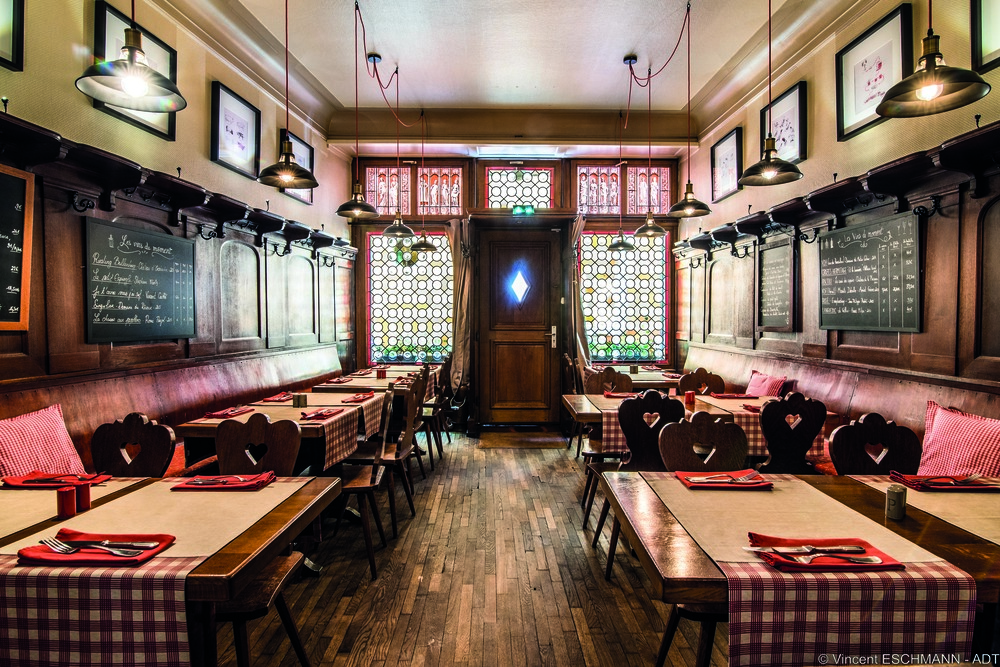
The panelled dining room of this winstub was my first experience of the Alsatian gift for woodworking. More importantly, it’s the place that spotlighted the region’s love of charcuterie ham, sausages, the fermented cabbage known as choucroute, its superb wines and its gifted baking traditions. Settled at my table with a pretty kelsch (an Alsatian take on gingham) tablecloth, my mind reeled, because I wanted to try everything and I was alone. The third time the older waiter came to take my order I explained why I was so indecisive – this was the first time I’d ever been to a winstub and he asked me what dishes appealed to me most. I told him and so I ended up with tasting portions of their excellent goose foie gras, presskopf (head cheese) with choucroute salad, Grumbeerekiechle (crispy potato galettes) and finally a grilled pig’s knuckle. It was an epic feast and happily my hotel was just a few streets away, because a siesta was imperative.
To my amazement, however, I was actually hungry when I woke from the slumber that followed my feast, but I later understood this to be a further recommendation of the excellence of Alsatian cooking. One might fear it to be heavy and fat-rich, but instead it’s surprisingly wholesome and digestible, in addition to being delicious.
21 Quai Saint-Nicolas, Strasbourg. Tel. (33) 03 88 35 60 68, Lunch for two €80.
Brasserie-Winstub Silvergloeckel, Westhoffen
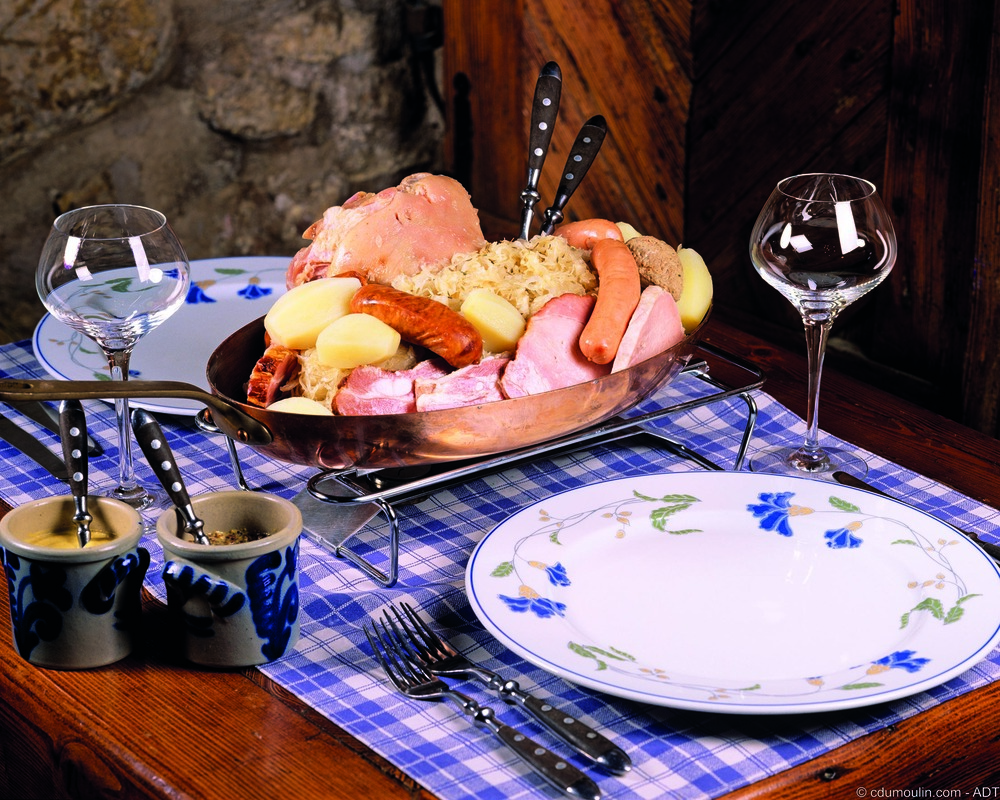
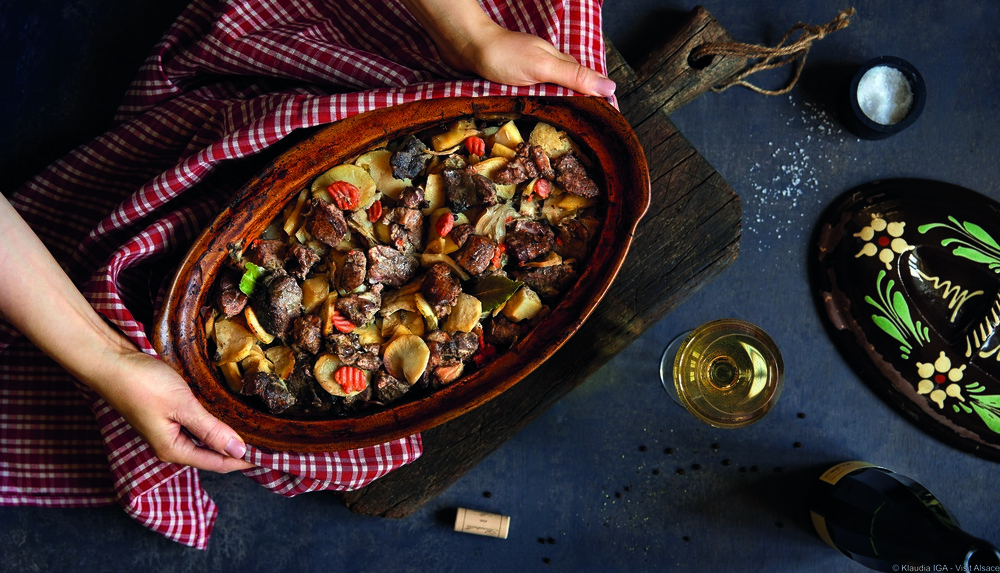
Occupying a lovingly renovated traditional Alsatian house, the dining room has whitewashed walls, wooden tables and chairs with heart-shaped backs, which gives the place an endearingly rustic and nostalgic atmosphere. The menu changes regularly, but runs to superb choucroute garni (sauerkraut garnished with various cuts of pork) and baeckeoffe-a casserole of meats, potatoes, onions and a bouquet garni in white wine –
another homey favourite of mine.
23 rue Birris, Westhoffen, Tel. (33) 03 88 50 54, Lunch for two €70.
www.facebook.com/silvergloeckel
Winstub Le Freiberg, Obernai
This snug winstub with exposed stone walls is a welcoming place with a range of Alsatian dishes, including various tartes flambées – the Alsatian answer to pizza, the most famous version of which is made with cream, lardons and onions. Look out too for pig’s cheeks and mushrooms braised in Pinot noir wine, and a rich bouchée de la reine a puff-pastry case filled with creamed chicken and veal.
46 Rue du Général Gouraud, Obernai, Tel. (33) 03 88 95 53 77, Dinner for two €130.
Looking for more French food and drink content?
In our magazine we offer a whirlwind tour of the best gastronomic destinations. Discover La Belle France’s renowned markets, quirkiest food festivals, most indulgent restaurants and foodie experiences.
Lead photo credit : Estaminet du Wouwenberghoff_Ferme du mont des Récollets_Pierre André Leclercq_Wikimedia
Share to: Facebook Twitter LinkedIn Email
More in Estaminets, Travel
Related Posts