How to Make the 5 French Mother Sauces
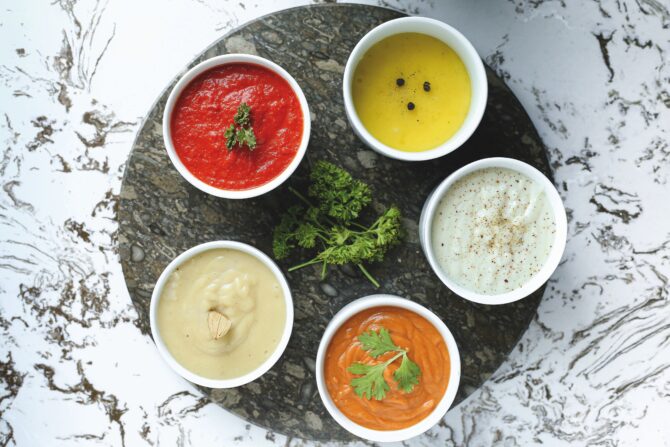
Béchamel, Velouté, Espagnole, Tomate and Hollandaise are the five classic French mother sauces – the foundations from which countless other sauces, often known as ‘daughter sauces’, are derived.
Codified in the modern system by legendary French chef Auguste Escoffier, these five sauces remain fundamental to French cooking. From a creamy Béchamel for gratins to silky Hollandaise spooned over asparagus or eggs, mastering them opens the door to an enormous range of classic dishes and variations.
Here’s how to make all five French mother sauces at home.
Béchamel sauce
A creamy white sauce made with milk, butter and flour, Béchamel is traditionally used in gratins, lasagnes and other baked dishes. Once mastered, it can also form the base for sauces such as Mornay, which adds cheese to the classic recipe.
Ingredients
- 1 litre milk
- 60g butter
- 60g flour
- 1 onion piqué (an onion studded with 1 clove and 1 bay leaf)
- Salt
- White pepper
- Nutmeg
Method
- Bring the milk to a simmer with the onion piqué. Leave to infuse.
- Melt the butter in a saucepan and stir in the flour to make a white roux. Cook gently for 2–3 minutes without colouring.
- Gradually whisk in the hot milk.
- Bring to the boil, then simmer for 20–30 minutes.
- Season with salt, white pepper and a little nutmeg.
- Strain and serve as required.
Velouté sauce
Made from stock thickened with a light roux, Velouté is a smooth, silky sauce traditionally served with poultry, veal and fish. The choice of stock can be adapted depending on the dish it accompanies.
Ingredients
- 1 litre white stock (veal, chicken or fish)
- 60g butter
- 60g flour
- Salt
- White pepper
Method
- Make a blond roux by cooking the butter and flour together until pale golden.
- Gradually whisk in the hot stock.
- Bring to the boil, then simmer gently for 30 minutes, skimming if necessary.
- Season lightly with salt and white pepper.
- Strain before serving.
Espagnole sauce
Rich and deeply savoury, Espagnole is a classic brown sauce made with veal stock, vegetables and tomato purée. It forms the foundation of many traditional meat sauces and is also closely associated with demi-glace.
Ingredients
- 1 litre brown veal stock
- 60g butter
- 60g flour
- 100g mirepoix (diced onion, carrot and celery)
- 50g tomato purée
- 1 bouquet garni
Method
- Cook the mirepoix until lightly coloured.
- Add the tomato purée and cook for a few minutes.
- Prepare a brown roux by cooking the butter and flour together until chestnut brown.
- Gradually whisk in the hot brown stock.
- Add the mirepoix mixture and bouquet garni.
- Simmer gently for 1 hour.
- Strain and degrease before serving or using as the base for another sauce.
Tomate sauce
The French mother sauce Tomate combines tomatoes with onions, garlic and herbs to create a versatile accompaniment to meat, poultry and vegetables.
Ingredients
- 1kg tomatoes (or peeled plum tomatoes)
- 100g onion, finely diced
- 2 cloves garlic
- 30ml olive oil
- 1 bouquet garni
- Salt
- Pepper
Method
- Sweat the onion gently in the olive oil.
- Add the garlic and tomatoes.
- Add the bouquet garni.
- Simmer gently for 45–60 minutes.
- Remove the bouquet garni.
- Pass the sauce through a food mill, or blend and strain.
- Season with salt and pepper to taste.
Hollandaise sauce
An emulsion of egg yolks, butter and lemon juice, Hollandaise is one of the best-known French sauces. Rich, buttery and lightly tangy, it is classically paired with asparagus, fish and eggs and is also the starting point for Béarnaise sauce.
Ingredients
- 3 egg yolks
- 250g clarified butter
- 15ml water
- 15ml lemon juice
- Salt
- Pinch of cayenne pepper
Method
- Whisk the egg yolks and water over a bain-marie until thickened.
- Gradually whisk in the warm clarified butter to form a smooth emulsion.
- Add the lemon juice.
- Season with salt and a pinch of cayenne pepper.
- Serve immediately.
Why are they called mother sauces?
The name reflects their role as the starting point for numerous other sauces. By altering the seasoning or adding a handful of additional ingredients, each mother sauce can produce a family of ‘daughter sauces’.
For example, Hollandaise forms the basis of Béarnaise, while Béchamel can be transformed into Mornay with the addition of cheese. Learning the five basic techniques is therefore one of the most useful starting points for anyone interested in traditional French cooking.
Lead photo credit : Shutterstock
Share to: Facebook Twitter LinkedIn Email
More in Auguste Escoffier, Béchamel, classic French recipes, Espagnole, French cooking, French cuisine, French mother sauces, French recipes, French sauces, Hollandaise, sauce recipes, Tomate sauce, Velouté
Related Posts