Valrhona: Inside the Rhône Valley chocolate house
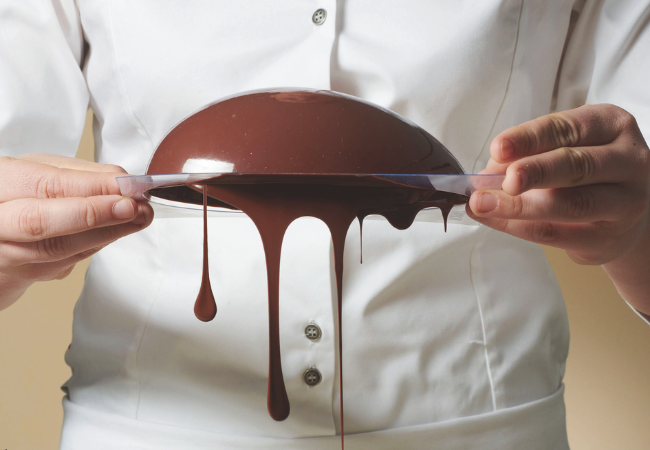
Chocolate maker Valrhona has built a reputation as the choice of chocolatiers and pâtissiers for a century. Caroline Mills finds out why…
The clue is in the name – Valrhona, Although it hasn’t always been this way. A little over a century ago, Albéric Guironnet, a pastry chef and confectioner from the Ardèche, founded the Chocolaterie du Vivarais in Tain l’Hermitage (Drôme), on the east bank of the River Rhône. Guironnet chose to roast the cocoa beans himself, which allowed him to supply other pastry chefs.
The company was later renamed La Chocolaterie Gonnet when the company was sold to Albert Gonnet, and the workshop expanded to diversify the range of chocolate. By 1947, the company was becoming better-known among professional pâtissiers and chocolatiers, and Gonnet created the brand we know today, Valrhona, short for the Vallée du Rhône.
The brand name has since lost its circumflex, and is now simply Valrhona, although it has remained in the same buildings, within metres of the river, for a century. Small details remain important.
Making a name for itself
The company has, of course, mechanised, modernised, extended to a second site (in the early 2000s) less than 5km from its historic site beside the river, and become ever greater known. An international brand, Valrhona is now regarded as the chocolate of choice among the world’s best pastry chefs and chocolate makers.
That includes chefs trained at L’École Valrhona, founded in Tain l’Hermitage as a centre of excellence and a hub for creativity and innovation, and where Valrhona can share its expertise.
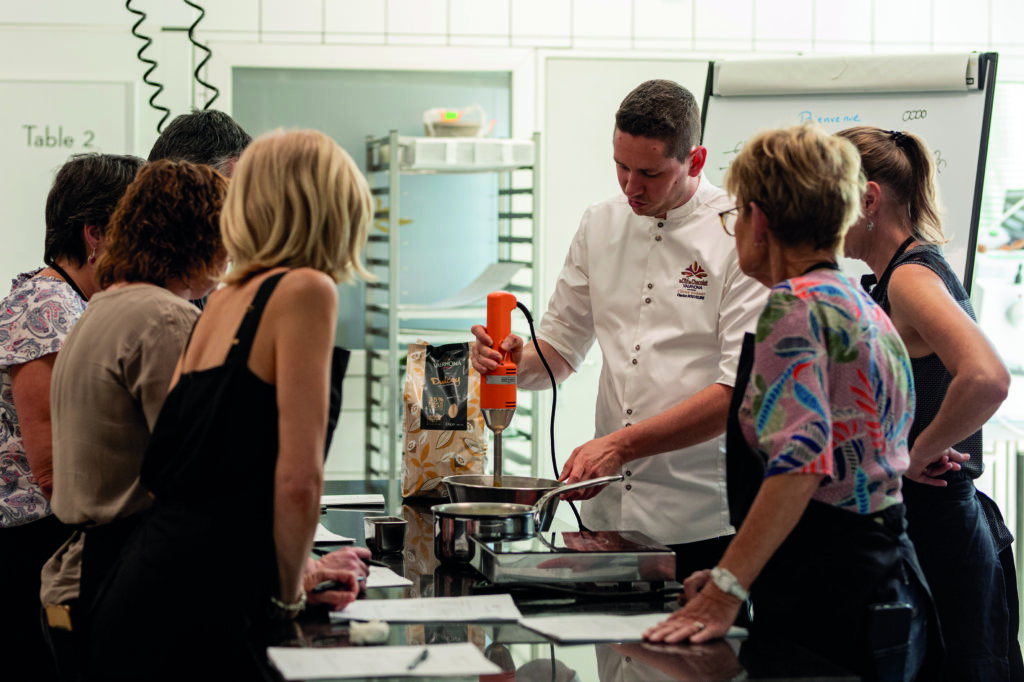
Four further schools have latterly opened in Tokyo (Japan), Brooklyn (USA), Paris and. most recently, in 2024, Dubai. In 2017, Valrhona initiated the Graines de Pâtissier programme. which gives young people aged 16 to 25 who were unable to complete their state education a second chance through discovering professions in the field of pastry-and chocolate-making.
Innovation is at the heart of the Maison’s DNA. It was the first chocolate manufacturer, in 1986, to offer chefs and craftsmen the world’s most bitter chocolate (70%) at the time. More recently, it developed Dulcey blond chocolate, discovered when white chocolate was accidentally left in a bain-marie. Then there’s Compoz, a unique concept that enables chefs and artisans to craft their own chocolate identity by assembling base mixes with support from Valrhona Lab’s digital tool. In 2015. Valrhona invented double fermentation, a process that incorporates fruit into the cocoa bean fermentation process to create new tastes. The company continues to innovate, notably with the creation of a new product, Oabika, which is a highly concentrated cocoa juice extracted from the white pulp surrounding the beans, aimed at gastronomy professionals.
Valrhona sources its cocoa beans from 15 partner cocoa producers in 14 countries, including from its own estates in Madagascar and Brazil. Sustainability is at the heart of every stage of production, from the fight against deforestation to the construction of schools for children in cocoa-growing communities, from reusable packaging to the publication of a responsible gastronomy guide for professionals in the sector. All this, and more, earned Valrhona its second B Corporation certification in 2024, recognising its commitment to creating a positive impact on people and the planet through its work and production practices.
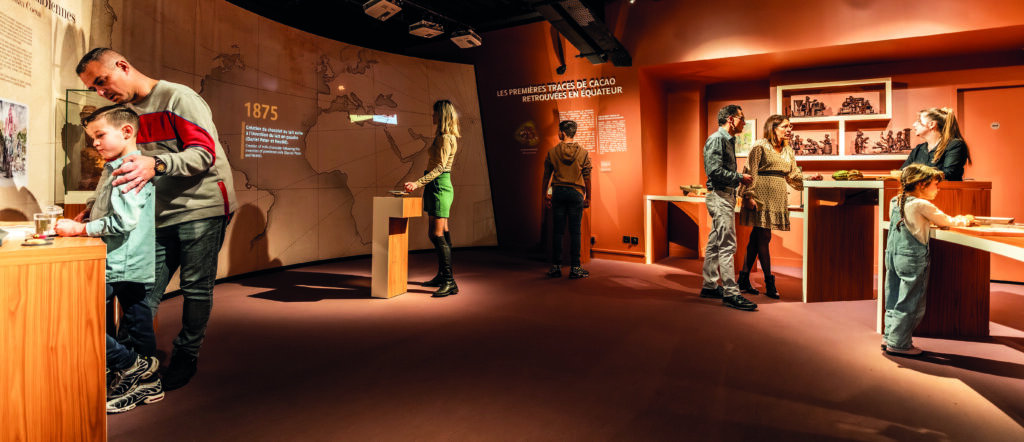
But what of the public? The everyday chocolate lover is catered for, too, in Tain l’Hermitage with the magnificent Cité du Chocolat, which was created in 2013 right alongside the original factory workshop. A journey around the visitor attraction will show you how to taste chocolate properly (who doesn’t love scanning a barcode and out pop two chocolates to eat?!), educate you on ingredients and recipes, and explain how chocolate at Valrhona is made (with real-time camera images of the chocolate factory). It’s also a chance to explore the history of cocoa and cocoa plantations around the world, as well as Valrhona’s own story.
Chocolate up close
My favourite part of the attraction is Chef’s World, with a selection of virtual reality activities such as attempting to write with chocolate, or creating a range of pâtisserie. But it’s possible to go a stage further at the Dulcey Lab and L’École Gourmet, where professional pastry chefs will guide you through hands-on experiences lasting 30 minutes to half- and two-day classes on how to make fabulous desserts. There are workshops for children, too.
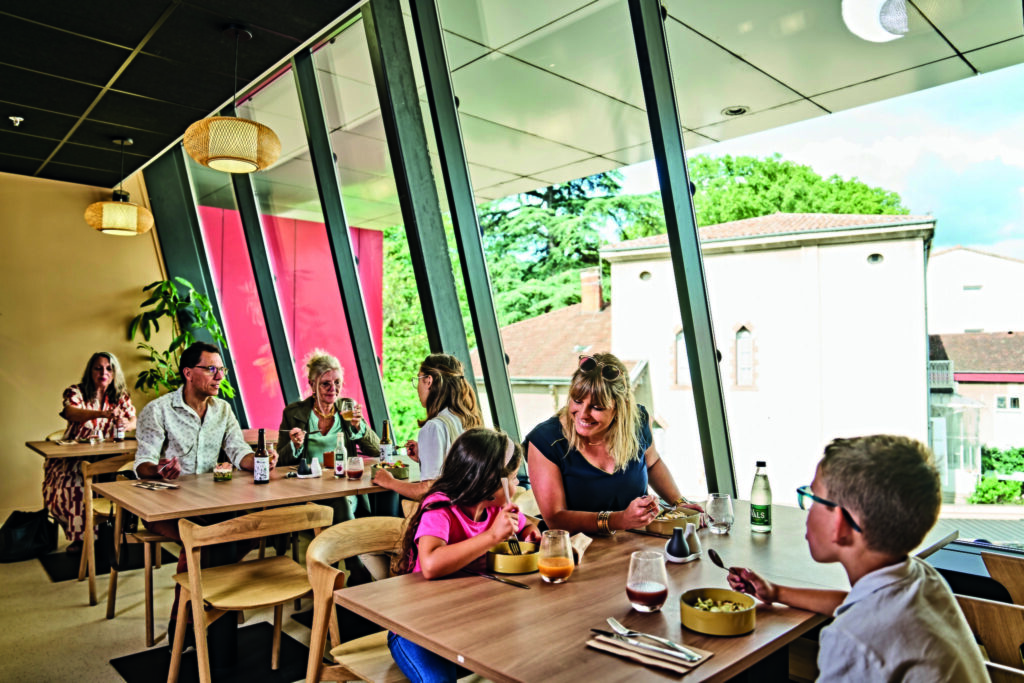
Le Comptoir Porcelana is the on-site restaurant, where starter, main course and dessert, naturally, feature chocolate. The boutique sells Valrhona’s entire range of chocolate ganaches, pralines and bars alongside the gourmet’s cooking range of chocolate to make homemade chocolates. It’s a lot of chocolate. But there’s always the promenade beside the River Rhône – the beautiful river that gave the brand its name to walk it off.
Enjoyed this? Why not try Valrhona’s Milk chocolate & hazelnut bûche de Noël recipe?
VALRHONA AND L’ÉCOLE VALRHONA
LA CITÉ DU CHOCOLAT
Looking for more French food and drink content?
In our magazine we offer a whirlwind tour of the best gastronomic destinations. Discover La Belle France’s renowned markets, quirkiest food festivals, most indulgent restaurants and foodie experiences.
Lead photo credit : Publimage
Share to: Facebook Twitter LinkedIn Email
Related Posts