Céret’s Annual Fête de la Cerise
The annual Fête de la Cerise in Céret is an unmissable celebration of cherries and Catalan culture. Steve Turnbull reports…
Every spring, the town of Céret in French Catalonia goes crazy for cherries. That’s because cherries are emblematic of the Vallespir area in the Pyrénées-Orientales, where the town is located, and Catalans like nothing better than to throw a street party. But it’s also because the town has earned the reputation of being the cherry capital of France.
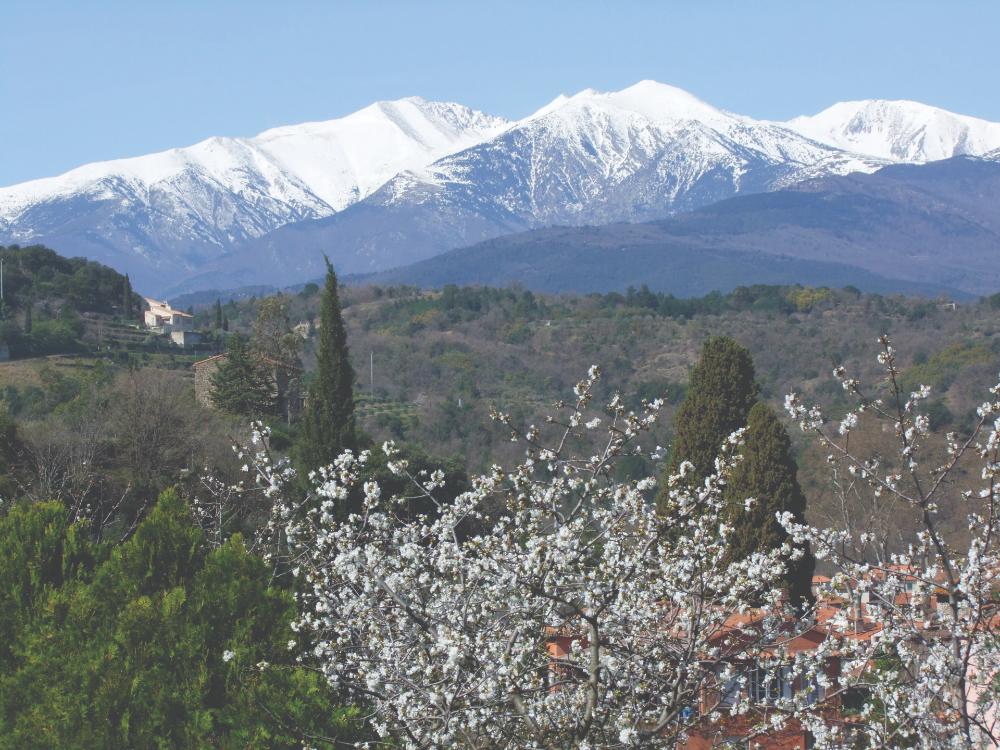
White cherry blossom beneath Mt Canigou ©Damusmedia
Cherry orchards were first planted here in the second half of the 19th century. Profiting from a perfect micro-climate of warm weather and well-drained soil, they ripened earlier than in most parts of France and yielded bumper harvests. So, naturally, the idea of a fête soon took shape, and the obvious time to hold this was mid-to-late May to celebrate the harvest.
The festival – La Fête de La Cerise et Céret de Bandas, to give it its full title – is free to attend and the streets are pedestrianised, so it’s always a popular event. It takes place over two full days (at a weekend), and the carnival atmosphere continues well into the evening. Be sure to bring your cash and credit card because you’ll be tempted at every turn. As well as bulging punnets of bright red fruit, you’ll find practically every kind of cherry product you could imagine, from clafoutis (a classic southern French dessert/cake made from batter), to jam to eau-de-vie – not to mention vinegar, craft beers and countless tempting creations in the town’s pâtisseries.
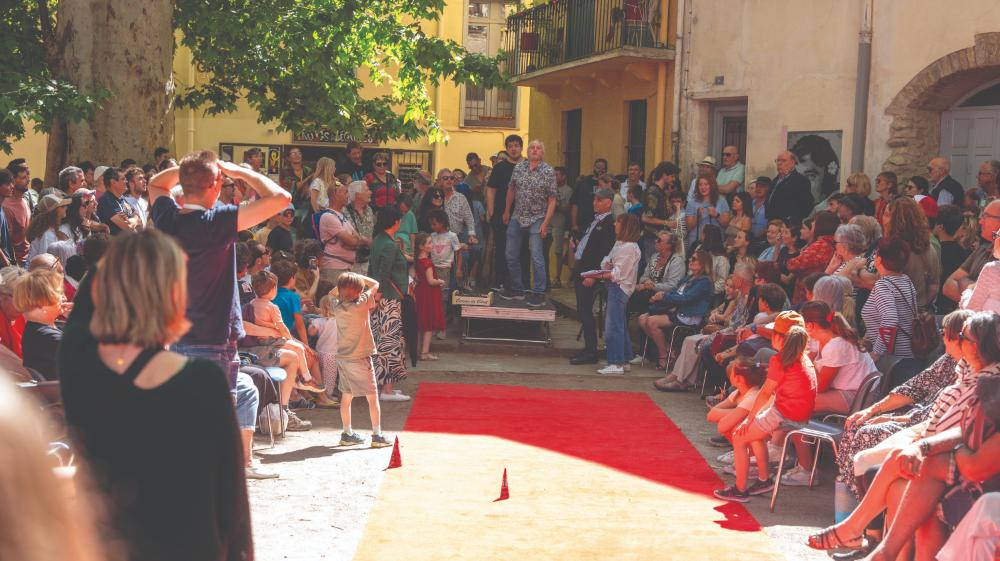
Spitting spectacle – the cherry stone spitting contest ©SteveTurnbull
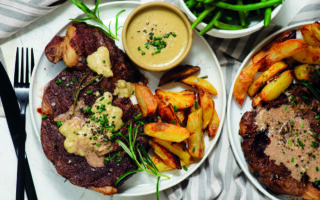
Many of the local restaurants get in the swing of it too, with special dishes such as lamb shank in a cherry jus, and Tomme de Brebis des Pyrénées (a local sheep’s cheese) et son chutney à la cerise, the latter offering a tempting treat for British palates in particular. However, the dish you’ll spot most on the menus is the crowd-pleasing magret de canard aux cerises, the acidic sweetness of the cherries perfectly balancing the rich, fatty flavour of the duck.
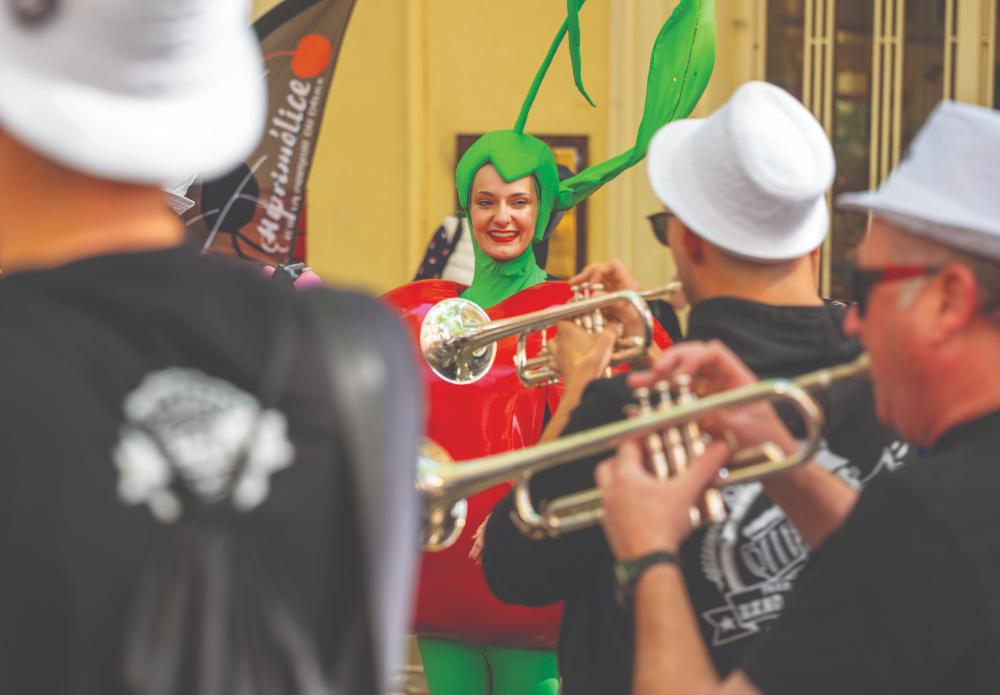
Painting the town red and pumping out the music ©SteveTurnbull
You can also enjoy the bandas (traditional marching brass bands from the south of France) as they compete to be the most entertaining. There’s even a cherry stone spitting contest. In case you’re thinking of entering, the winning distance in the adult category last year was nearly 10 metres. If not, you can always join in with the traditional sardana dance, which is central to Catalan culture, both in Spain and France. This takes the form of a large circle where participants join hands and move around in time to the music. Be warned, though, it’s not as easy as it looks and you need a strong sense of rhythm – if you’ve had one too many shots of eau-de-vie, you may well topple to the floor and turn cherry red. Seriously, though, the dance is a wonderful spectacle which expresses both Catalan unity and resistance (originally to Franco’s fascism).
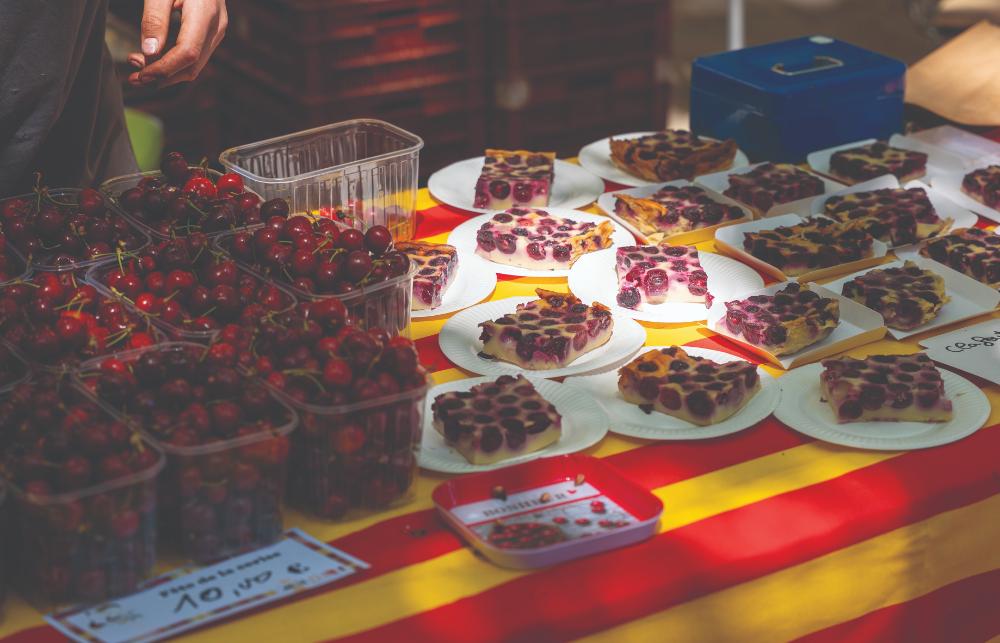
So tempting! Clafoutis slices at one of the stalls ©SteveTurnbull
A taste of local culture
Céret is proud of its artistic heritage, and the festival offers an excellent opportunity to experience this. As well as several works by Picasso, who stayed in the town in the early 20th century and was fond of the area, the Musée d’Art Moderne holds paintings by Chagall, Braque and Soutine. The Art Sant Roch gallery is also worth a visit, as you stroll around the charming town centre and soak up the festive ambience.
While much of the food at the festival is on the indulgent side, cherries have well-recognised health benefits: they are packed with vitamins, antioxidants and pectin, a soluble fibre which may be good for cholesterol. Perhaps that’s the secret to the joie de vivre which permeates the festival – or maybe it’s in the Catalan DNA.
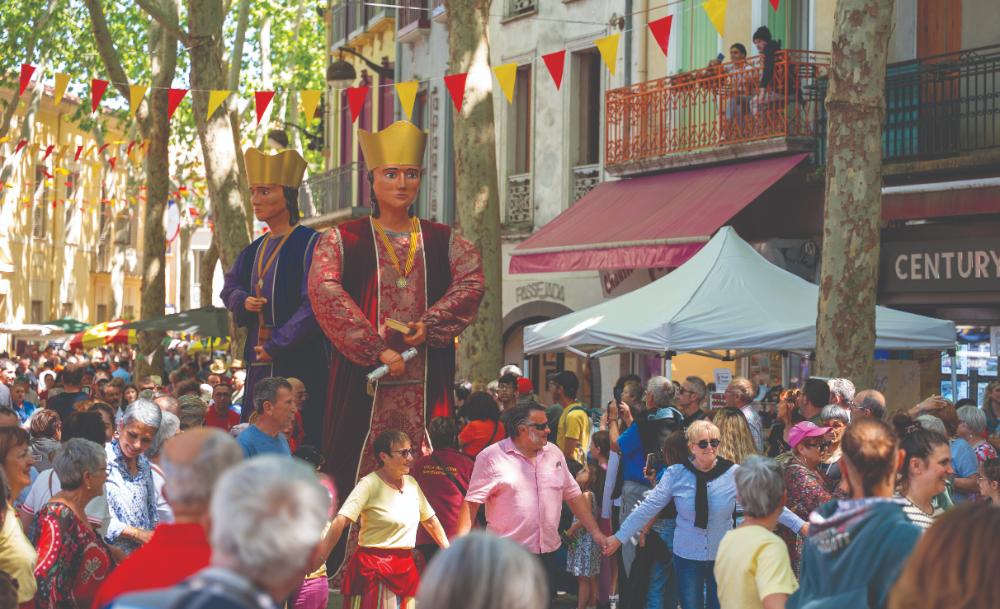
Holding hands for the sardana dance ©SteveTurnbull
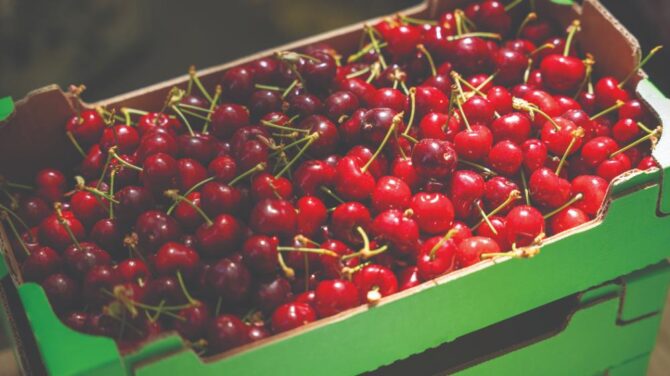
Most of the cherries are cultivated along the lush banks of the River Tech, overlooked by majestic Mont Canigou, the spiritual peak of French Catalonia. There are a number of varieties among the orchards, including Stark (or Starking) Hardy, which originates from America, and Bigalese. But the majority (around 80%) are Burlat, which is medium-sized with low acidity and deliciously sweet flesh. Furthermore, it is often the first to ripen (in early-to-mid April), effectively opening the season. Upon ripening, a crate of cherries is sent by plane to the President and Prime Minister, a tradition that dates from the 1930s.
But what of the name Céret itself? Some say it comes from the Latin cerasum, meaning – you guessed it – cherry, suggesting the roots of local production go even deeper. Céret and cerise are certainly a catchy combination, even if (for various reasons, including cheap Spanish imports), cherry producers in this part of France have faced challenging times in recent years, hence the increasing importance of the festival.
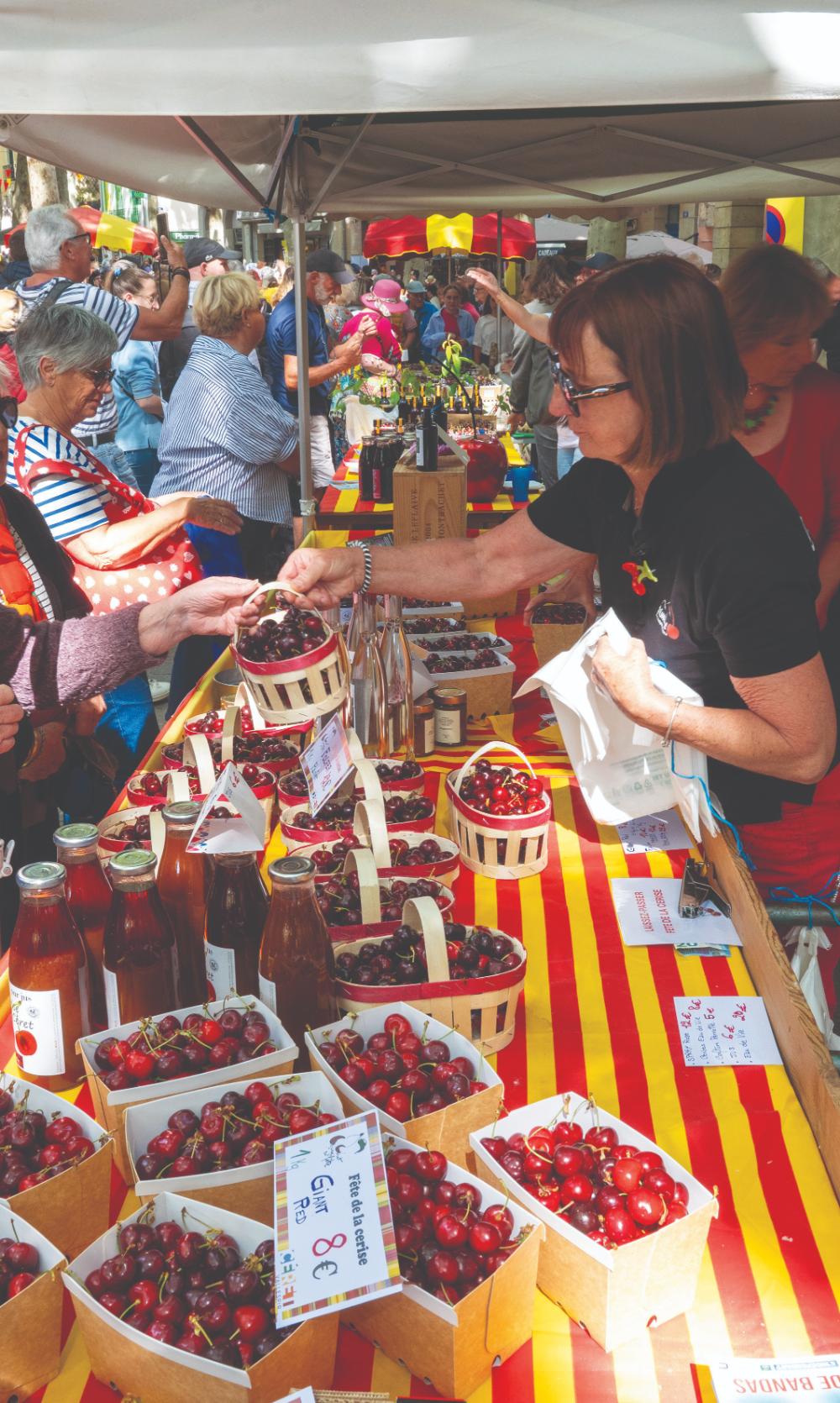
Brisk business at one of the stalls
Just a few miles to the north of town, you’ll find Le Mas Py, an organic estate which sells a range of produits du terroir and specialises in dried cherries. The owners, Erwin and Brigitte, are proud of their many awards and their sustainable approach, which means – waste not want not-they even sell the stalks and stones! The former are used to make tangy tisane, while the latter are used for blind baking and heat packs.
The couple also sell their cherries to renowned chocolatier Olivier Bajard, from nearby Perpignan. He tops mendiants noirs (dark chocolate discs) with the fruit along with candied almonds and pistachios. To boot, Mas Py’s cherries feature in the widely-shared duck recipe of local chef Jean Plouzennec, complemented by cherry honey. All of which underlines not only the incredible versatility of cherries in general, but also the extraordinary entrepreneurship driving the local industry.
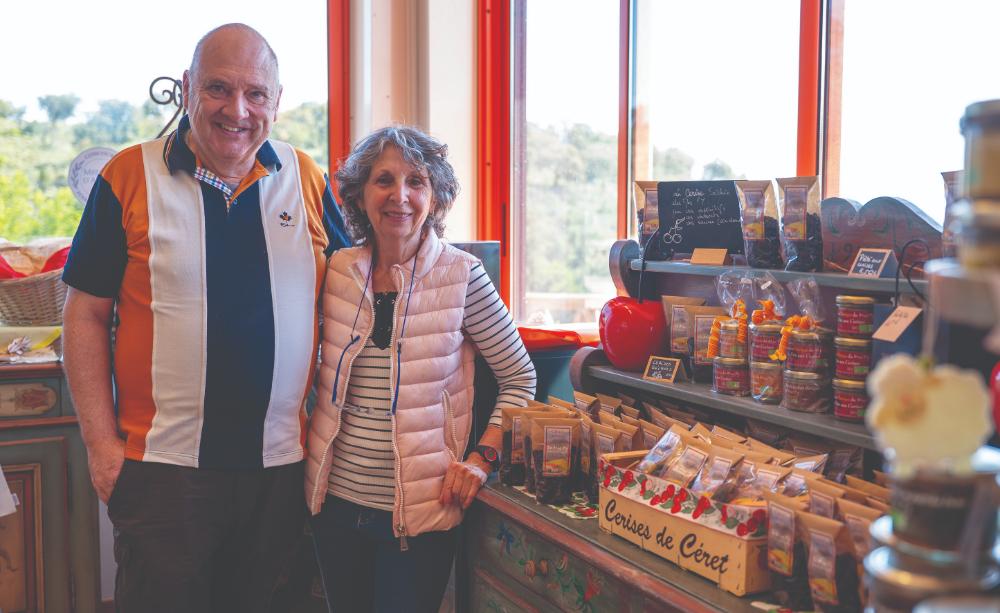
Erwin and Brigitte at Mas Py ©SteveTurnbull
So, if you love cherries and Catalan culture, then Céret in the springtime is definitely the place to be. The fact that this fabulous festival (on May 23-24 this year) caters for all ages and tastes really is the cherry on the cake.
Looking for more French food and drink content?
In our magazine we offer a whirlwind tour of the best gastronomic destinations. Discover La Belle France’s renowned markets, quirkiest food festivals, most indulgent restaurants and foodie experiences.
Lead photo credit : Box of bright red Burlat cherries ©Steve Turnbull
Share to: Facebook Twitter LinkedIn Email
More in Céret, Cherry Festival, Fête de la Cerise
Related Posts