Beyond Cassoulet: Eating My Way Through Toulouse’s Changing Food Scene
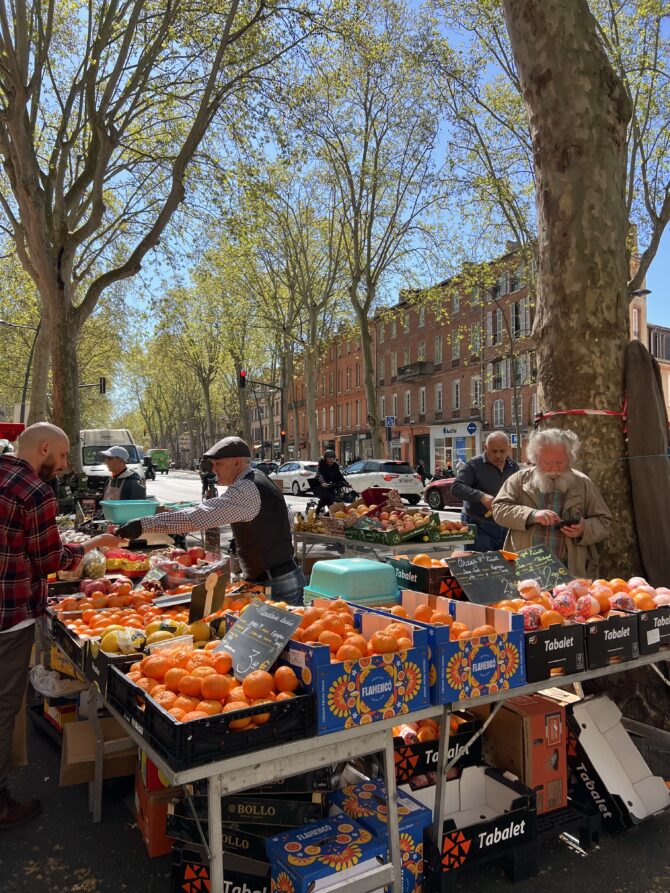
Day one in Toulouse began, as all good food stories should, with a market I hadn’t planned to find.
I stepped off the bus from the airport at Jeanne d’Arc and walked straight into it – stalls lining the road, overflowing with life, a river of people moving between them. It felt instinctively old-school, and utterly French: vendors calling out their prices, mothers clutching their children’s hands so they don’t get swept downstream, and the most colourful, vibrant seasonal produce bursting out of their crates. This was exactly the kind of place that reminded me why I booked this trip. It was a strong start.
This experience having whetted my appetite, I headed somewhere I had been excited to try since finding it on Google Maps the week before.
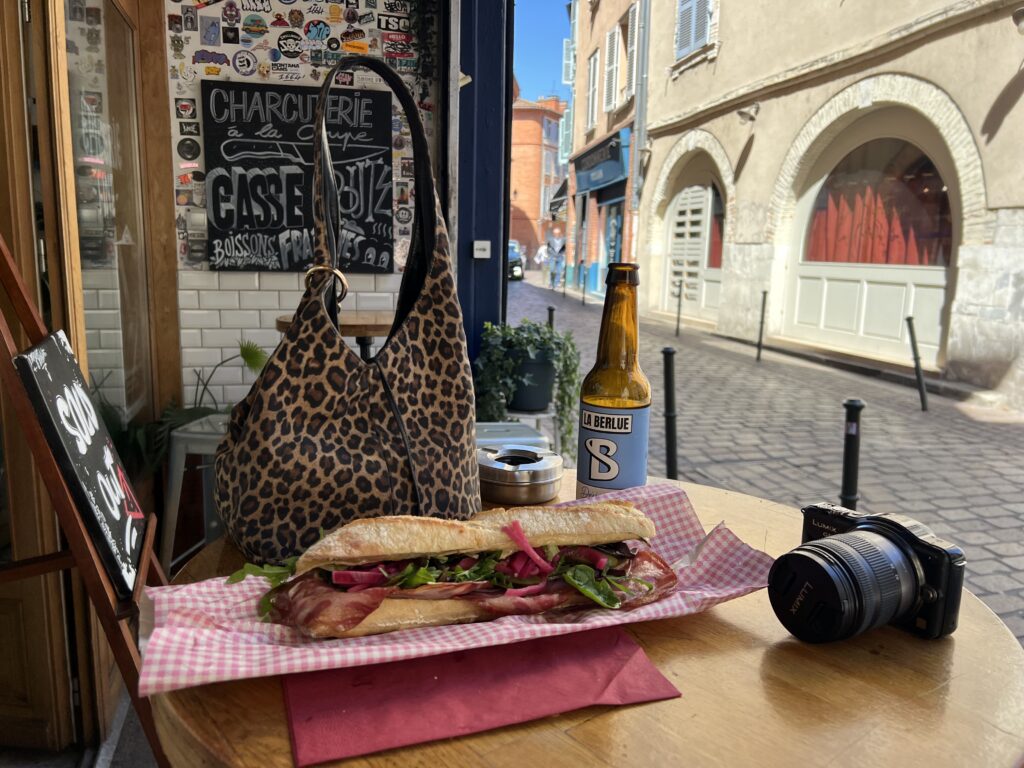
In my opinion, any French trip must begin with a sandwich. At Le Détaillant – Sandwich de Qualité, I ordered “le notre” and watched, almost theatrically, as a “sold out” sign went up the moment mine was prepared. In the short wait, a steady stream of people approached, paused, saw the sign, and visibly deflated. It told me everything I needed to know – this sandwich was going to be good. And it was: the crunch of the baguette, contrasting with the creaminess of the cheese and the tartness of the pickles, was perfect.
I took it to the river with an ice-cold blanche. Around me, people lounged in the sun, ducks paddled by, mopeds hummed along – pastel Vespas, women in dresses, the kind of effortless chic that made me briefly consider moving countries. Little did I know that this thought would not, in fact, remain brief.
Toulouse, I quickly realised, is a city in motion. Bicycles, boats, people running, rowing – all these forces pulling it forward. But its food? That’s where the real tension lies.
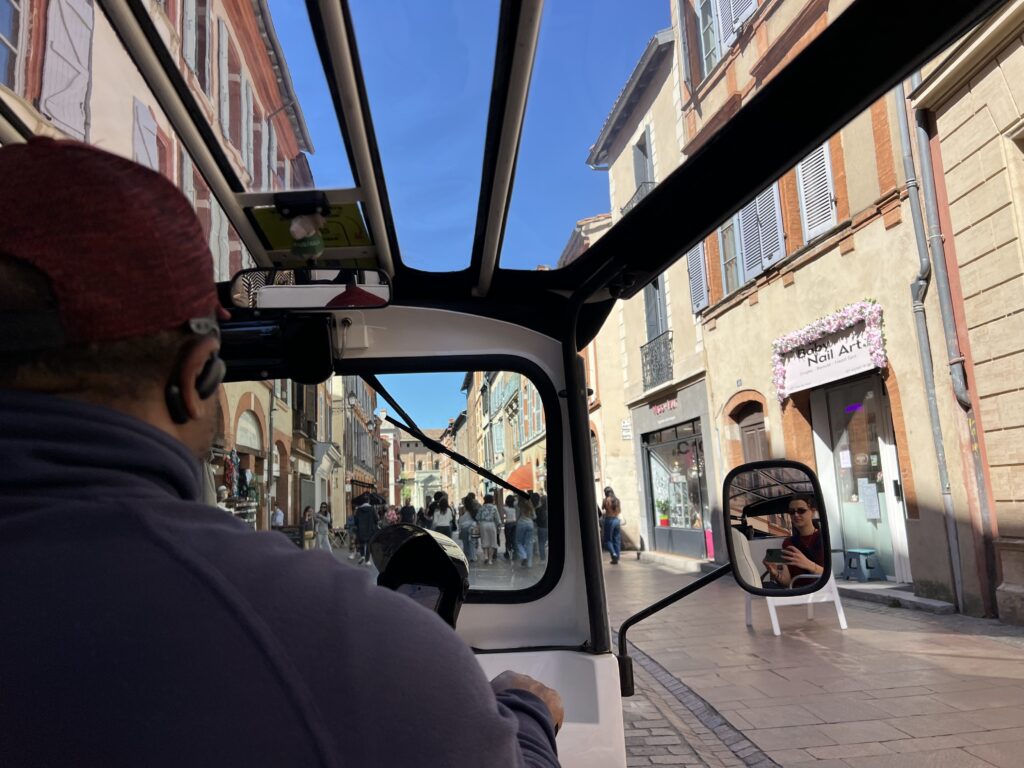
That afternoon, I climbed into the city’s only tuk-tuk.
https://www.tuktuktoulouse.com/
For two hours, my guide – a bit of a local celebrity, it turns out – drove me through the pink-brick streets (or “fairground brick,” as he called it), narrating history while people shouted “eyyy ça va?!” across junctions. Toulouse is France’s second biggest university city, he told me. It made sense.
He pointed out the Canal du Midi, with its constant flow of walkers and cyclists, and recommended I try La Fénétra – a traditional almond and apricot dessert. Even here, tradition was being handed down casually, in passing. Food is so intrinsic to French culture that to learn is to eat.
On first research, you will read about the must-tries of Toulouse – all delicious dishes with centuries of history. Cassoulet, the city’s most famous dish, is a rich, slow-cooked casserole of white beans, pork, sausages, and confit de canard, the kind of meal that feels as though it has been simmering for generations. The Toulouse sausage (saucisse de Toulouse) is traditionally sold in a long, continuous coil rather than neat, individual links.
And then there are the menus themselves. In many traditional Toulousian restaurants, you will find a proud, unapologetic celebration of the whole animal: pig feet, tête de veau (calf’s head), brains, rillettes, and generous servings of tripe. This is food that does not shy away from its origins.
But it was dinner that night that reframed everything.
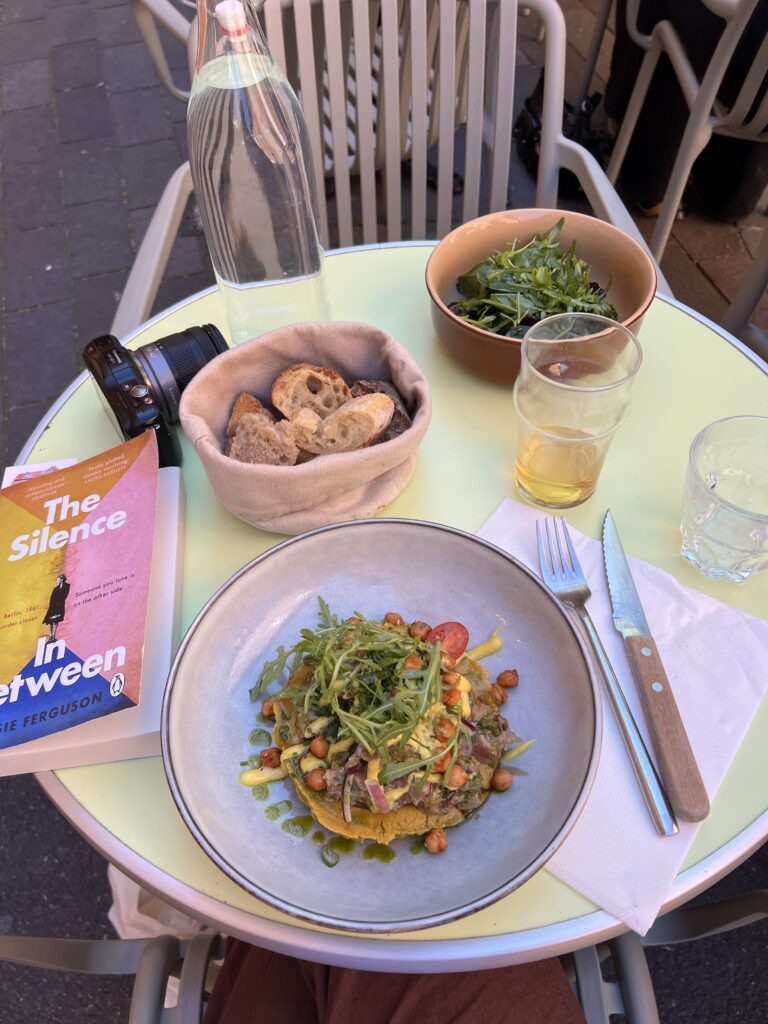
At Campagne, I sat on the terrace in the heat and ordered instinctively cold dishes: ajo blanco, followed by tuna tartare with citrus, pesto and chickpeas. It was light, precise, modern – yet still rooted. Their philosophy is simple, and the name (meaning countryside) alludes to it: “putting local, farm-fresh, carefully selected, and delicious products at the center of the table.” It sounds traditional – and it is – but the execution is entirely contemporary. This is not your grandmother’s cassoulet (though she would definitely approve).
From my endless flâner’ing around the city, I noticed that places such as Campagne were popping up more and more, with a new generation of chefs beginning to take hold of the city, claiming ownership over their region’s exquisite produce and creating something new. Other restaurants like this, which give me every reason to return, include PAPI – Cantine de quartier and Loustic.
Something else I began to notice during these walks was the presence of Spanish influence on the food scene. With Spain only a three-hour drive away, it makes sense, but it was striking just how visible it was. I passed countless tapas bars, each with terraces spilling out onto the street, echoing that same culture of grazing, sharing, and moving between places.
At BOCA, a more traditional tapas bar, the atmosphere felt classic and convivial, with an almost unbelievable 4.9 stars from over 1,600 reviews on Google. Then, just a few streets away, there was Guapito – a more modern interpretation, with a noticeably trendy clientele gathered outside on the terrace, cocktails in hand, plates arriving in a steady stream.
Day two allowed me to explore the traditions at greater length.
After a coffee on my Airbnb’s terrace (is there any better start to a day?), I walked to Marché Victor Hugo to join a tour led by Jean-Baptiste Aldebert, known as Gastronoguide.
https://www.gastronoguide.com/
If Toulouse’s new food scene is about evolution, this market is its foundation.
Inside, there are around 100 vendors selling the icons of southwestern French cuisine. At Maison Papaix, ducks are raised for foie gras in a true farm-to-counter operation. At another stall, I saw testicles casually on display. This is not a place that softens its edges.
I rather felt for another member of the tour who was vegetarian, but it turned out there were plenty of other options too.
My coup de cœur was the square-shaped macarons from La Pâtisserie Authié, amusingly named “ma-carrés,” as well as a “Paris-Toulouse,” a local spin on a Paris-Brest. I bought a box of nine ma-carrés as a gift for my parents, who are self-professed macaron experts. Upstairs, restaurants serve dishes made entirely from produce sourced downstairs. Jean-Baptiste told me that if you ask nicely, the fishmongers will even shuck oysters for you to eat on the spot.
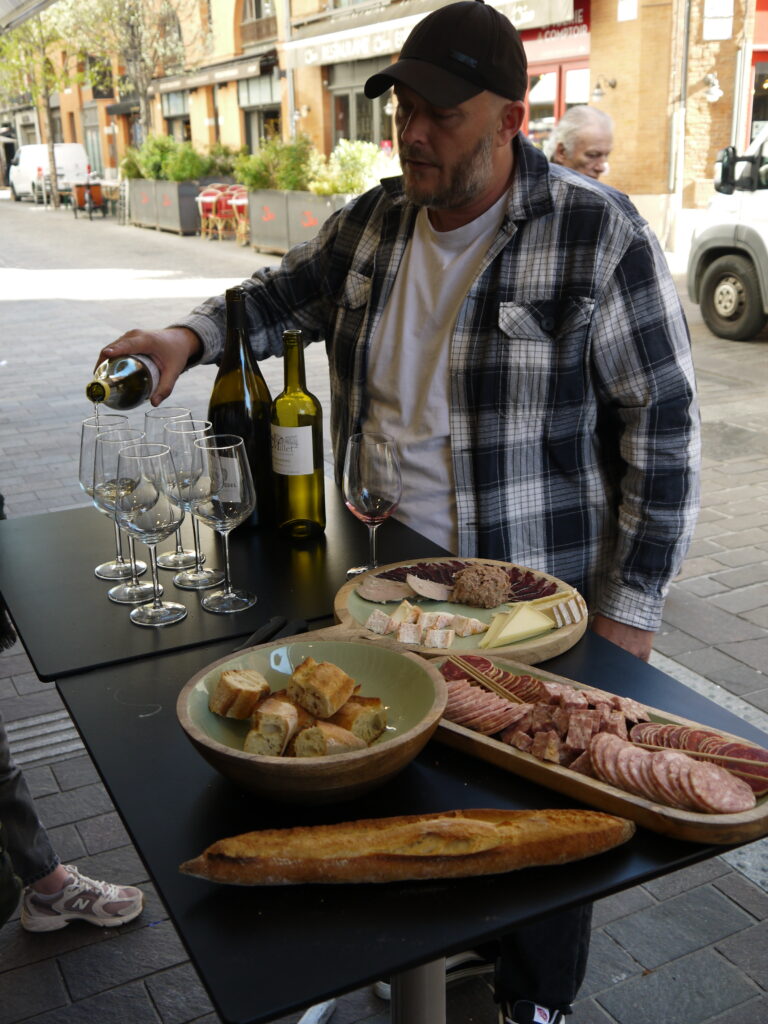
He finished the tour with a tasting that epitomised Toulousian tradition. Our spread came from across the market: Maison Castet for charcuterie, Fromagerie Emilie for cheese, and Boulangerie Credo for bread. It was indulgent, excessive, and completely joyful – especially as it was only 10am, accompanied by three petit verres of wine.
A French member of the tour joked that in France, there is no such thing as an “alcoholic” – they simply call it a bon vivant.
We sampled a white, a red, and a sweet wine. I was taught that old-school thinking says red wine with cheese. New-school? White wine. Even the act of rinsing glasses between wines – done with more wine, not water – felt like a lesson in evolution.
But here’s the thing: entry into this market is almost impossible. Stalls can cost hundreds of thousands of euros, and once you have secured a place, it would be unthinkable to leave such prime real estate. Turnover is low. You don’t start here – you earn your way in.
Which is exactly why the new wave is happening elsewhere.
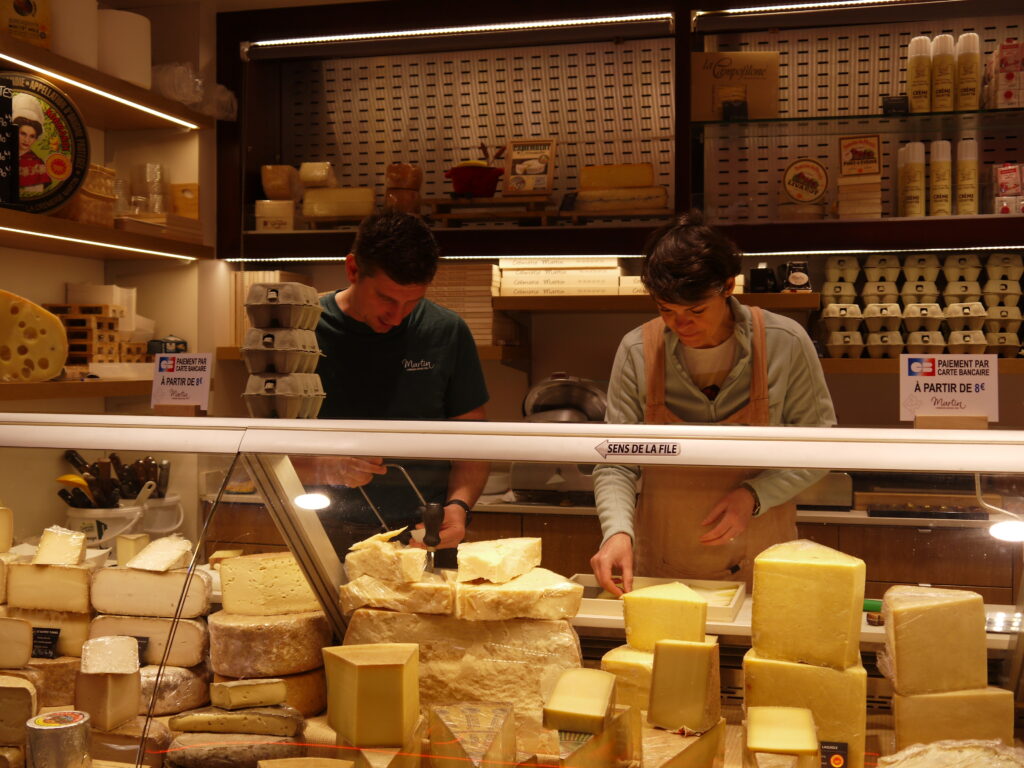
Later, I stopped by Xavier, the city’s most celebrated cheesemonger. With over 300 cheeses and a Meilleur Ouvrier de France title to its name, it represents the pinnacle of Toulouse’s meticulous tradition.
I wanted to buy everything. Airline hand luggage rules said otherwise – as did my people-pleasing nature, which told me not to stink out the plane.
By day three, the contrast came fully into focus.
A slow cruise along the Canal du Midi – blossoms overhead, runners and cyclists passing by, people sunbathing on balconies – gave me time to think about it. Toulouse isn’t replacing its food culture; it’s adding layers to it.
https://www.bateaux-toulousains.com/accueil
That became undeniable at Les Halles de la Cartoucherie – the “elsewhere” I had been alluding to.
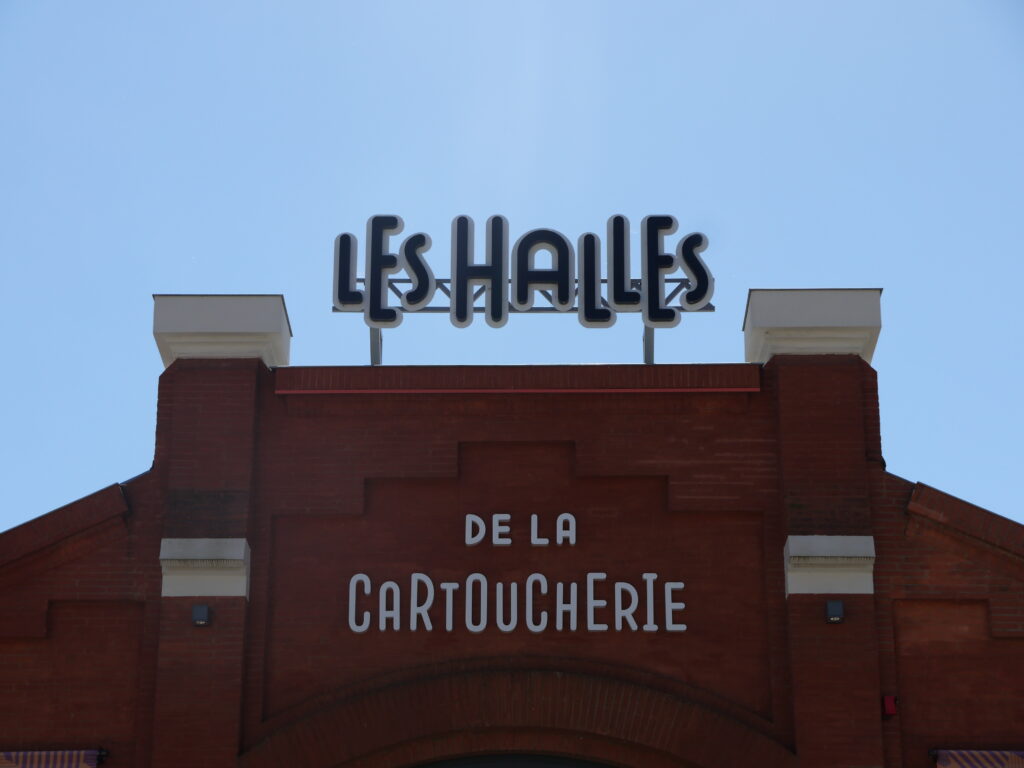
Opened in 2023 on what was once an industrial site used for ammunition production, the space has been completely transformed into something entirely different: a hub for food, sport, culture and community. What was once a protected zone of factories is now filled with people, energy, and constant activity. I thought, what a brilliantly French thing to centre a new development around a food market.
After an embarrassingly long time deciding (Japanese? Mexican? something else entirely?), I settled on Boniface. Two oysters – one Mediterranean, one Arctic – followed by chipirones and potatoes with aioli.
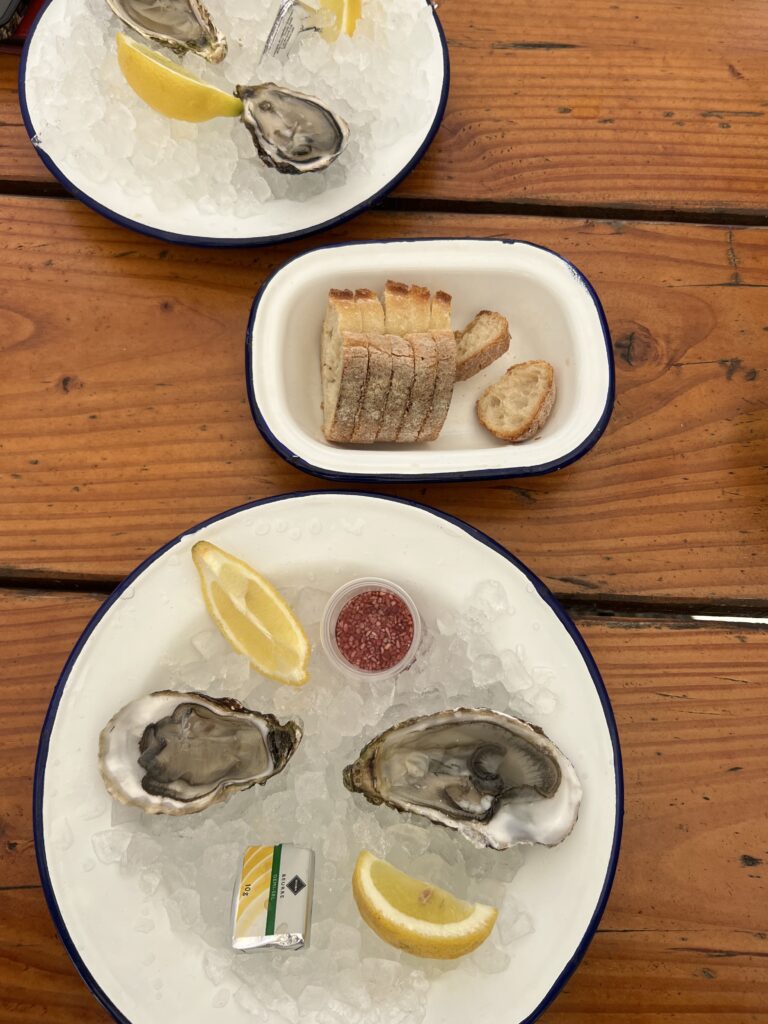
Around me, the diversity was striking. At La Sauce, culinary students were running a plant-forward pop-up, creating menus from scratch. Elsewhere, I was tempted by local craft beer and experimental coffee grown on a plantation close to Toulouse.
This is where new chefs start. Not in Victor Hugo, but here – where risk is possible, and lower fees allow that crucial first step.
And then there are the cafés.
It was when I was living in Paris that I became obsessed with coffee. At university, my friends and I would go to Starbucks and order caramel frappés, much more for the sweetness than the caffeine. In Paris, I began experimenting with café au lait avec un sachet de sucre, and before I knew it I was drinking double espressos. That’s the French effect.
Walking through Toulouse, I kept noticing it: sleek, minimalist cafés serving coconut milk matcha lattes and ube vanilla creations. Four years ago in Paris, alternative milk felt like a rarity. Here, it is standard.
At The Coffee, I ordered a tiramisu iced latte and drank it by the river. Another day, at Flowers Cafe, I had a café cannelle on the terrace, watching the city drift by.
These places might seem small, but they signal a shift in taste and expectation, catering to a younger, more experimental audience.
Toulouse really is young. You feel it everywhere – in the energy, the movement, the constant hum of activity. But what makes it exciting is how that youth interacts with tradition.
At the market, you see the roots: foie gras, cheese, centuries of craft. At places like Campagne and Les Halles, you see the branches stretching, adapting, and experimenting.
And whether you’re eating foie gras in a historic market or plant-based croquettes in a repurposed factory, I learnt that one thing in Toulouse remains firmly unchanged: it’s a chocolatine, not a pain au chocolat.
Share to: Facebook Twitter LinkedIn Email
More in Toulouse, Toulouse Gastronomy, What to eat in Toulouse
Related Posts