Baba au Rhum: A Royal Favourite
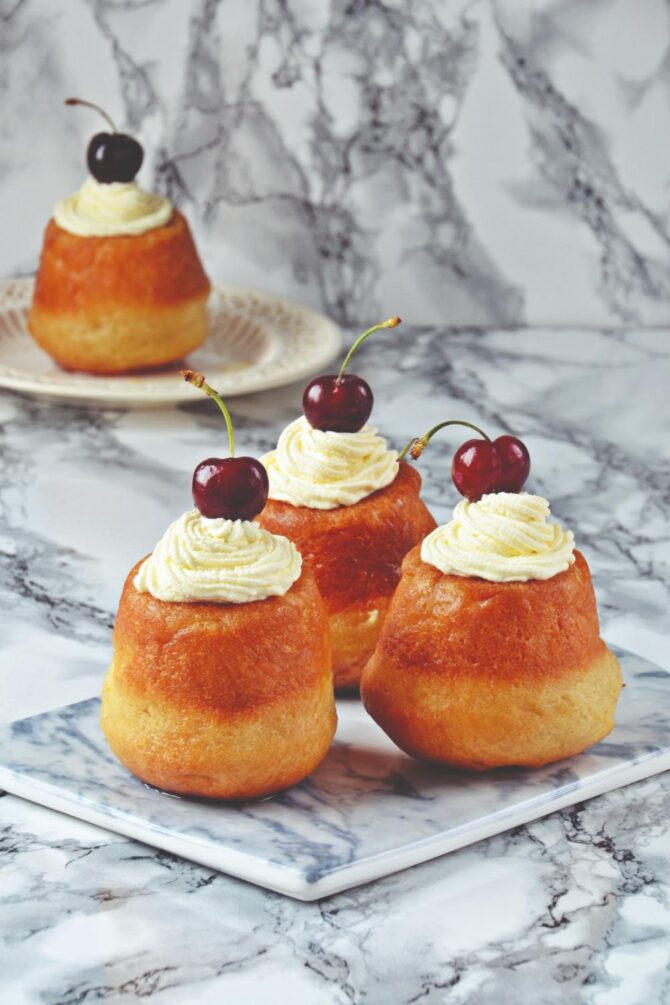
Brilliant in its simplicity, the baba au rhum graces dessert menus across France – but its first appearance 300 years ago wasn’t at all planned. Justin Postlethwaite explains…
French culinary history is liberally sprinkled with culinary mishaps which history has judged to be truly serendipitous, so delicious were the results. The most celebrated are probably Roquefort – boy leaves sandwich in Aveyron cave, returns later to a surprisingly sublime mouldy treat; tarte Tatin – auberge kitchen sisters forget to put lid on apple pie, so the yummy caramelised apple at the bottom of the pan was flipped and presented face-up, thus tantalising both eye and taste buds; and sauce Béarnaise -the tarragon-tinged steak accompaniment conjured par hasard by chef Jean-Louis-François Collinet in 1837, when he needed to correct an overcooked shallot reduction by adding egg yolks and butter.
Another tale of culinary experiment-turned-triumph relates to a sweet treat found in pâtisserie display fridges up and down the Hexagon, as well as on brasserie menus from Montpellier to Montmartre: the baba au rhum. As something of an addict, I’ve had amazing ones, I’ve had poor ones; sickly sweet ones, stodgy ones; big ones served as a centrepiece pudding, and little ones presented as part of a café gourmand.
One certainty is that you are never far from a chance to sample this hugely popular, and decidedly historic, dessert, which is based on a simple spongy batter soaked in booze and adorned with cream. But to discover its origins, we must don our court wigs and head to Lunéville, 35km east of Nancy in Lorraine (Grand Est region), at the beginning of the 18th century. Living in exile in the grand Château de Lunéville was the former king of Poland, Stanislaus I, who would turn out to be the last duke of Lorraine and Bar. He was quite the cultural instigator, turning the castle into a centre for the arts and ordering the building of the truly wondrous Place Stanislas in Nancy – today a must-visit on any Francophile’s wishlist; he was also a serious foodie, reportedly prematurely obese with a decidedly sweet tooth. He loved to feast on kouglofs, like Polish babka cakes that reminded him of his origins.
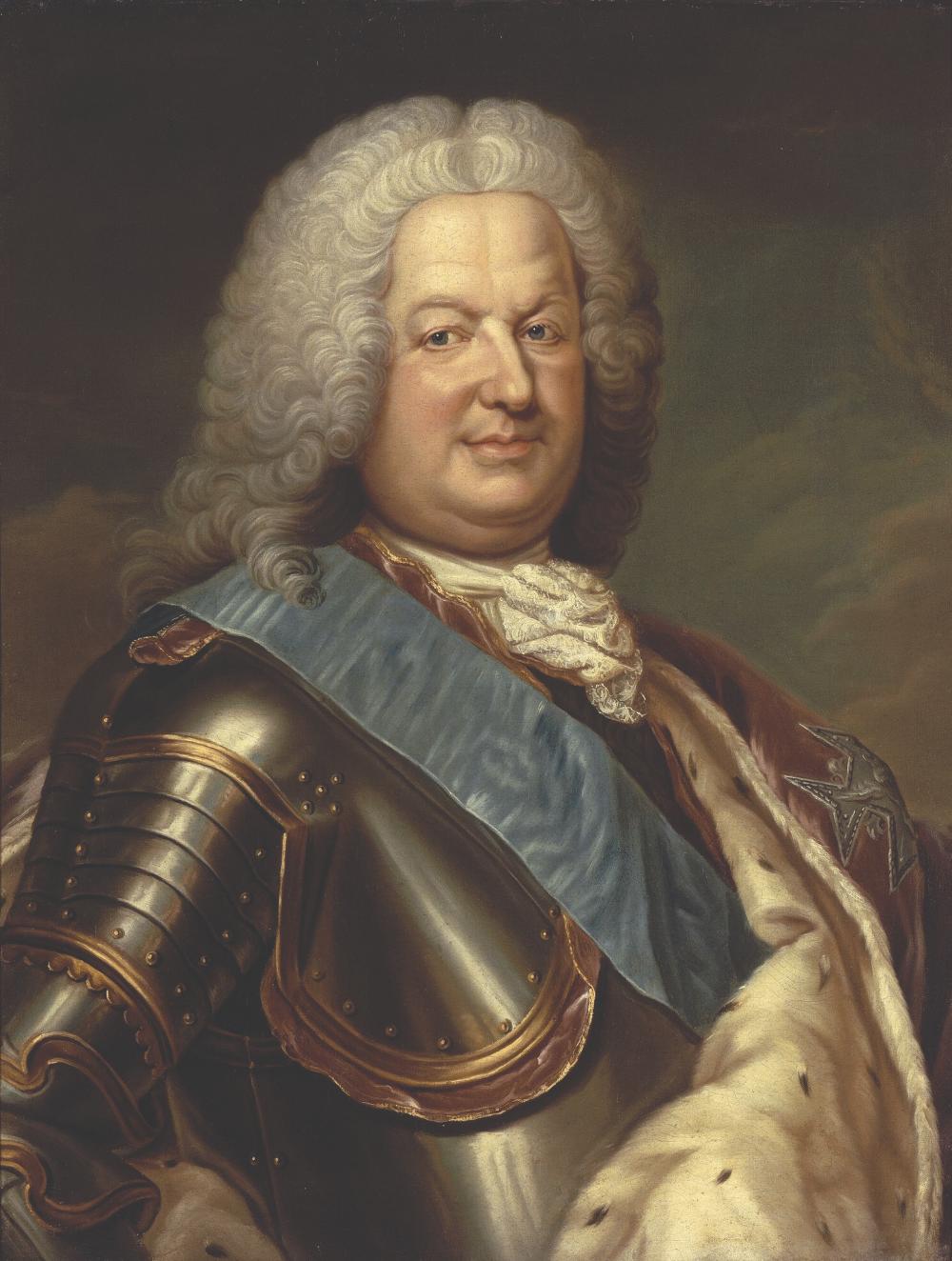
Stanislaw_Leszczynski1
Birth of the baba
On one occasion, Nicolas Stohrer, an apprentice pastry chef in the château’s kitchen, brought a brioche from Poland for the king. Unfortunately, it had dried out during the journey, rendering it largely inedible – perilous, even, given the shocking state of the king’s sugar-damaged teeth. To rectify matters, Stohrer decided to soak it in liquor to soften it. According to which legend you believe, he used either the popular Tokaji wine from Hungary, or Malaga, a sweet wine produced in Andalusia. Stohrer then filled the dessert with crème pâtissière (pastry cream) and raisins. Needless to say, King Stanislas was an instant fan and duly named the new dessert Ali Baba, supposedly after the hero of a book of Arabian folktales he’d been enjoying. The Tales of the Thousand and One Nights.
The next stage on the rum baba’s road to legendary status came when Stohrer founded the capital’s first pâtisserie on rue Montorgueil, Paris (2ème) in 1730. This was five years after he’d moved to Versailles whilst serving as pastry chef to Stanislaus’s daughter, Marie Leszczyńska, who married King Louis XV. Over time, rum replaced wine and the crème pâtissière was replaced by crème chantilly. Many other classic sweet treats could also be bought at his shop, including Chiboust cream tart, the puits d’amour and the traditional-style religieuse. The pâtisserie is still a go-to for the sweet of tooth today, and is also renowned for its vol-au-vents. Maison Stohrer even welcomed Queen Elizabeth II in 2004 during the state visit to France – a royal seal of approval coming almost 300 years after Nicolas Stohrer’s first from Stanislaus.
Babas au rhum
Makes 6
INGREDIENTS
For the babas
- 220 g strong white flour
- 7 g fast-action yeast
- ½ tsp fine salt
- 50 g caster sugar
- 2 medium eggs
- 70 ml lukewarm milk
- 100 g soft unsalted butter
- Butter & caster sugar for dusting moulds
For the syrup
- 250 g caster sugar
- 200 ml water
- 3-4 tbsp dark rum
- For the Chantilly
- 250 ml double cream
- 100 g icing sugar
- Seeds of 1 vanilla pod (or ½ tsp vanilla extract)
METHOD
- Mix flour, yeast, sugar and salt. Add eggs and warm milk; knead for 10 minutes until smooth. Knead in butter. Cover and let rise for 1 hour, or until doubled.
- Butter and sugar the moulds. Fill 2/3 full. Leave to rise again until nearly at the top.
- Heat the oven to 180°C (350°F/Gas 4). Spoon the babas into moulds and bake for 20-25 minutes, until golden and springy. Cool for a few minutes, then turn out on to a wire tray and leave to cool.
- Heat water and sugar until dissolved; take off heat and add rum. Soak babas in warm syrup, turning until evenly saturated. Leave to cool.
- Whip the cream with the icing sugar and vanilla to soft peaks. Chill until needed.
- Set each syrup-soaked baba on a plate and pipe Chantilly over the top or into the centre. Pour over more syrup and garnish with fresh fruit.
Looking for more French food and drink content?
In our magazine we offer a whirlwind tour of the best gastronomic destinations. Discover La Belle France’s renowned markets, quirkiest food festivals, most indulgent restaurants and foodie experiences.
Lead photo credit : Photo: shutterstock
Share to: Facebook Twitter LinkedIn Email
More in Baba au Rhum, French pasteurise
Related Posts