The Oldest Manufacturer of Montélimar Nougat
Caroline Mills visits Arnaud Soubeyran, the oldest manufacturer of Montélimar nougat, to see how the legendary confection is made
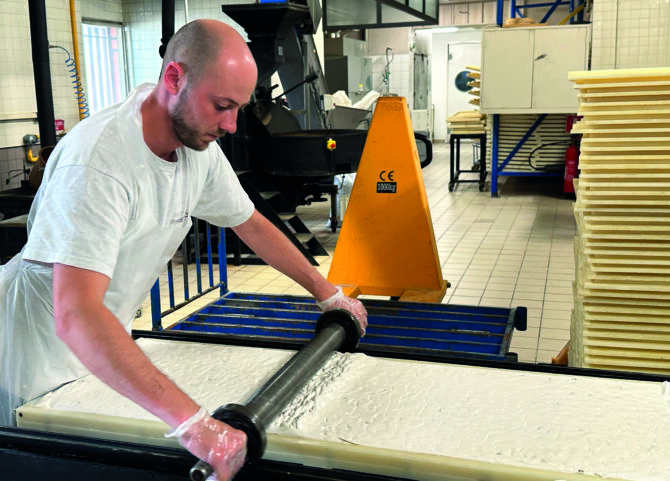
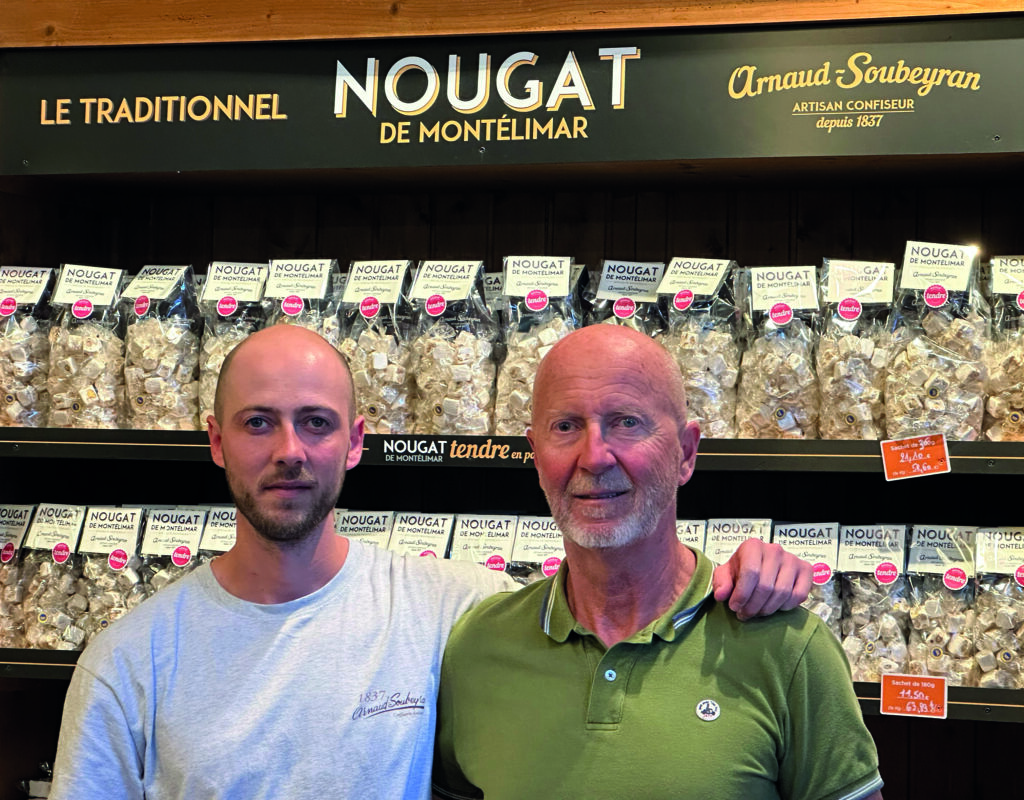
Giant palette arms rotate slowly. beating warm honey in a copper bain-marie. Its scent is irresistibly pungent. Quentin Honnoré scoops spatula-sized lumps of stiff-peaked whisked egg white into the copper cauldron then drizzles in a boiling sugar syrup prepared on a black iron hob, rather like an old kitchen range. The palette arms decelerate as the soft mix thickens, like whipped cream.
“It’s good weather for making nougat today,” says Quentin as the sun shines outside the Arnaud Soubeyran kitchen in Montélimar. I ask what ‘good nougat-making weather is. “Not too much humidity,” he says. “It doesn’t help with the consistency of nougat. Too hot, though, and the nougat can become hard.”
A history of tradition
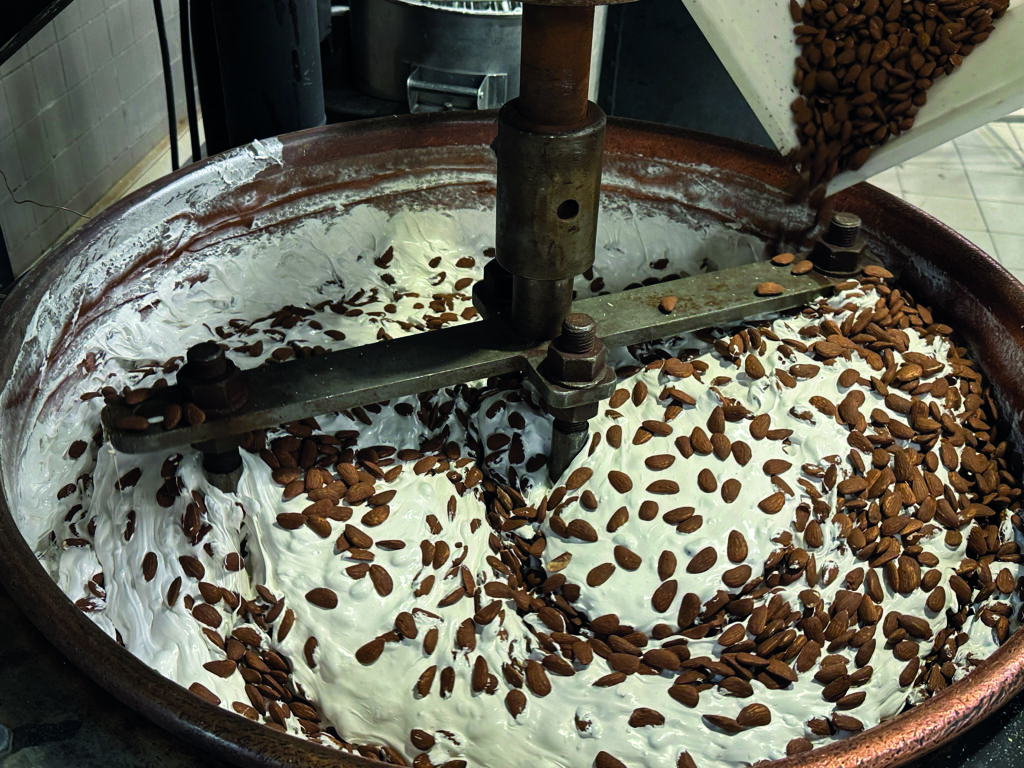
Quentin checks the temperature on a sturdy, heated cauldron, then tips in a sack of French almonds. Inside, the unblanched whole nuts turn, dried until crisp and deliciously crunchy. Within a few minutes they, too, are ready to be added to the mix, along with a small quantity of pistachios. “I am making a classic, traditional nougat today,” explains Quentin. Traditional, that is, to Montélimar, the historic Drôme city beside the River Rhône. The city is famous for its nougat, and Arnaud Soubeyran is known as the longest-serving manufacturer of the world-famous Nougat de Montélimar.
Begun in 1837 by husband-and-wife team Jean Mathieu Arnaud and Marguerite Clara Soubeyran, the Arnaud Soubeyran nougat brand became synonymous with quality as it attracted ever-greater numbers of sweet-eaters stopping in Montélimar on railway journeys and, latterly, on the famous N7 road between Paris and the Mediterranean.
Quentin’s grandparents bought the company in the 1970s, and his mother, Caroline, later created the Musée du Nougat at Arnaud Soubeyran, where visitors can learn about the history and manufacture of nougat, in addition to watching while confectioners make sweet treats. Quentin is the third generation of his family to make nougat by hand, using the same artisan methods as in the 1830s. “Didier, mon papa,” says Quentin as his father arrives in the kitchen and kisses him on both cheeks. This is a family business; brother Thomas is involved, too. More on him later.
With the almonds and pistachios added to the beaten mixture, which is full of soft folds, the nougat is ready. Using an over-sized wooden spatula, the mix is scooped from the cauldron and spread in trays lined with edible paper. It will need to be left to set for 24 hours before it can be cut into cubes (the traditional shape) ready for sale.
A homegrown delicacy
Unlike other nougat manufacturers, Arnaud Soubeyran has been able to add a new brand to its line-up of classic, fruity, soft and hard nougats: Chez Nous, for the Chez Nous nougat is made with the company’s own almonds and honey.
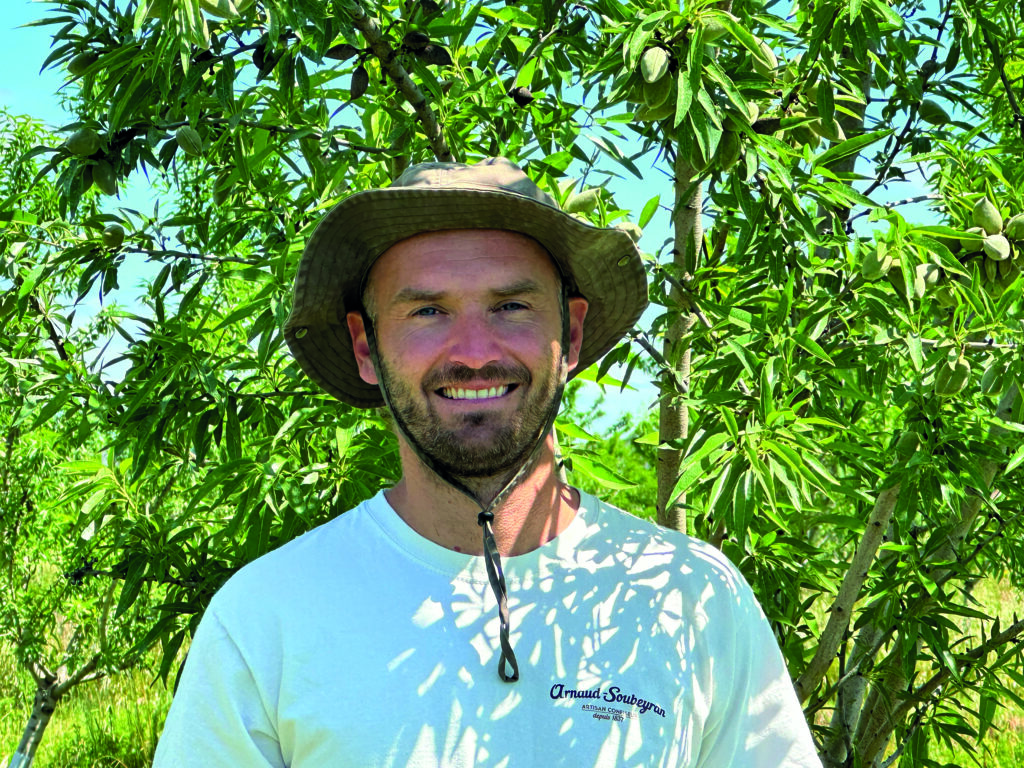
Less than 2km from the Arnaud Soubeyran kitchen and museum are 16 hectares of Provençal ground, where Quentin’s bother, Thomas, shows me around the almond orchard. “We wanted to be able to use our own products within the nougat production process,” he says. “When we bought this land, in 2019, it had been under arable production for many years, and there was little fertility left in the soil.
“I wanted to farm using sustainable management techniques because that aids biodiversity and assists with the pollination of the almond blossom. In 2020, we planted 4,000 almond trees and, in between, a mix of grasses and wildflowers to provide soil cover. There are three different species of almond here, which mature at different times. This helps prolong the harvest, and as they blossom at different times, also reduces the threat from frost.”
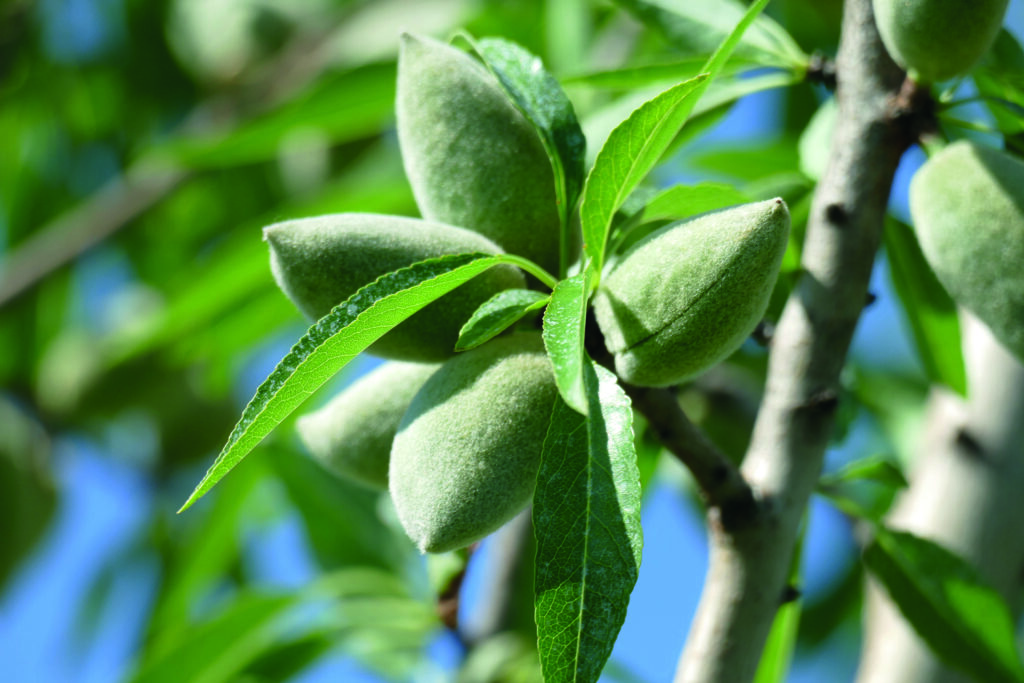
Frost, you would think, is not something to be concerned about along the Vallée de la Rhône, one of France’s richest soft fruit growing areas. But spring 2025 proved to be challenging, with more rain than usual (200% more, according to Thomas) and lower temperatures, causing more frost than normal. Hence, 40% of the blossom was lost, and some of the almond trees – though looking lusciously green against the pretty backdrop of the Montagnes d’Ardèche – are void of nuts. “This year should have been our first harvest of the entire orchard,” says Thomas. But that’s not to be, a fact which underlines the vulnerability of production in a changing climate.
“This region was well known for growing almonds a principal ingredient of Montélimar nougat – many decades ago,” says Thomas. “Now it’s rare.” I ask why, and he explains that, with the introduction of Californian almonds, small French growers couldn’t compete, and the almond trees were replaced by other crops. “It’s difficult to obtain French almonds now,” he says, “so we use Mediterranean (Italy and Spain) when we can’t use our own. But the aim is to meet 70% to 80% of our needs from this orchard.”
Thomas also has 60 beehives producing honey for the Chez Nous nougat. “I bring all the hives here in early spring, to help pollinate the almond blossom,” he says, as bees buzz around 20 hives. “Some are then taken across the river to the Ardèche, where the land is wild, and they return in June before the lavender harvest.”
Recognition at last
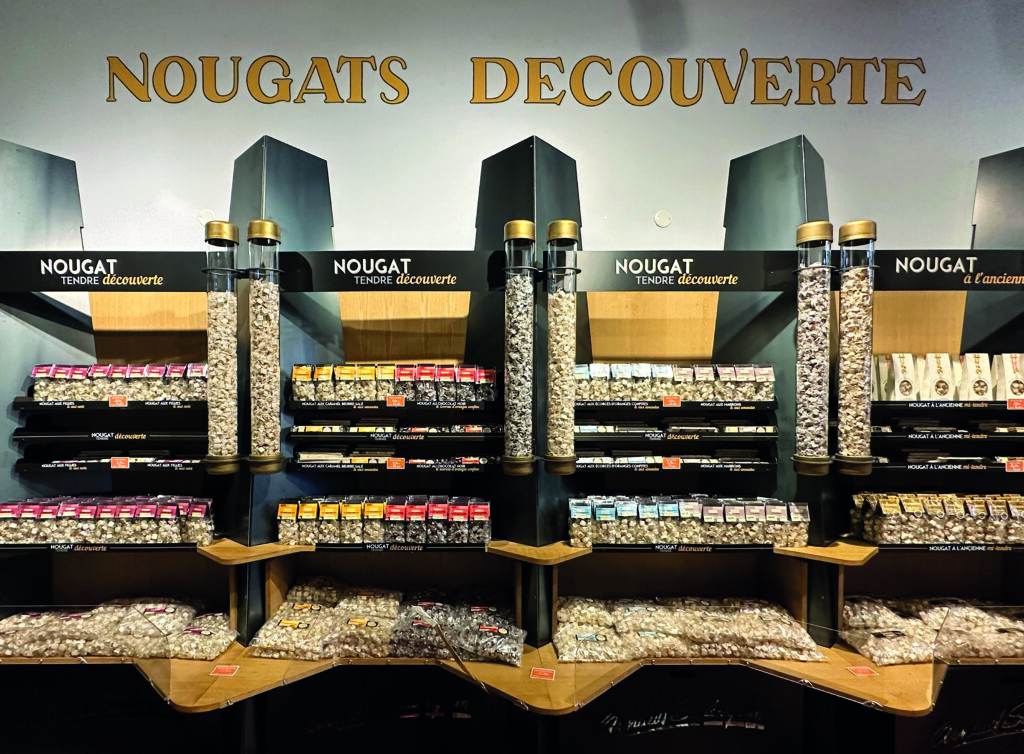
Thomas returns to his latest project -creating a room for extrapolating the honey as well as a visitor centre, ready in 2026 for tours of the almond orchard. I return to the Arnaud Soubeyran Musée du Nougat for a delicious lunch of local produce at the on-site restaurant and a mooch around the shop. contemplating the challenges required to grow almonds before making nougat. A nougat that, after many years of campaigning, has finally been recognised with Indication Géographique Protégée (IGP) status as Nougat de Montélimar.
Share to: Facebook Twitter LinkedIn Email
More in Auvergne-rhone-alpes, History, Montelimar, nougat, People
Related Posts