Burgundy’s New Route du Cassis: in Search of Blackcurrants
Karen Tait heads to Burgundy’s new Route du Cassis in search of blackcurrants – and finds mustard, Michelin stars and magnificent vineyards along the way.
One of the most sublime creations to come out of Burgundy – a region famed for its gastronomic bounty – is the kir royale. For me, no trip to France is complete without one. The combination of crème de cassis and crémant de Bourgogne or champagne is glorious, though it is equally good with Aligoté wine, as in the original recipe.
Despite the drink’s popularity, blackcurrants are not the first thing most people associate with Burgundy – wine and mustard tend to dominate the region’s culinary reputation -but these small, intensely flavoured berries are a prized local speciality.
The Route du Cassis has been designed to showcase them, linking farms, tastings and producers across the region. At the heart of the route is Le Cassissium, an interactive museum and production facility run by Maison Vedrenne. Historic copper stills, porcelain jars and wooden presses sit alongside gleaming stainless steel vats, illustrating how production has evolved.
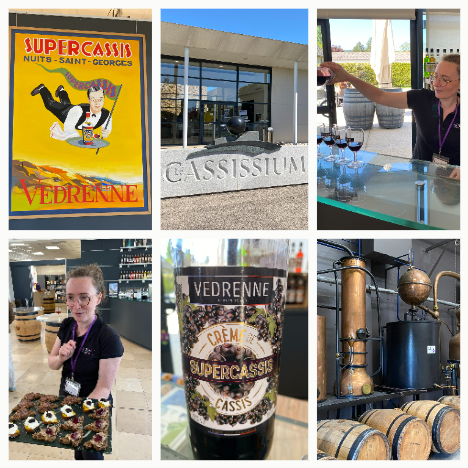
We learned the difference between a liqueur and a crème de cassis: the latter is thicker and sweeter, containing at least 250g of sugar per litre. Maison Vedrenne’s ‘Supercassis contains twice as many berries as a standard crème de cassis and reaches the maximum permitted alcohol level of 20%. Although the UK produces more blackcurrants, Burgundy’s Noir de Bourgogne variety is smaller, darker and more tart, making it ideal for processing. Around 1,300 hectares are grown across the Côte d’Or and Saône-et-Loire.
We were eager to try this super-powered cassis. Rich, silky and intensely fruity, it coated the throat as it went down. The tasting also included cocktails, salmon and pork rillettes infused with cassis, cream cheese with blackcurrant ketchup and sorbet drizzled with cassis and marc de Bourgogne, a spirit made from grape skins left over from winemaking.
Grape expectations
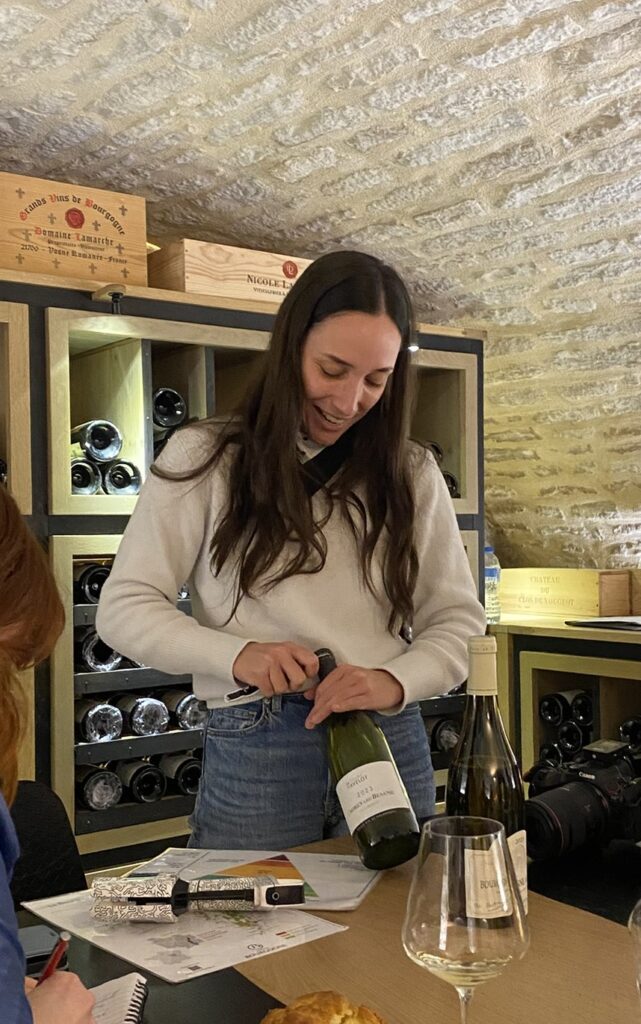
My journey through Burgundy stretched from north to south, discovering more of the products that have made the region a foodie paradise – there are no fewer than 13 gourmet routes! Unsurprisingly, wine was a constant thread. Our first stop was Dijon, where we stayed at the elegant 19th-century Hôtel du Palais. In its atmospheric cellar, our guide, Prune, explained Burgundy’s complex wine geography, from regional appellations to grands crus. Villages such as Meursault, Savigny-lès-Beaune and Corton are famous names on wine labels but seeing them mapped out brought the region to life, and it was a privilege to try them.
In Burgundy, white wines are made from Chardonnay and reds from Pinot Noir. While I’ve always enjoyed a crisp Chablis, I found myself preferring some of the more buttery Chardonnays from the warmer south of the region. The wine was accompanied by the biggest gougère I’ve ever seen. If you don’t know this cheesy choux pastry creation – a popular French canapé – I recommend you try one at your earliest opportunity.
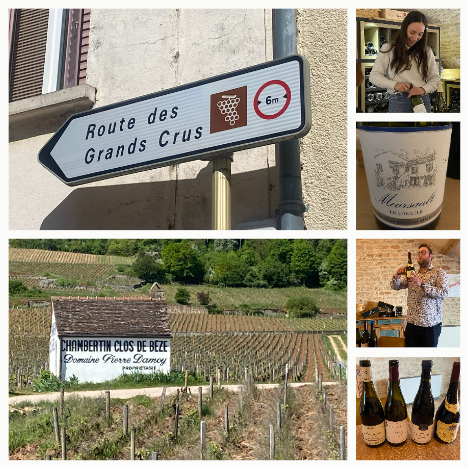
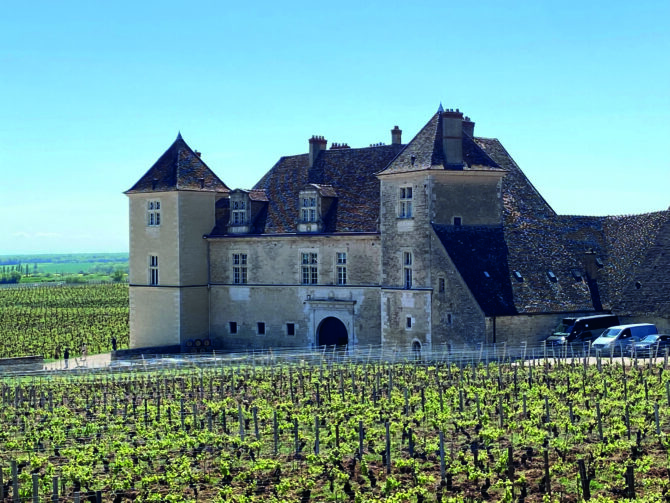
The next morning we travelled along the Route des Grands Crus towards Beaune, passing celebrated vineyards including Romanée-Conti. Land here is so valuable that many vignerons own only a few rows of vines. Sometimes the difference between a €30 bottle and a €300 bottle is simply which side of the road the vineyard sits on.
Mellow yellow
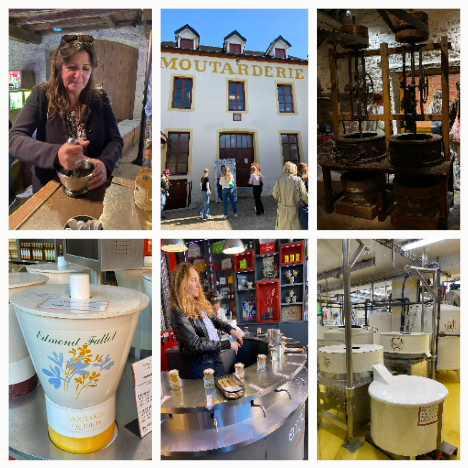
The spotlight then turned to another Burgundian icon: mustard. At La Moutarderie Fallot in Beaune, we toured a historic factory that still grinds mustard seeds using traditional stone millstones. The pungent aroma in the air was strong enough to bring tears to our eyes. We also had the chance to make mustard, grinding seeds in a pestle and mortar while slowly adding vinegar. The difference between Burgundy and Dijon mustard is that the former is made with wine, the latter with vinegar. There are countless flavoured variations too, from basil to smoked paprika, all available to sample and buy in the shop.
With our mouths now on fire, what we needed was a cool glass of white wine. After a tour of the Côte de Beaune vineyards with Safari Tours, passing famous villages including Pommard and Volnay, we enjoyed a tasting at La Cave d’Elisée. Burgundy wine production remains dominated by small family-owned domaines, unlike the investor-led model often associated with Bordeaux.
Demand far outstrips supply, driving prices ever higher. That evening we dined at Loiseau des Vignes near the famous Hospices de Beaune. Dinner began with oeufs en meurette – eggs poached in red wine sauce – followed by slow-cooked Charolais beef cheek with silky pommes purée and local wines.
The following morning we visited the Hospices de Beaune, with its striking patterned roof tiles and rich history. Founded in the 15th century as a hospital for the poor, it reflects the close links in Burgundy between religion, wealth, wine and gastronomy. The hospital was founded by Nicolas Rolin, chancellor to the Duke of Burgundy, who was keen to save his soul by helping the poor. Nuns cared for the sick and cultivated medicinal herbs, while the hospital’s vineyards helped fund its charitable work. The annual Hospices de Beaune wine auction, which raises funds for charity, remains one of the most prestigious events in the wine world.
Animal farm
Leaving Beaune behind, the landscape changed as vineyards gave way to rolling farmland. Southern Burgundy is agricultural country, famed for poultry, goat’s cheese and Charolais cattle.
Our first stop was La Bonardière poultry farm in Bouhans, where they produce the renowned Poulet de Bresse, the only French chicken with AOC status. The white-feathered birds roam freely across grassy fields, and the care shown by the farmer for his flocks was obvious, especially when he gently saved an escapee hen.
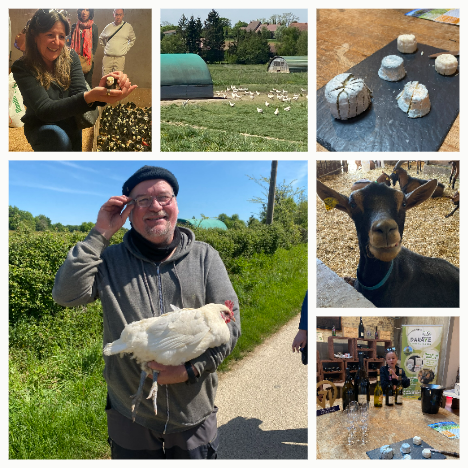
Later, we sampled Poulet de Bresse served with cream and morel sauce at the Hostellerie Bressane in nearby Saint-Germain-du-Bois.
The cuteness factor increased further at Ferme des Poncetys in Davayé, where goats provide the milk for AOP Mâconnais cheese. The farm also makes wine, while the neighbouring Lycée Lucie Aubrac trains future goat farmers and winemakers. Our final stop was Charolles, at the heart of the Charolais cattle region, where we checked into Maison Doucet. Chef Frédéric Doucet and his team have recently won a second Michelin star. We were welcomed into the kitchen for an apéritif alongside a delicious array of delicate appetisers, including sorrel tartlets, hay-smoked Époisses cheese, trout caviar and beef with tarragon mustard. Frédéric then prepared his signature dish before us: raw Charolais beef wrapped around diced oysters and herbs, topped with a seaweed sauce, representing the meeting of land and sea.
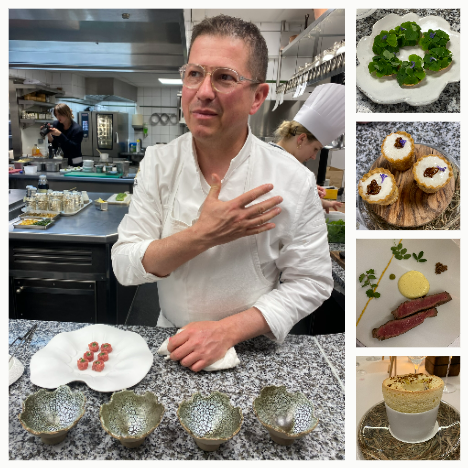
Back at the table came an extraordinary succession of dishes: rye bread with whipped butter and hazelnut oil, Charolais beef with meadow herbs and bone marrow, a dandelion infusion palate cleanser, a laden cheese trolley, a goat’s cheese ice cream with cassis and, last but not least, a lemon soufflé with hay-infused ice cream.
Petit fours naturally included chocolates infused with crème de cassis – a fitting end to a journey through one of France’s great culinary regions.
BURGUNDY ESSENTIALS
Where to stay
Hôtel du Palais, Dijon: Boutique hotel with nine rooms in a 19th-century bourgeois residence, with original painted ceilings and stone staircase.
Hôtel de la Poste, Beaune: Built at the end of the 19th century on the site of an old coaching inn, with a restaurant and sumptuous bar.
Maison Doucet, Charolles: A sophisticated and comfortable hotel with heated swimming pool and spa.
Where to eat
Le Pré aux Clercs, Dijon: A timeless brasserie and Dijon institution for lovers of French and Burgundian gastronomy. Menu designed by the famous Georges Blanc.
Loiseau des Vignes, Beaune: Bistro near the famous Hospices de Beaune celebrating Burgundian produce and wines.
Maison Doucet, Charolles: A two-Michelin-star restaurant headed by Frédéric Doucet, with cuisine inspired by local ingredients and his own kitchen garden.
Wine tasting
Beaune: Book a vineyard tour with Safari Tours; book a tasting at La Cave d’Elisée
Dijon: Cave du Palais
Wine tasting
Le Cassissium, Nuits-Saint-Georges: A fun and educational experience, based around blackcurrants. Explore the different facets of crème de cassis production.
La Moutarderie Fallot, Beaune: Traditional family-run mustard factory with tours, demonstrations and a shop.
Share to: Facebook Twitter LinkedIn Email
More in Burgundy, Dijon, Mustard, Route du Cassis
Related Posts